Have a saved cart?
Enter your email to restore it.


Back sleeping is one of the healthiest sleep positions, when the mattress is right. In this position, your spine can maintain its natural S-curve, your hips stay level, and your shoulders rest without rolling forward. But the mattress has to do its part. Too soft, and your hips sink into a hammock shape that strains the lumbar region. Too firm, and the natural inward curve of your lower back is left unsupported, creating pressure and tension through the night.
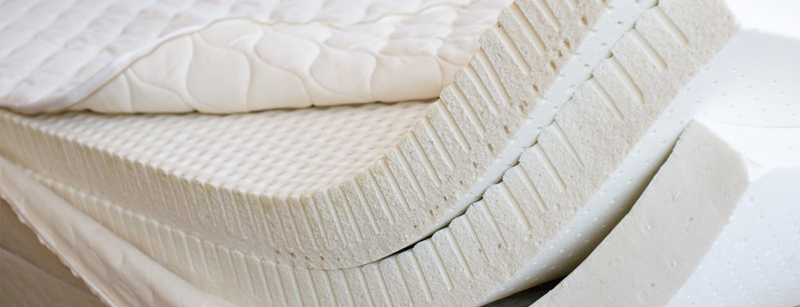
Latex is unusually well-suited for back sleepers for a few reasons. It’s responsive, meaning it pushes back immediately rather than letting you sink gradually the way memory foam does. It supports the lumbar curve without feeling rigid. And because it’s breathable, it doesn’t trap the heat that tends to build up when you’re lying flat on your back. If you’ve been sleeping on a mattress that leaves you stiff in the morning or waking up with a dull ache in your lower back, the problem is almost certainly one of firmness and support, two things latex handles exceptionally well.
This guide covers exactly what to look for, including firmness ratings, layer configurations, and specific recommendations based on your body weight.
Mattress firmness is measured in ILD (Indentation Load Deflection), the amount of force required to compress a four-inch latex layer by 25%. The higher the ILD, the firmer the latex. For back sleepers, getting this number right is more important than almost any other factor.
The goal is a mattress that allows your heavier midsection to sink slightly while supporting the lumbar curve, not a surface that lets everything sink equally, and not one so firm that it pushes back against the natural arch of your spine.
For most back sleepers, that sweet spot falls somewhere in a Medium-to-Firm overall feel. In current ILD choices, that typically means:
Where you land within those ranges depends primarily on your body weight. Heavier sleepers need firmer ILDs to prevent excessive sinkage. Lighter sleepers need softer ILDs to allow the mattress to contour enough to actually make contact with the lumbar region.
Both types of latex work well for back sleepers, but they’re used differently within a mattress. Understanding which to use in which layer is more useful than trying to choose one over the other.
Dunlop latex is denser and heavier because of how it’s processed. The natural rubber solids settle slightly during vulcanization, creating a bottom-heavy layer that’s excellent for support cores. It’s also more durable over time, which matters for the foundational layers of a mattress.
Talalay latex is produced with a vacuum and flash-freeze process that distributes the cell structure more uniformly. The result is a more consistent, slightly springier feel with better pressure relief. It works beautifully as a comfort layer, even for back sleepers, as long as you’re using it in the right ILD. A Medium 30–32 or Firm 37–40 Talalay layer at the top of the mattress gives back sleepers responsive cushioning without sacrificing the support underneath.
A well-configured latex mattress for a back sleeper often looks like this: Talalay on top for surface comfort, Dunlop underneath for structural support. Sleeping Organic’s models are built around exactly this logic.
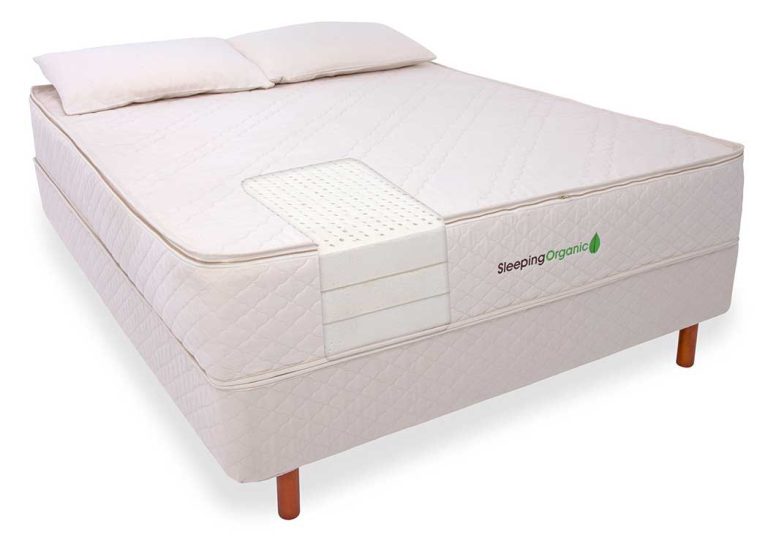
Sleeping Organic builds three natural latex mattresses, each with a different layer count and height. All of them can be configured for back sleepers, the right choice depends on your weight, preference for feel, and whether you want the ability to adjust layers over time.
The Sapling is the most straightforward configuration: one comfort layer over one support core. At 9 inches, it’s the most accessible entry point, and for average-weight back sleepers who prefer a relatively firm feel, it often works extremely well. The simpler layer stack means less cushioning overall, which suits back sleepers better than it suits side sleepers.
The Sprout adds a third layer, giving you more nuance in how the mattress is configured. The additional layer height allows for a slightly softer surface feel without compromising support, which makes it a versatile option for back sleepers who sleep warm or need a bit more cushioning. It’s also a strong choice for combination sleepers who spend significant time on their backs but occasionally roll to their sides.
The Tree is the most customizable option in the lineup. With four layers, you have significant latitude to dial in exactly the right balance of support and comfort for your body and sleep position. Back sleepers who are heavier (over 200 lbs) often find the Tree’s depth useful, more layers means more room to engineer a firm-but-cushioned feel without the mattress feeling punishing. The Tree also tends to have excellent edge support due to its overall density.
All three models are available through Sleeping Organic’s natural latex mattress builder, where you can choose each layer’s ILD and latex type individually. This is one of the most significant advantages of buying from a company like Sleeping Organic, off-the-shelf mattresses force you to accept the configuration the manufacturer chose. Custom latex lets you build for your actual body and sleep position. You can read more about what that means in practice in this overview of custom latex mattresses.
Body weight is the single biggest variable in choosing the right latex ILD for a back sleeper. The following recommendations apply to back-specific configurations, if you’re a combination sleeper, factor in your secondary position as well.
Lighter back sleepers tend to rest on top of the mattress rather than compressing into it. This means a firm mattress can actually cause problems, the lumbar region doesn’t get enough contact, and pressure builds at the sacrum and shoulder blades. A Medium 30–32 comfort layer with a Medium 30–32 or Firm 37–40 support core gives lighter sleepers the contouring they need without letting the hips drop.
This is the most common range: a Medium 30–32 comfort layer with a Firm 37–40 support core. This configuration supports the lumbar curve, prevents hammocking, and provides enough surface cushioning to keep pressure off the sacrum through the night.
Heavier back sleepers compress latex more deeply, which means softer ILDs will allow too much hip sinkage. A Medium 30–32 or Firm 37–40 comfort layer and an X-Firm 44 support core maintain spinal alignment without bottoming out. In multi-layer mattresses like the Tree, using Dunlop throughout all support layers provides maximum stability.
| Weight Range | Comfort Layer | Support Core | Overall Feel |
|---|---|---|---|
| Under 130 lbs | Talalay, 30–32 ILD | Dunlop, 30–32 or 37–40 ILD | Medium |
| 130–200 lbs | Talalay, 30–32 ILD | Dunlop, 37–40 ILD | Medium-to-Firm |
| Over 200 lbs | Talalay, 30–32 or 37–40 ILD | Dunlop, 44 ILD | Firm |
For multi-layer mattresses (Sprout or Tree), choose a middle layer from the current discrete options that is firmer than the comfort layer and softer than the base; do not assume every 2–4 point increment is an available choice. This transition layer approach is especially effective for back sleepers who need cushioning at the sacrum but firm support at the lumbar.
If you’re choosing a mattress specifically because you’re dealing with back pain, the stakes are higher and the configuration matters more. A mattress that’s even slightly too soft will let the hips sag overnight, straining the lumbar musculature and the SI joint. A mattress that’s too firm creates a gap under the lumbar arch, the spine is essentially unsupported for hours at a time.
Latex’s unique property here is its zoned support behavior. Because latex responds to pressure proportionally, heavier parts of the body (hips, shoulders) compress it more while lighter areas (lumbar region) get less compression and more passive support. This is different from memory foam, which softens uniformly with body heat, and different from innerspring, which either supports or doesn’t. You can read more about latex mattresses and back pain in detail, but the short version is that correctly configured latex is one of the most effective options for back sleepers dealing with chronic lumbar issues.
One underrated factor: pillow choice. Back sleepers need a pillow with enough loft to keep the cervical spine in line with the thoracic spine, not so high that the neck bends forward, not so flat that the head drops back. A natural shredded latex pillow is adjustable by design, letting you remove or add fill until the loft is exactly right for your neck position when lying on your back.
Yes, and more than most people realize. Adjustable bases allow you to elevate the head or foot of the mattress independently, which opens up several options that are directly relevant to back sleepers.
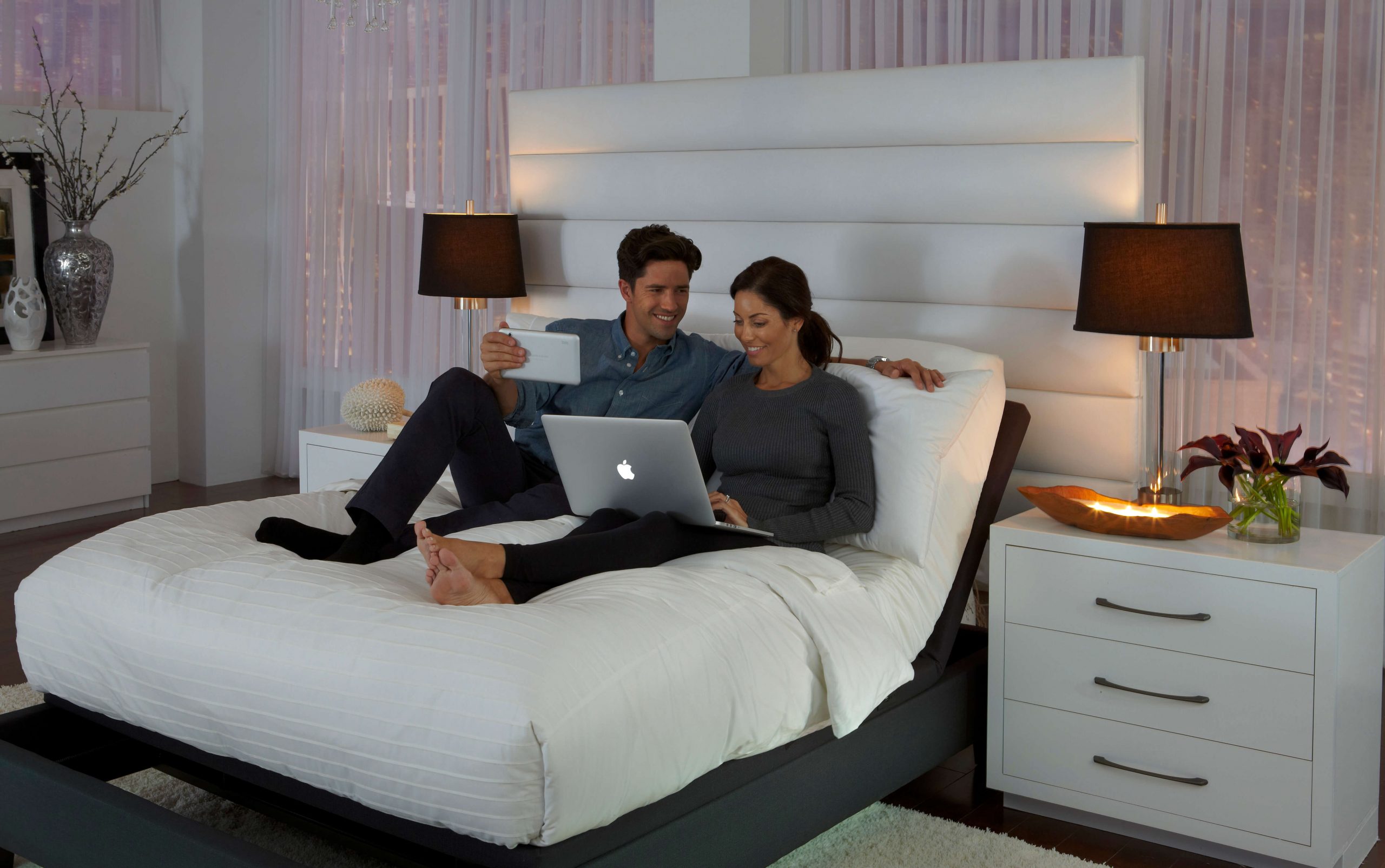
Elevating the head slightly (5–15 degrees) can reduce pressure on the lumbar spine by redistributing some of your body weight toward your feet. Elevating the foot of the bed similarly reduces lumbar pressure by opening the hip angle. For back sleepers with chronic lower back pain, this kind of position adjustment can make a meaningful difference, something a flat mattress simply can’t offer regardless of its firmness.
Latex is one of the few mattress materials that works well on an adjustable base because it’s flexible enough to bend without cracking or delaminating. Sleeping Organic’s latex mattresses are compatible with adjustable frames, and you can find detailed guidance in this post on the best latex mattresses for adjustable bases.
If you’re using an adjustable base, pair it with a proper organic mattress foundation for the non-articulating portions of your setup to ensure the mattress is adequately supported.
Most people aren’t strict single-position sleepers. If you spend the majority of the night on your back but occasionally shift to your side, lean toward the softer end of the recommended ILD ranges above, you need enough surface cushioning to handle shoulder and hip pressure when you roll over. For back-to-side combination sleepers, the Sprout or Tree models give you the layer depth to accommodate both positions without compromising either.
If you’re split between back and stomach sleeping, that’s a more specific situation, stomach sleeping requires firmer, flatter support to prevent lumbar hyperextension, which partially conflicts with the lumbar-contouring approach for back sleeping. You can read more about the best latex mattresses for stomach sleepers for a detailed breakdown of those tradeoffs.
For a comprehensive overview of how back sleepers compare to other positions and what makes latex uniquely suited to all of them, this post on latex mattress pros and cons is worth reading before you finalize a configuration.
For most back sleepers in the 130–200 lb range, a comfort layer between 30–32 ILD and a support core between 37–40 ILD delivers the right balance of lumbar support and pressure relief. Lighter sleepers should move toward the softer end of those ranges; heavier sleepers should move firmer. ILD isn’t the only factor, layer thickness and mattress height matter too, but it’s the most direct control you have over how a latex mattress feels.
Neither is universally better, they serve different roles. Talalay works well as a comfort layer for back sleepers when used in a Medium 30–32 or Firm 37–40 ILD, providing responsive cushioning without the deep sink that would disrupt spinal alignment. Dunlop is the preferred choice for support cores due to its density and durability. A well-configured mattress for a back sleeper will often use both. You can read a full comparison at our Dunlop vs. Talalay guide.
It can, and for many back sleepers, switching to a properly configured latex mattress is the single most effective change they make for chronic lower back pain. The key is the configuration: a mattress that’s too soft allows the hips to drop and the lumbar to lose support; one that’s too firm creates a gap under the lumbar arch. Latex’s proportional response to pressure makes it easier to achieve the specific support profile that keeps the spine neutral. More detail is covered in our post on latex mattresses and back pain.
Heavier back sleepers need a genuinely firm mattress, not just described as firm, but built that way. Look for a comfort layer in the 30–32 or 37–40 ILD range and a support core at 44 ILD. At these weights, softer ILDs will allow too much hip sinkage even if they feel comfortable at first. Sleeping Organic’s custom builder lets you set each layer’s ILD directly, which is the most reliable way to get this right.
Firmer. Side sleepers need enough surface give to allow the shoulder and hip to compress into the mattress, keeping the spine level. Back sleepers don’t have that same pressure-point demand, the body weight is distributed more evenly, so the priority shifts from cushioning to support. A mattress that’s ideal for a side sleeper will often be too soft for a back sleeper of the same weight. If you’re a side sleeper comparing notes, see our post on the best latex mattress for side sleepers.
You need a stable, flat support surface, but not necessarily a traditional box spring. A slatted platform bed works well as long as the slats are no more than 3 inches apart (to prevent the latex from sagging between them). A solid foundation is even better. Sleeping Organic’s organic mattress foundation is built to work with latex and provides the uniform support that back sleepers particularly benefit from, a surface with flex or gaps will undermine even a well-configured mattress.