Have a saved cart?
Enter your email to restore it.

If you are shopping for a California King latex mattress, you need to know about a manufacturing issue that most companies will not mention upfront: the majority of Cal King latex mattresses have a glue seam running down the center. This is not a design choice. It is a limitation of standard latex production molds. Understanding why this happens helps you find a better product.
A California King mattress measures 72 inches wide by 84 inches long. It is the longest standard mattress size, designed for taller sleepers who need the extra length. The width, 72 inches, is where the manufacturing problem starts.
Standard latex production molds are approximately 38 inches wide. This is an industry-wide limitation based on the equipment used to vulcanize and bake natural latex into the foam cores used in mattresses. A standard Queen (60 inches wide) or regular King (76 inches wide) can be addressed with molds designed for those specific widths, though even Kings sometimes run into the same issue.
At 72 inches wide, a California King cannot be produced as a single piece in a standard 38-inch mold. The solution most manufacturers use: produce two narrower pieces (typically 36 inches each) and glue them together side by side. This creates a seam running lengthwise down the center of the mattress.

The glue joint in a California King latex mattress creates several problems:
The adhesives used to bond latex pieces together are typically solvent-based or water-based industrial glues. Even “low-VOC” adhesives introduce chemicals into a product that should be entirely natural. If you are buying a natural or organic latex mattress specifically to avoid chemical exposure, a glue seam undermines that purpose. For more on this topic, read our article on glues used in mattresses.
A glue joint creates a rigid line where two pieces of latex are bonded. This spot does not flex and compress the same way as the surrounding latex. Sleepers, especially those who sleep in the center of the bed, may feel a firmer strip or a slight ridge where the pieces meet. Over time, the glued area and the non-glued areas can wear at different rates.
Adhesive bonds can degrade over time, particularly with the repeated compression and flexing that a mattress endures nightly. If the glue weakens, the two halves can shift or separate, creating a gap or uneven surface. This tends to happen years into ownership, well past any return period but well before a quality latex mattress should reach end of life.
We approach California King mattresses differently. Rather than gluing two pieces together and hoping for the best, we offer two options:
We work with suppliers who can produce latex cores in dimensions that accommodate California King widths without requiring a center seam. This means your mattress is a single continuous piece of latex. No glue. No seam, no compromise in feel or material purity.
For couples who want different firmness levels on each side, a split California King makes sense as a deliberate design feature rather than a manufacturing workaround. Each half is a complete, unglued piece of latex at the firmness you choose. This is fundamentally different from gluing two pieces together, the split is functional and intentional.
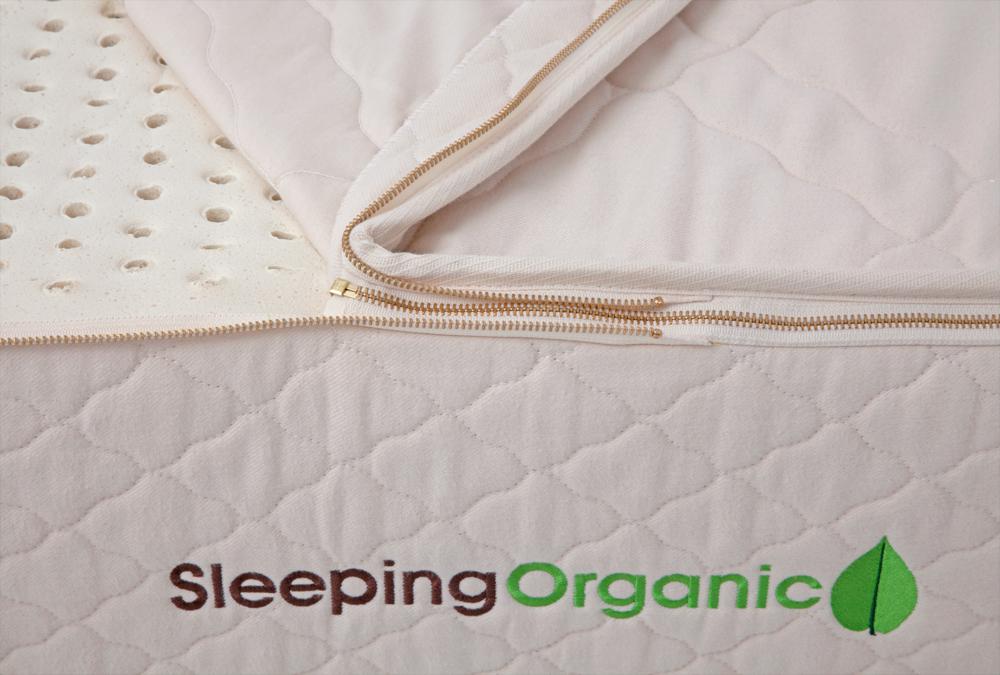
Both approaches mean your natural latex mattress contains zero adhesives. The latex layers are held in place by the organic cotton and wool casing, not by chemical bonding. Read more about our custom latex mattress approach.
Before committing to a Cal King, make sure it is the right size for your situation:
| Feature | California King (72″ x 84″) | Standard King (76″ x 80″) |
|---|---|---|
| Width | 72 inches | 76 inches |
| Length | 84 inches | 80 inches |
| Best for | Taller sleepers (6’2″ and above) | Couples wanting maximum width |
| Bedding availability | Less common, often special order | Widely available |
| Latex glue risk | High (most manufacturers glue) | Moderate (some manufacturers glue) |
The Cal King’s extra 4 inches of length comes at the cost of 4 inches of width. If you are not over 6 feet tall, a standard King likely makes more sense and is easier to shop for. For more on King-size options, see our guide on the best King-size latex mattress.
When evaluating any California King latex mattress, ask these specific questions:
Standard latex production molds are approximately 38 inches wide. A California King is 72 inches wide, which exceeds what a single mold can produce. Most manufacturers solve this by making two 36-inch pieces and gluing them together side by side, creating a seam down the center of the mattress.
Many sleepers can, especially those who sleep in the center of the bed. The glue joint creates a firmer, less flexible strip compared to the surrounding latex. It may not be obvious on day one, but as the mattress breaks in, the difference between the glued and non-glued areas can become more noticeable.
It depends on the adhesive. Solvent-based adhesives can off-gas VOCs. Even water-based or “low-VOC” adhesives introduce synthetic chemicals into an otherwise natural product. If avoiding chemical exposure is a priority, which is why most people buy natural latex in the first place, a glue-free construction is the better choice.
Yes. California King is a less common size overall, and the manufacturing challenges with latex make it even more limited. Many companies that offer organic latex mattresses either do not offer Cal King at all or only offer glued versions. Look for manufacturers that specifically address how they handle the Cal King width.
A solid platform or slatted foundation with slats no more than 3 inches apart. The foundation must be exactly 72″ x 84″Cal King and standard King dimensions are not interchangeable. Our organic mattress foundation is available in California King dimensions.
If you and your partner prefer different firmness levels, a split Cal King is an excellent option. Each side is an independent piece of latex at your chosen firmness. Unlike a glued mattress where the split is a manufacturing shortcut, a split design is a deliberate feature that gives each sleeper a customized experience.