Have a saved cart?
Enter your email to restore it.

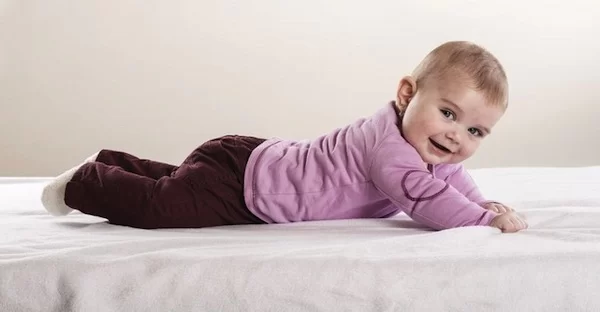
Most crib mattresses sold today are made from polyurethane foam wrapped in vinyl (PVC) covers. These materials are standard in the industry because they are inexpensive, waterproof, and easy to clean. They also contain chemicals that many parents would prefer their infant not sleep on for 10-14 hours every day.
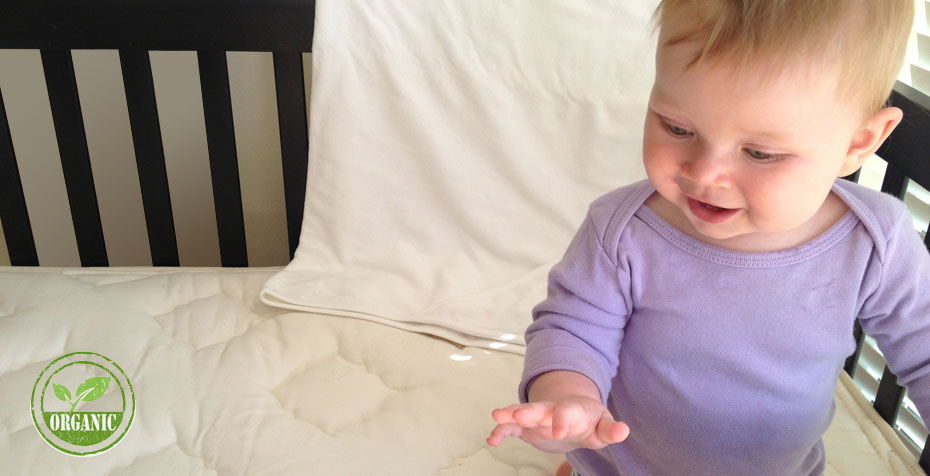
Understanding what is in a conventional crib mattress, and what the alternatives are, helps parents make an informed decision about their baby’s sleep environment.
The core of most crib mattresses is polyurethane foam, a petroleum-based synthetic material. Polyurethane foam off-gasses volatile organic compounds (VOCs) including toluene, benzene, and formaldehyde. These emissions are highest when the mattress is new and decrease over time but do not stop entirely. The “new mattress smell” is the off-gassing of these compounds.
Vinyl covers are used because they are waterproof and wipeable, practical features for a crib mattress. However, PVC manufacturing involves phthalates (plasticizers that keep vinyl flexible) and can release chlorine-based compounds. Phthalates are endocrine disruptors that interfere with hormone function and are of particular concern for infants whose systems are still developing.
All mattresses sold in the U.S. must meet federal flammability standards. Conventional crib mattresses typically achieve compliance through chemical flame retardants applied to the foam or fabric. These chemicals, including various brominated and chlorinated compounds, have been associated with endocrine disruption, developmental concerns, and other health effects in research studies. For more on this topic, see our article on mattresses and fire retardants.
An organic latex crib mattress replaces every problematic component in a conventional crib mattress with a certified organic alternative:
The result is a crib mattress that meets all safety and firmness requirements while eliminating the chemical exposures present in conventional options. Organic latex is naturally firm, an important characteristic for safe infant sleep, and does not develop body impressions that could create suffocation hazards.
For full details on these certifications, visit our organic mattress certifications page.
Sudden Infant Death Syndrome (SIDS) is the leading cause of death in infants between one month and one year of age. The causes of SIDS are not fully understood, and no single factor has been identified as the definitive cause.
The American Academy of Pediatrics (AAP) recommends the following evidence-based safe sleep practices, which have been shown to significantly reduce SIDS risk:
These practices are the foundation of SIDS prevention and should be followed regardless of what type of crib mattress you use.
Some researchers have investigated potential links between chemical exposures in the sleep environment and infant health outcomes. Studies have examined:
It is important to be clear: these findings show correlation and potential mechanisms, not proven causation. The scientific community has not established a definitive causal link between crib mattress chemicals and SIDS. Parents should not rely on mattress choice alone as a SIDS prevention strategy.
While the research is not conclusive, many parents and pediatric health professionals apply the precautionary principle: when a potential risk can be reduced without downside, it makes sense to do so. Choosing an organic crib mattress eliminates chemical exposures that have raised concern in research, while still meeting all firmness and safety requirements for infant sleep.
This is not a substitute for safe sleep practices. It is an additional step that addresses a different dimension of the sleep environment. Both matter.
If you choose to go the organic route, verify the following:
For more on how chemicals in mattresses affect air quality, see our article on latex mattress off-gassing.
Safe sleep practices, back sleeping, firm surface, clear crib, are the most important steps you can take to reduce SIDS risk. These are supported by decades of research and strong scientific consensus.
Choosing an organic crib mattress addresses a different concern: reducing your infant’s daily exposure to petroleum-based chemicals, VOCs, and flame retardants during the 10-14 hours they spend sleeping. Whether this also reduces SIDS risk is not established by current research, but it eliminates chemical exposures that have independently raised health concerns in scientific literature.
Both decisions, following safe sleep practices and choosing non-toxic materials, work together to create the safest possible sleep environment for your baby.
There is no established causal link between conventional crib mattress materials and SIDS. Some research has explored potential connections between chemical exposures in the sleep environment and infant health, but these findings show correlation and possible mechanisms, not proven causation. Safe sleep practices (back sleeping, firm surface, clear crib) remain the evidence-based approach to SIDS prevention.
Yes. Natural latex is naturally firm, which is one of the reasons it works well for infant mattresses. A properly made organic latex crib mattress meets CPSC firmness standards. The latex maintains its firmness over time and does not develop body impressions, which is a safety advantage over polyurethane foam that can soften and conform with use.
Conventional crib mattresses typically contain polyurethane foam (which off-gasses VOCs including toluene and formaldehyde), vinyl/PVC covers (containing phthalate plasticizers), and chemical flame retardants (brominated or chlorinated compounds). These materials are standard in the industry due to their low cost and functional properties.
An organic crib mattress costs more upfront, typically $200-$500 compared to $50-$150 for conventional, but eliminates your infant’s exposure to polyurethane foam off-gassing, chemical flame retardants, vinyl phthalates, and adhesive chemicals during the 10-14 hours per day they spend sleeping. Many parents consider this a worthwhile investment given that infants are particularly vulnerable to chemical exposures.
Proposed by Barry Richardson and later promoted by T.J. Sprott, this hypothesis suggests that common fungi in mattresses can convert flame retardants and other chemicals (containing arsenic, antimony, and phosphorus) into toxic nerve gases. The hypothesis remains controversial, some studies have found supporting evidence while others have not been able to replicate the findings. It has not been accepted as an established cause of SIDS by mainstream medical organizations.
The American Academy of Pediatrics recommends: always place infants on their back to sleep, use a firm and flat sleep surface, keep the crib free of blankets, pillows, bumpers, and stuffed animals, room-share without bed-sharing for at least six months, avoid overheating, and offer a pacifier at sleep time. These practices should be followed with any crib mattress, organic or conventional.
Explore our natural latex mattress, the same materials and construction, available in all standard and crib sizes.