Have a saved cart?
Enter your email to restore it.

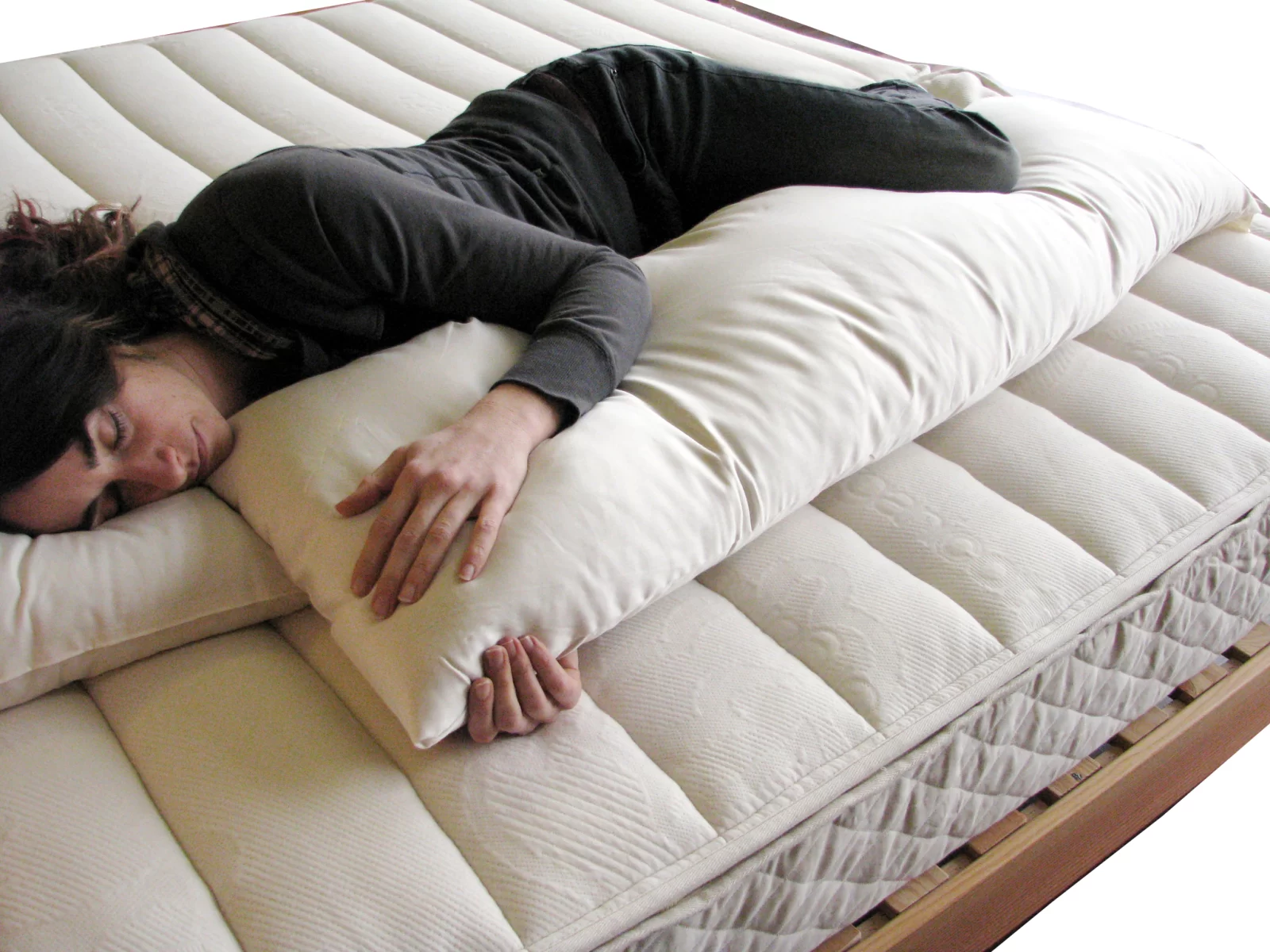
If you sleep on your side and wake up with shoulder pain, stiffness, or numbness, your mattress is almost certainly part of the problem. Side sleeper shoulder pain is one of the most common sleep complaints, and it almost always comes down to one thing: a mattress that does not allow the shoulder joint to sink in far enough. When the shoulder is pushed upward by a surface that is too firm, the rotator cuff structures are compressed for hours, causing inflammation, pain, and restricted mobility by morning.
The right natural latex mattress eliminates this by allowing proper shoulder depression while maintaining full spinal alignment. Here is how to get the configuration right.

When you lie on your side, your body weight concentrates on two narrow contact points, the shoulder and the hip. On a firm mattress, the shoulder cannot sink into the surface. Instead, it gets pushed upward toward your ear, compressing the tendons, bursae, and muscles of the rotator cuff. Maintain that position for 6-8 hours, and you wake up with pain that ranges from mild stiffness to sharp discomfort.
The underlying issue is not side sleeping itself. It is the mattress surface. Side sleeping is actually beneficial for digestion, breathing, and spinal alignment when done on the right surface. The shoulder just needs room to sink in.
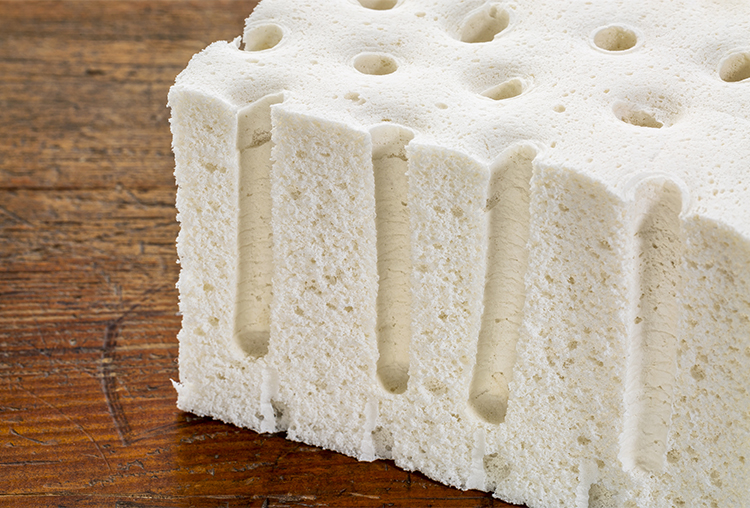
Natural latex is responsive, it compresses proportionally to the pressure applied to it. Heavier body parts like the shoulder and hip sink deeper, while lighter areas like the waist receive firmer support. This creates a natural contour that lets the shoulder joint rest in a neutral position instead of being compressed upward.
Unlike memory foam, which slowly conforms and can leave you feeling trapped, latex responds instantly. When you shift positions during the night, the latex rebounds immediately, providing consistent support in every position without creating temporary craters that misalign your spine.
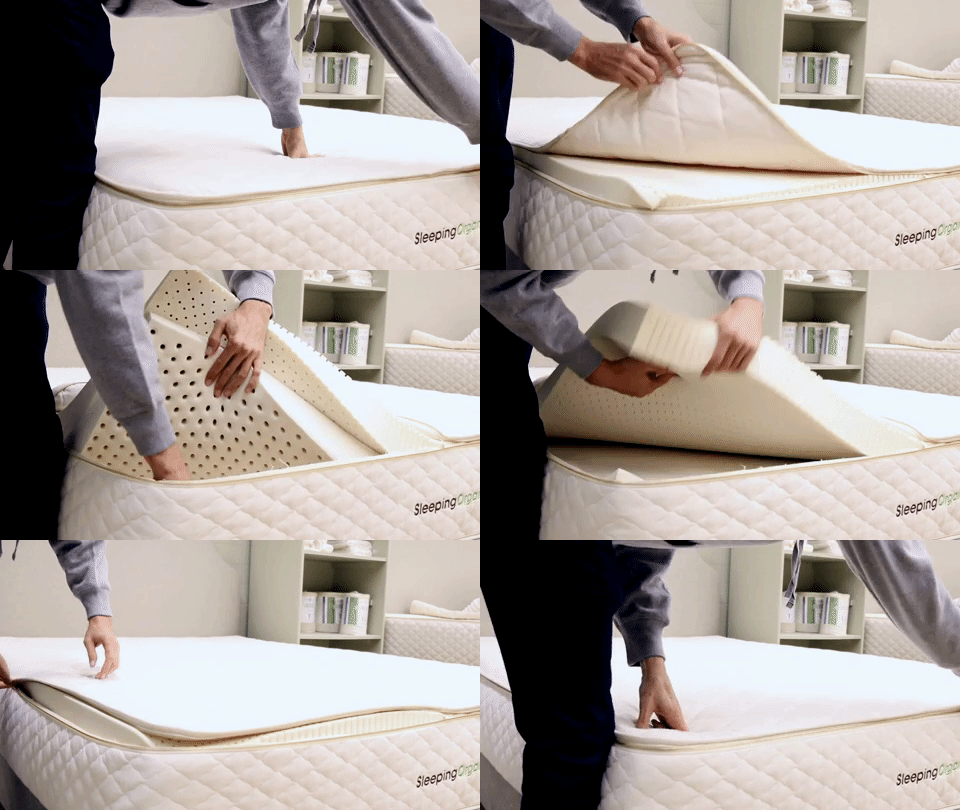
The comfort layer, the top layer of the mattress, is what determines whether your shoulder can sink in properly. For side sleepers dealing with shoulder pain:
The support layers beneath should always be firm to maintain spinal alignment. The goal is a soft enough surface for the shoulder to sink into without the entire body sinking too deep.
Your pillow is as important as your mattress for preventing shoulder pain. A side sleeper’s pillow needs to fill the gap between the ear and the mattress surface, keeping the neck in a straight line with the spine. Too flat, and the neck droops. Too thick, and the neck bends upward.
A natural shredded latex pillow is ideal because the fill is adjustable. You add or remove shredded latex until the pillow height matches your shoulder width exactly. This level of customization is impossible with solid foam or fiber-fill pillows.
Firm mattresses are the primary cause of side sleeper shoulder pain. They provide good back support but do not allow the shoulder or hip to sink in, creating concentrated pressure on joints. Avoid firm mattresses if you are a dedicated side sleeper with shoulder issues.
This is the sweet spot for most side sleepers. Enough give for shoulder and hip depression, enough support to prevent spinal sagging. A layered latex mattress lets you achieve this exact balance.
Ultra-soft surfaces can feel comfortable initially but may allow excessive sinking that misaligns the spine and creates different pain points. Side sleepers need softness at the surface with firm support underneath, not a uniformly soft mattress.
If shoulder pain persists after switching to a properly configured mattress and pillow, consult a healthcare provider. Chronic shoulder pain can indicate conditions like rotator cuff injury, frozen shoulder, or bursitis that require medical treatment. A sleep study may also be recommended if your shoulder pain is accompanied by other sleep disruption symptoms.
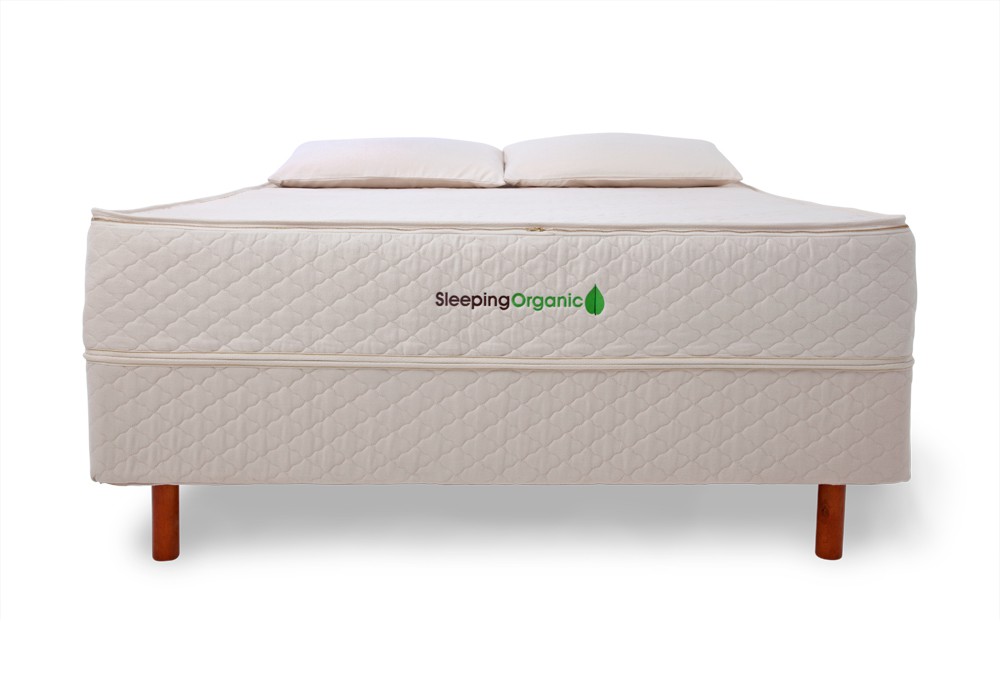
Place your mattress on a proper organic mattress foundation to ensure the latex performs as designed, an unsupportive base can undermine even the best mattress configuration.
Yes, but only when the mattress does not allow the shoulder to sink in properly. On a surface that is too firm, the shoulder joint is pushed upward and compressed for hours, causing inflammation and pain. On the right mattress, one with a soft enough comfort layer, side sleeping should not cause shoulder pain.
A medium to medium-soft comfort layer on top of a firm support base. This allows the shoulder to sink in and decompress while the firm base maintains overall spinal alignment. In a layered latex mattress. This means soft Talalay or medium Dunlop on top, firm Dunlop on the bottom.
Not necessarily. Side sleeping has numerous health benefits including reduced snoring, better digestion, and improved circulation. Before changing your sleep position, try changing your mattress and pillow. Most side sleeper shoulder pain is caused by the sleep surface, not the sleep position itself.
Two changes make the biggest difference: switch to a mattress with a softer comfort layer that lets the shoulder sink in, and use a pillow with the right loft to keep the neck aligned with the spine. A shredded latex pillow with adjustable fill lets you dial in the exact height your neck needs.
Keep your arms in front of your body at roughly chest level, or rest the top arm on your hip. Avoid tucking your bottom arm under the pillow, which elevates and compresses the shoulder joint. If you find your arms going numb, your mattress may be too firm and not allowing enough shoulder depression.
For most side sleepers, yes. Latex responds instantly to pressure and provides consistent support as you move during the night. Memory foam slowly conforms and is slow to recover, which can leave you stuck in positions that compress the shoulder. Latex also sleeps significantly cooler, which matters since inflammation and heat make shoulder pain worse.