Have a saved cart?
Enter your email to restore it.

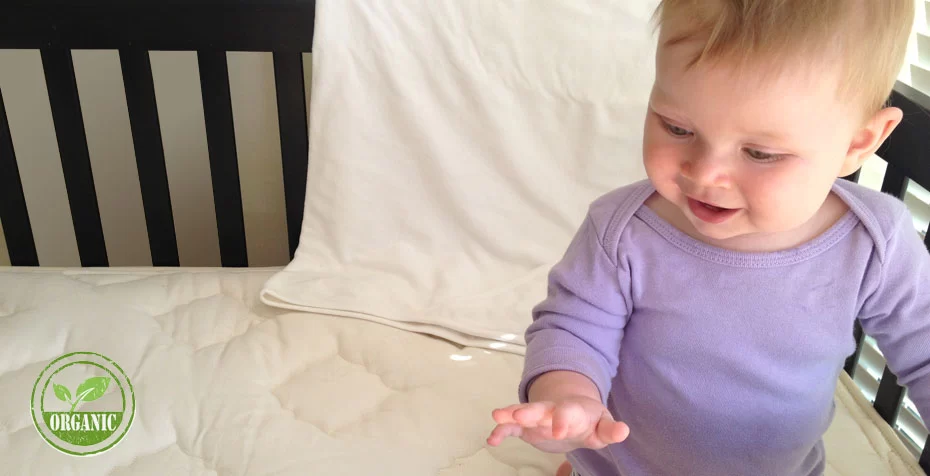
Choosing a crib mattress is one of the most important health decisions parents make for their newborn. Babies spend 12 to 17 hours a day sleeping, their respiratory systems are still developing, and they breathe in much higher concentrations of surface-level chemical emissions relative to their body weight. The difference between a conventional crib mattress and an organic latex crib mattress comes down to what your baby is breathing and absorbing during all those hours of sleep.
Most conventional crib mattresses are made from polyurethane foam or polyester fiber fill, wrapped in a vinyl (PVC) or polyethylene waterproof cover. These materials are inexpensive to manufacture but come with significant chemical concerns:
Polyvinyl Chloride (PVC) is considered one of the most toxic plastics by the FDA and the Consumer Product Safety Commission. Phthalates, which make up roughly 30% of PVC, are plasticizers that are not chemically bound to the plastic and leach out over time. DEHP is the most common phthalate found in crib mattress covers. These chemicals are known endocrine disruptors and have been banned in many consumer products across Europe.
Because polyurethane foam is extremely flammable, conventional crib mattresses must be treated with chemical flame retardants to meet federal flammability standards. Common retardants like pentaBDE are not bound to the foam and leach into the air through off-gassing. PentaBDE has been linked to hyperactivity and neurobehavioral changes in children and has been banned in California and throughout Europe.
Polyurethane foam is the primary filling in most conventional crib mattresses. It off-gasses volatile organic compounds (VOCs), traps heat and moisture, and creates an environment that attracts dust mites and allergens. It also degrades and compresses relatively quickly, losing its support within a few years.
Conventional mattresses are often pre-treated with formaldehyde-emitting stain and water repellents. Additional chemical additives include organotin compounds and various adhesives. These chemicals off-gas into the air your baby breathes throughout the night.
Children are far more vulnerable to chemical exposure than adults, especially during the first few years of brain development and physical growth. Studies show a strong correlation between neurotoxic chemicals found in conventional bedding and conditions including:
Considering how many hours infants spend on their crib mattress each day, choosing one that does not contain harmful chemicals is one of the most impactful health decisions parents can make.
An organic latex crib mattress contains just three ingredients: organic latex, organic cotton, and organic wool. Each material is organically grown and processed without synthetic pesticides, chemical flame retardants, or harsh manufacturing chemicals.
The core of an organic latex crib mattress is typically 6 inches thick, made with two 3-inch layers of Dunlop latex. Dunlop is recommended over Talalay latex for crib mattresses because it provides a firmer, denser sleeping surface appropriate for infants. Dunlop latex can also be GOLS-certified organic, which Talalay currently cannot.
A medium-over-firm layer configuration provides the ideal balance of gentle cushioning on top with firm support underneath, which pediatric guidelines recommend for safe infant sleep.
Instead of chemical flame retardants, organic latex crib mattresses use a tightly woven layer of organic wool to meet federal 16 CFR Part 1633 flammability standards. Wool is naturally flame-resistant due to its keratin protein structure and natural lanolin coating. It smolders rather than burns, and self-extinguishes when the flame source is removed.
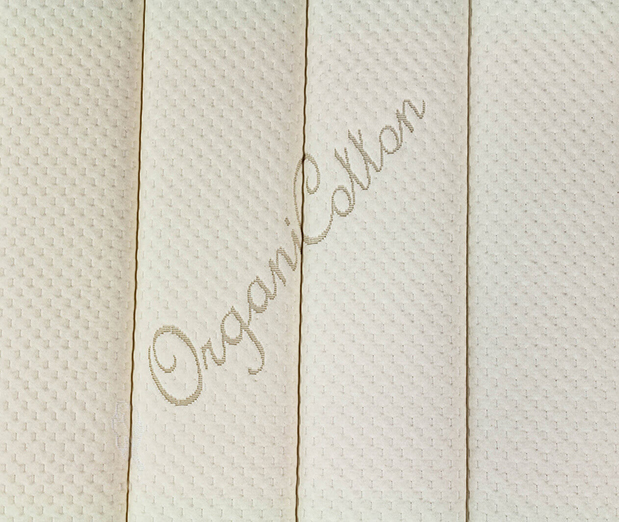
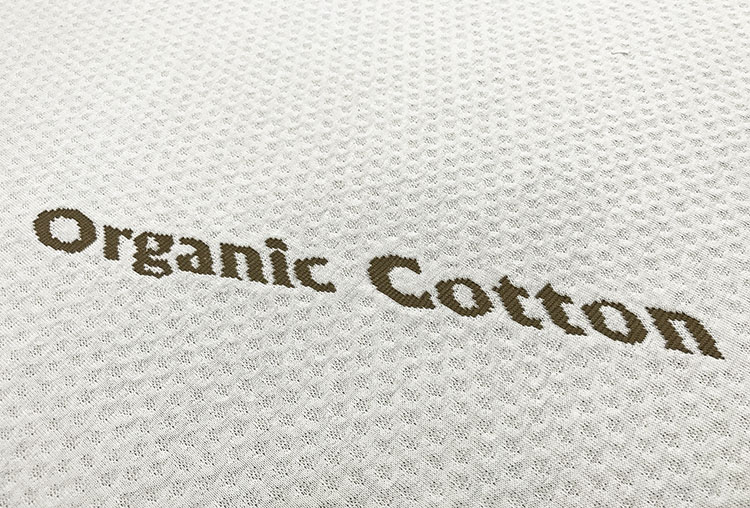
The outer cover is made from organic cotton, grown without pesticides, bleach, or synthetic dyes. Most organic latex crib mattresses feature a zip-off cover, making it easy to inspect the latex layers inside and clean the cover as needed.
Zero polyurethane foam, zero chemical flame retardants, zero PVC, zero phthalates, zero formaldehyde. Your baby sleeps on certified organic materials and nothing else. This is the single biggest advantage of an organic latex crib mattress.
Dunlop latex provides the flat, firm sleeping surface that pediatricians recommend for safe infant sleep. Unlike memory foam, which conforms and sinks under body weight, latex provides responsive support that keeps the baby on top of the mattress rather than sinking into it.
Organic latex, wool, and cotton are all naturally resistant to dust mites, mold, mildew, and bacteria. This is particularly important for babies who may be developing sensitivities, and for families with a history of allergies or asthma.
Organic wool regulates temperature by wicking moisture away from the body. This helps keep your baby comfortable throughout the night without overheating, which is especially important since overheating is a known risk factor in SIDS.
An organic latex crib mattress can last through multiple children. The latex core does not compress or break down like polyurethane foam, and the organic cotton cover can be removed and washed. This durability makes it a better long-term value despite the higher upfront cost.
When shopping for an organic latex crib mattress, these third-party certifications verify that the materials meet genuine organic standards:
GOLS concerns organic latex, while OEKO-TEX STANDARD 100 addresses harmful substance testing of covered textiles. Each document has a specific scope; see our materials and certifications page.
Many parents want a waterproof crib mattress, but the plastic waterproof covers used on conventional crib mattresses are part of the problem. PVC and polyethylene covers trap heat, create a sweaty sleep surface, and can off-gas chemicals.
Instead, consider using a wool puddle pad, such as the puddle pad from Holy Lamb Organics. Wool naturally repels moisture while remaining breathable, providing protection without the chemicals associated with plastic covers. Avoid waterproof coatings or covers made from any plastic material, even those marketed as “food grade.”
While Sleeping Organic does not currently manufacture crib mattresses, we recommend the organic cotton, wool, and latex crib mattress from Avocado. It uses GOLS-certified organic Dunlop latex, organic cotton and wool, and no waterproof coating on the cover. It checks all the boxes for a safe, non-toxic infant sleeping surface.
If you are exploring the world of organic and natural latex for the first time, starting with a natural shredded latex pillow for yourself is a great way to experience the material. When you are ready, a natural latex mattress for your own bed paired with a solid organic mattress foundation will give you the same chemical-free sleep you want for your baby.
Conventional crib mattresses commonly contain polyurethane foam, PVC waterproof covers, phthalates, chemical flame retardants, and formaldehyde. These chemicals off-gas and leach into the air your baby breathes. While individual exposure levels may fall within regulatory limits, the cumulative effect of multiple chemicals on a developing infant is a legitimate concern.
Dunlop latex is the recommended choice for crib mattresses. It is denser and firmer than Talalay latex, providing the flat, supportive surface pediatricians recommend for safe infant sleep. Dunlop latex can also be GOLS-certified organic, while Talalay currently cannot achieve organic certification.
Six inches is the standard thickness for an organic latex crib mattress. This typically consists of two 3-inch layers of Dunlop latex, usually in a medium-over-firm configuration for optimal support and comfort.
A plastic waterproof cover is not recommended because it introduces the same types of chemicals you are trying to avoid. Instead, use a wool puddle pad, which naturally repels moisture while remaining breathable and chemical-free.
An organic latex crib mattress can last through multiple children. The Dunlop latex core does not compress or break down like polyurethane foam, and the organic cotton cover is removable and washable. Most families get 8 to 10+ years of use from a quality organic crib mattress.
Considering that your baby spends more time on their crib mattress than any other surface, and that their developing systems are most vulnerable to chemical exposure, an organic crib mattress is one of the highest-value health investments parents can make. The long-term durability also means it can serve multiple children, further offsetting the higher upfront cost.