Have a saved cart?
Enter your email to restore it.

No, a latex mattress should not be used with a traditional box spring. Box springs were engineered for innerspring mattresses, and pairing one with latex creates an uneven, unsupported surface that can cause your mattress to sag prematurely, and may even void your warranty. If you already own a box spring, there are simple workarounds, but the better long-term move is a latex mattress foundation built for the job.

A box spring is a wooden frame filled with metal coils or a grid of springs. Its job is to work in sync with an innerspring mattress, the two spring systems absorb shock together and distribute weight as a unit. That relationship is specific. Latex is a completely different material with different structural needs.
Here’s what goes wrong when you put latex on a box spring:
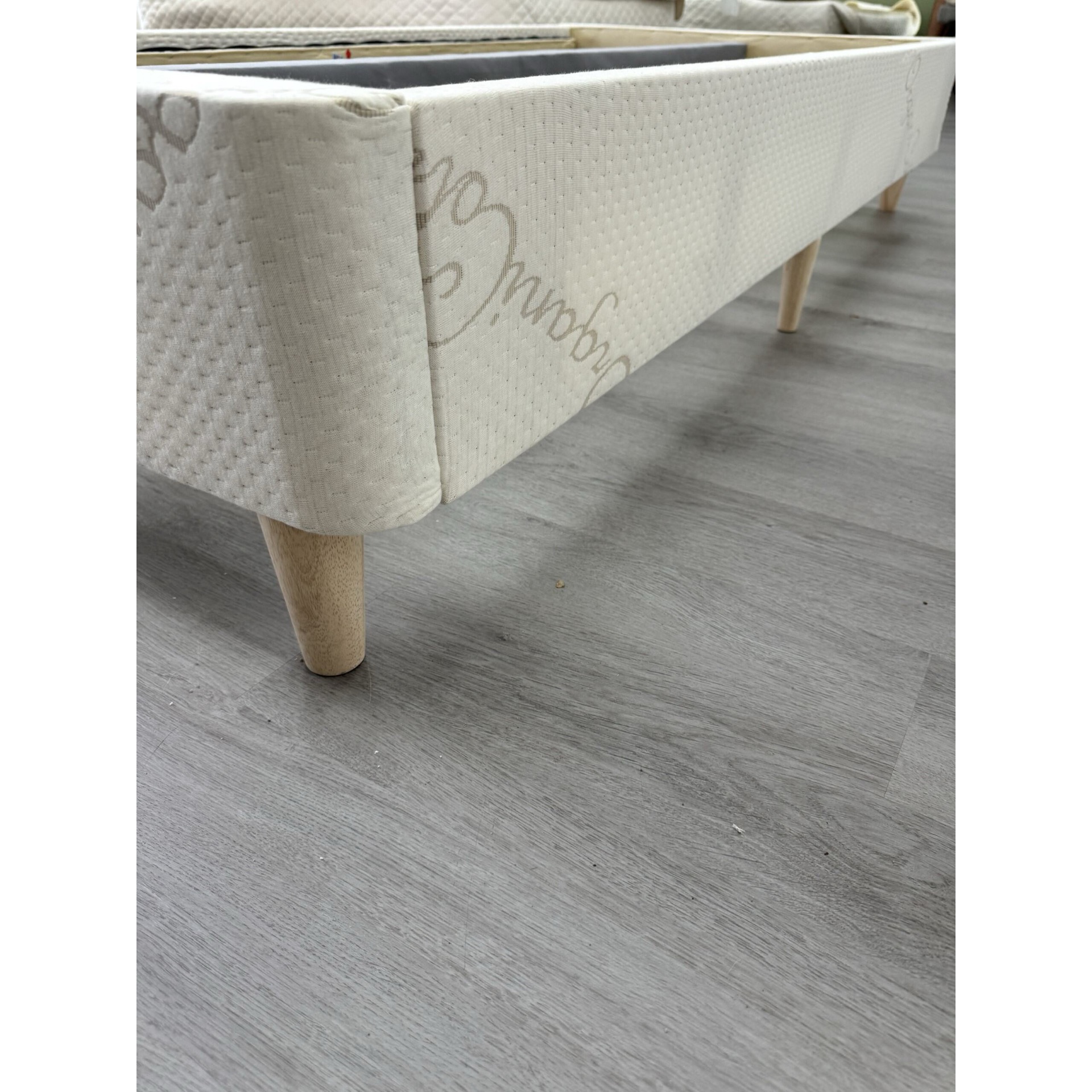
The good news is that the right foundation for a latex mattress is widely available and, in many cases, more affordable than a quality box spring. You have four solid options:
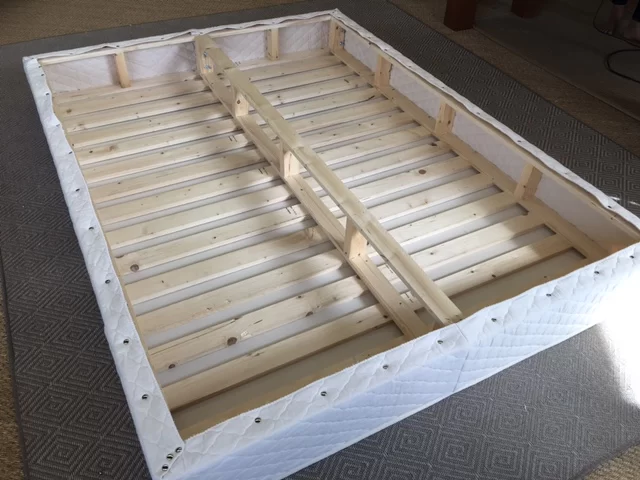
A solid wood foundation, sometimes called a wood box foundation, looks similar to a box spring but has a rigid, flat top deck instead of springs. It provides consistent support across the entire mattress surface, handles the weight of latex without shifting, and typically meets warranty requirements. Our latex mattress foundation is built specifically for this purpose.
Slatted platforms work well as long as the slats are no more than 3 inches apart. Wider gaps create the same unsupported-surface problem as a box spring. Slats should also be sturdy, thin, flexible slats that bow under weight won’t give latex the rigid push-back it needs. Solid hardwood slats are preferable to thin pine.
Many modern platform bed frames have a built-in solid or closely slatted surface that eliminates the need for any separate foundation. If you’re buying a new bed frame. This is often the most streamlined option, one piece of furniture handles everything. Check the slat spacing before purchasing.
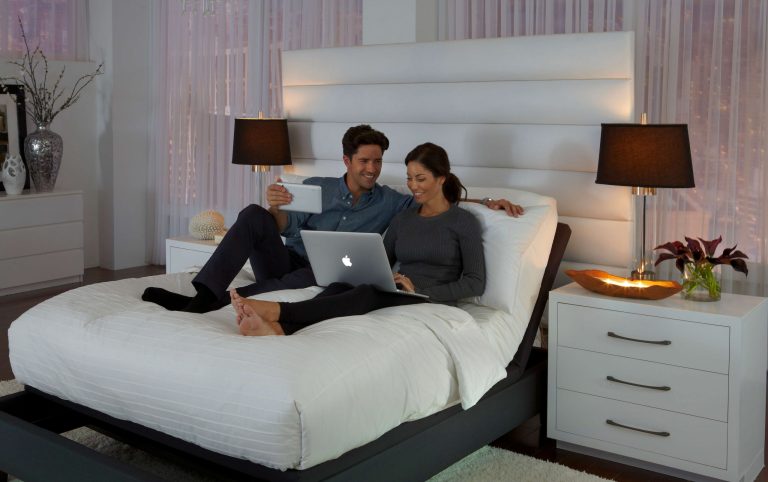
Natural latex is one of the few mattress materials that pairs well with an adjustable base. Because latex isn’t made with metal coils or springs, it can flex with the base without damaging its internal structure. If you want the head-up or zero-gravity position benefits. This is a viable path, see our guide to latex mattresses for adjustable bases for what to look for.
If you own a box spring and aren’t ready to replace it, you can make it work temporarily by placing a bunkie board or a sheet of 3/4-inch plywood on top of it. This creates a flat, firm surface over the springs and eliminates the uneven-support problem.
The trade-off: a solid board on top of a box spring blocks airflow from underneath the mattress. Latex breathes better than most foam, but ventilation from below still contributes to temperature regulation and moisture management. This setup works as a stopgap, not a permanent solution.
A bunkie board (typically 2 inches thick) is the cleaner version of this fix, it sits low and gives you a flat surface without adding as much height as a full sheet of plywood.
| Foundation Type | Recommended for Latex? | Notes |
|---|---|---|
| Traditional box spring | No | Uneven support, may void warranty |
| Solid wood foundation | Yes | Best all-around option |
| Slatted platform (slats ≤3″) | Yes | Slat spacing and sturdiness matter |
| Platform bed frame | Yes | Verify slat spacing or solid deck |
| Adjustable base | Yes | Latex handles flex well |
| Box spring + bunkie board | Acceptable short-term | Limits airflow, not ideal long-term |
| Box spring + plywood | Acceptable short-term | Same airflow limitation as bunkie board |
Yes, most latex mattresses do require some form of support underneath. A few things to keep in mind:
Floor sleeping: Placing a latex mattress directly on the floor is generally not recommended. It blocks airflow and can trap moisture between the mattress and the floor, which creates conditions for mold or mildew, especially in humid climates. Some manufacturers also consider floor use a warranty violation.
Existing metal frames with center support: A basic metal bed frame with slats or a center support bar may be sufficient for a latex mattress, provided the slats are close enough together. Without center support on a queen or king, you’ll likely see sag in the middle over time.
Weight capacity: Natural latex mattresses, particularly thicker all-latex models, can weigh 80 to 150 pounds or more. Your foundation needs to be rated for the combined weight of the mattress and sleepers without flexing or creaking.
For a complete breakdown of what works and what to look for, our guide to the best latex mattress foundations covers every option in detail.
Yes. This is an acceptable short-term solution. A sheet of 3/4-inch plywood or a bunkie board on top of a box spring creates the flat surface latex needs. The downside is reduced airflow underneath the mattress, which can affect temperature and moisture management over time. It works as a stopgap but isn’t the long-term ideal.
It depends on the manufacturer, but many latex mattress warranties require a solid or closely slatted foundation and explicitly exclude box springs. Read your warranty documentation before choosing a foundation, the support requirement is usually listed in the fine print.
Slats should be no more than 3 inches apart. Wider gaps leave sections of the mattress unsupported, which can cause the latex to sink into the gaps over time. The slats should also be rigid enough to not flex under load, thin, bendy slats defeat the purpose even when they’re closely spaced.
No. Platform beds are designed to be used without a box spring. If your platform bed has a solid surface or closely spaced slats (3 inches or less), it’s ready for a latex mattress as-is. Adding a box spring to a platform bed is unnecessary and typically makes the sleep surface too high and less stable.
Yes, natural latex handles the flexing motion of an adjustable base well. Unlike innerspring mattresses, latex has no metal coils to fatigue or misalign. The main thing to verify is that your latex mattress isn’t too thick for the base’s hinge range, and that the manufacturer approves adjustable base use. See our adjustable base guide for more.
Yes, but monitor moisture buildup. Without airflow underneath, humidity can accumulate between the mattress and floor. Periodically stand the mattress upright to air out, especially in humid environments.
A box spring has an internal spring or flexible slat system that provides a semi-flexible surface. A foundation is a rigid, flat platform, either solid or with closely spaced slats, that provides firm, consistent support. Latex mattresses need the foundation, not the box spring.
A bunkie board (a thin, solid platform) can be a quick fix for a bed frame with widely spaced slats or a wire grid. However, it may reduce airflow under the mattress. A properly slatted frame or purpose-built foundation is a better long-term solution.
A latex mattress needs a firm, flat, well-supported surface, and a traditional box spring provides none of those things reliably. A solid wood foundation, a slatted platform with slats no more than 3 inches apart, or a platform bed frame are the right choices. If you’re shopping for both a mattress and a foundation at once, our natural latex mattress paired with our organic mattress foundation is built to work together from the start, no compatibility guesswork required.