Have a saved cart?
Enter your email to restore it.


No. An organic latex mattress does not need a box spring, and in most cases, you should not use one. Box springs were designed for innerspring mattresses, they flex and absorb impact in a way that complements coil systems. Latex mattresses need a different kind of support: firm, flat, and evenly distributed. Here is what to use instead and why it matters.
A traditional box spring has a wooden frame with steel coils or flexible slats inside, topped by a fabric cover. It provides a semi-flexible surface that was engineered to work with innerspring mattresses. When you place a heavy, dense organic latex mattress on a box spring, two problems occur:
Organic latex is denser and heavier than conventional mattresses. A queen-size organic latex mattress can weigh 100-150 pounds. Box springs were not built to handle that weight without flexing, and the resulting uneven surface degrades the latex faster than a proper foundation would.
Using a box spring can also void your mattress warranty. Most organic latex mattress manufacturers specify the type of support base required, and box springs are typically excluded.
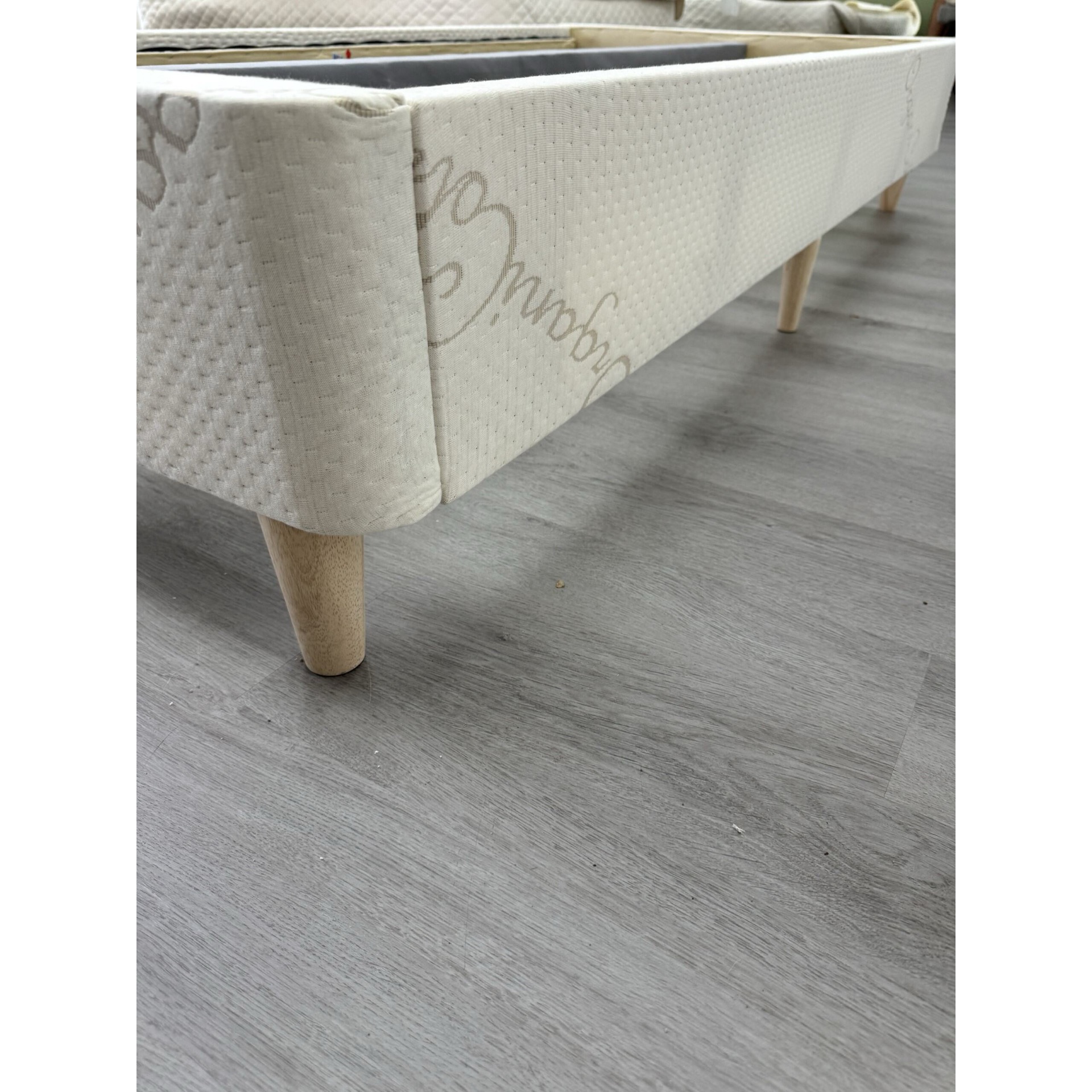
A latex mattress foundation provides a solid, flat surface specifically designed for latex mattresses. Unlike a box spring, a foundation does not flex or bounce, it delivers the rigid, consistent support that latex needs to perform properly.
Foundations are typically made with a solid wood frame and either a solid top or closely spaced slats (3 inches apart or less). They sit at the same height as a box spring, so your bed height does not change if you are replacing an old box spring with a foundation.
For an in-depth comparison of foundation options, see our guide to the best latex mattress foundations.
Platform beds have a built-in support surface, either a solid panel or closely spaced slats, and do not require any additional foundation. They sit lower to the ground than a traditional bed frame plus box spring, which some people prefer for aesthetic reasons.
If your platform bed uses slats, make sure they are no more than 3 inches apart and rigid (not flexible European-style bow slats). Wide gaps between slats let the latex sag between them, creating pressure points and uneven wear.
Organic latex mattresses work exceptionally well on adjustable bases. Latex is naturally flexible and returns to its original shape, so it handles the bending and articulation of an adjustable frame without damage. This is another area where latex outperforms innerspring and hybrid mattresses, which can stress at the hinge points.
When choosing an adjustable base, look for one with a solid support surface rather than a wire grid. The same principle applies: flat, firm, and evenly distributed support.
Yes. You can place an organic latex mattress directly on the floor. It works fine for support. However, there are two considerations: reduced airflow underneath the mattress can trap moisture (especially in humid climates), and getting in and out of a floor-level bed is harder for people with mobility issues.
If you go the floor route, periodically stand the mattress on its side to air it out and check for moisture buildup underneath.
A bunkie board is a thin, flat board (usually 1-3 inches thick) that sits on top of an existing bed frame or inside a bed frame to create a solid surface. It is a good solution if you have a bed frame designed for a box spring and want to convert it for use with a latex mattress without buying a new frame.
Place the bunkie board on the frame, then the mattress on top. This creates the firm, flat surface your latex mattress needs while using your existing furniture.
Regardless of which option you choose, your support base needs to meet these criteria:
A proper foundation paired with a custom organic latex mattress ensures the mattress performs as designed and lasts its full lifespan. For more detailed guidance, read our original post on whether a latex mattress needs a box spring. Complete your setup with a natural shredded latex pillow for fully organic bedding from head to toe.

Most likely, yes. Most organic latex mattress manufacturers require a solid, non-flexing support surface and specifically exclude box springs from their warranty coverage. Check your warranty terms before using any support base.
Yes, but monitor moisture buildup. Without airflow underneath, humidity can accumulate between the mattress and floor. Periodically stand the mattress upright to air out, especially in humid environments.
A box spring has an internal spring or flexible slat system that provides a semi-flexible surface. A foundation is a rigid, flat platform, either solid or with closely spaced slats, that provides firm, consistent support. Latex mattresses need the foundation, not the box spring.
Slats should be no more than 3 inches apart. Wider gaps allow the latex to sag between slats, creating uneven wear and an uncomfortable sleeping surface. Solid platform tops eliminate this concern entirely.
You need a firm, flat surface, but it does not have to be specifically marketed for latex. A solid platform bed, a quality foundation with closely spaced slats, an adjustable base, or even a bunkie board on an existing frame all work well.
Yes, and it is an excellent combination. Organic latex is naturally flexible and resilient, so it bends with the adjustable base without damage and returns to its original shape. It handles articulation better than innerspring or hybrid mattresses.