Have a saved cart?
Enter your email to restore it.

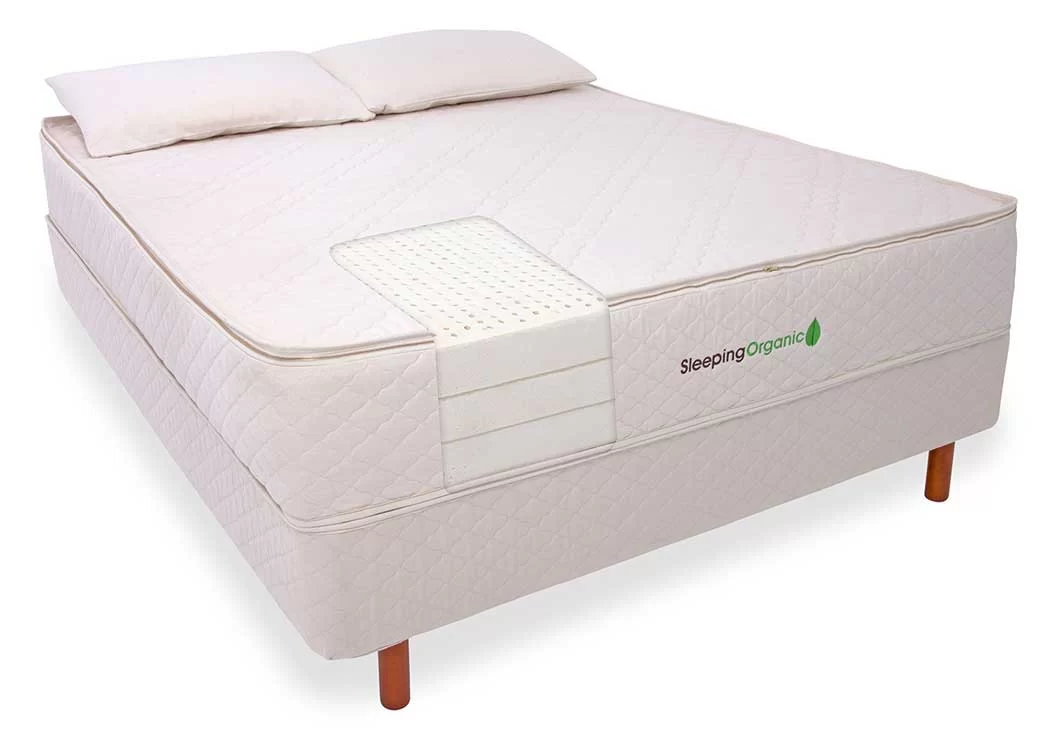
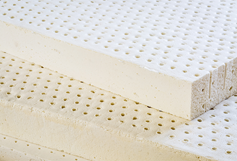
An organic latex mattress is built entirely from certified organic materials, GOLS-certified latex, organic cotton, organic wool, with no synthetic foams, chemical flame retardants, or petroleum-based components. It is not a marketing label. It is a specific standard verified by independent third-party certifications.

The term “organic” gets misused in the mattress industry. Understanding what it actually means, and what certifications to look for, protects you from spending thousands on a product that does not deliver what it promises.
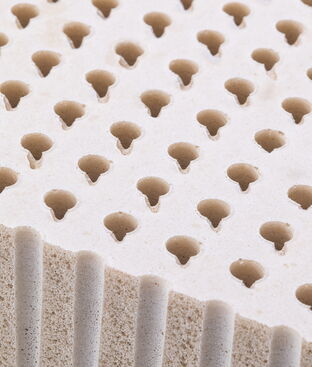
The core of an organic latex mattress is natural latex harvested from rubber trees (Hevea brasiliensis) grown on certified organic plantations. The Global Organic Latex Standard (GOLS) requires at least 95% certified organic raw material, with strict limits on chemical additives during processing. GOLS certification covers the entire supply chain from plantation to finished latex core.
Natural latex provides the mattress’s support and pressure relief. It is inherently responsive, durable, and temperature-neutral, properties that come from the material itself, not from chemical engineering.
The mattress casing is the fabric cover that holds the layers together. Check its cotton content, construction, and care instructions on the product page. A latex supplier certificate does not certify the casing.
In a well-built organic mattress, the cotton casing does more than just cover the latex. It provides breathability, helps regulate temperature, and holds the latex layers in position without the need for adhesives.
Wool serves as the natural fire barrier in an organic latex mattress. Federal law requires all mattresses sold in the United States to pass flammability testing (16 CFR 1633). Conventional mattresses meet this standard using chemical flame retardants. Organic mattresses use wool instead. It is naturally flame-resistant and does not require any chemical treatment to pass the test.
Wool also adds moisture-wicking properties and temperature regulation. It absorbs up to 30% of its weight in moisture without feeling damp, which helps keep the sleep surface dry and comfortable.
You spend roughly one-third of your life in direct contact with your mattress. Conventional mattresses contain polyurethane foam (a petroleum product), chemical flame retardants, synthetic adhesives, and various VOC-emitting materials. These substances off-gas continuously, and long-term low-level exposure is a legitimate concern. An organic latex mattress eliminates these chemical exposures entirely.
Natural latex outlasts every other mattress material. A quality organic latex mattress maintains its support and comfort for 20-25 years, roughly double the lifespan of a conventional mattress. This makes the higher upfront cost more reasonable when calculated per year of use.
Organic latex comes from renewable rubber tree plantations that sequester carbon. Organic cotton farming uses less water and no synthetic chemicals. Wool is a renewable fiber from humanely raised sheep. When the mattress eventually reaches end of life, its components are biodegradable. Contrast this with conventional mattresses that end up in landfills leaching petrochemicals.
The organic mattress market has a transparency problem. Here is what to verify before purchasing:
For a comprehensive overview of what each certification means, visit our organic mattress certifications page.
Genuine organic latex mattresses typically cost between $1,500 and $4,500 depending on size, thickness, and configuration. If you see an “organic latex mattress” priced well below $1,000, investigate carefully, the materials likely are not what they claim. Certified organic latex, organic cotton, and organic wool are premium materials with real costs.
That said, the per-year cost of an organic latex mattress is competitive with conventional alternatives. A $3,000 mattress lasting 20+ years costs $150 per year. A $1,000 conventional mattress replaced every 7-8 years costs $125-$143 per year, without the health, comfort, or environmental benefits.
Beyond materials, the firmness and construction of your organic latex mattress should match your sleep needs. Read our guide on how to choose the best latex mattress for detailed guidance on firmness selection based on body weight and sleep position.
Our natural latex mattress uses GOLS-certified organic latex, organic cotton, and wool, with zero adhesives, and lets you choose the exact firmness configuration that works for your body. Every mattress is built to order, nothing sits in a warehouse off-gassing before it reaches you.
For the complete sleep system, pair your mattress with a natural shredded latex pillow and an organic mattress foundation for a fully custom latex mattress setup built entirely from certified organic materials.
For organic latex, check the applicable GOLS supplier documentation. Review the cover and fire-barrier specifications separately, and distinguish component documentation from a finished-product certificate.
A quality organic latex mattress lasts 20-25 years with proper care and support. Natural latex is the most durable mattress material available. It maintains its elasticity and support characteristics far longer than polyurethane foam, memory foam, or innerspring systems.
When calculated per year of use, organic latex is competitive with conventional mattresses. A $3,000 organic mattress lasting 20 years costs $150 per year. You also get better sleep quality, zero chemical exposure, and a product that does not end up in a landfill leaching petrochemicals after 7 years.
Natural latex is 100% derived from rubber tree sap but may come from conventional farms that use synthetic pesticides and fertilizers. Organic latex is natural latex that has been certified by GOLS, grown on organic plantations with no synthetic chemical inputs, verified by third-party audits.
True latex allergies are uncommon and typically triggered by direct skin contact with raw latex proteins. The vulcanization process used to make mattress latex destroys most of these proteins. Additionally, the cotton and wool casing creates a barrier between the sleeper and the latex. People with Type I latex allergies should consult their allergist, but most people with latex sensitivity can sleep on a finished latex mattress without issues.
No. Natural latex has an open-cell structure that allows air to circulate through the material. Combined with the moisture-wicking properties of organic wool and the breathability of organic cotton, an organic latex mattress sleeps temperature-neutral to cool. This is a significant advantage over memory foam, which traps heat.