Have a saved cart?
Enter your email to restore it.

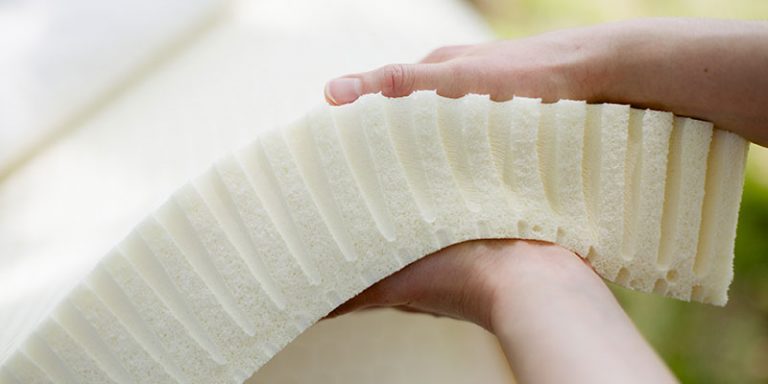
Latex mattresses do not have reinforced edges. This is an honest and important distinction from innerspring mattresses, which often use steel perimeter coils or foam encasements specifically designed to firm up the edges. If strong edge support is your top priority, you should know upfront that latex handles edges differently, and there are practical ways to maximize the edge support you do get.
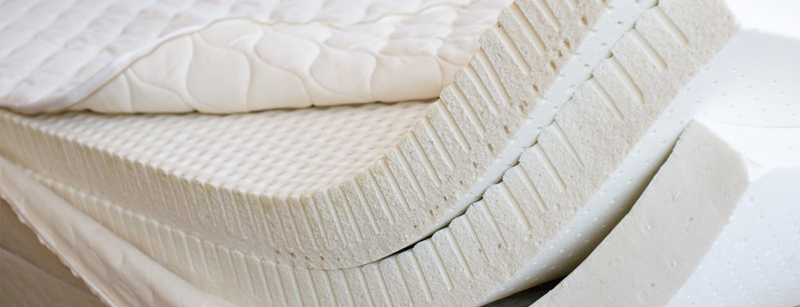
This guide explains how edge support works in latex mattresses, how it compares to other mattress types, what factors affect it, and specific steps you can take to get the best edge performance from a latex bed.
Edge support refers to how well a mattress maintains its structure and firmness at the perimeter. A mattress with strong edge support feels stable when you sit on the edge, sleep near the edge, or use the edge to push yourself up to a standing position.
Edge support affects three things:
| Mattress Type | Edge Support | Why |
|---|---|---|
| Innerspring (quality models) | Best | Reinforced perimeter coils or foam encasement specifically designed for edge stability |
| Hybrid (coils + foam) | Very good | Coil base provides structural edge support; foam comfort layer on top |
| Latex (firm configuration) | Good | Dense Dunlop base provides solid support; no reinforced edge but firm latex resists compression |
| Latex (soft configuration) | Moderate | Softer latex compresses more under body weight, including at the edges |
| Memory Foam | Moderate to poor | Foam conforms and compresses; softens with body heat, making edges even less stable |
Latex falls in the middle of the pack. It does not match a well-built innerspring for edge support, but it performs better than most memory foam mattresses, especially in firmer configurations. For a detailed comparison with innerspring, read our guide on latex mattresses vs. innerspring mattresses.
The single biggest factor in latex edge support is the firmness and density of the bottom layer. A Firm 37–40 or X-Firm 44 Dunlop base layer resists compression throughout the entire mattress, including the edges. This dense base acts as a stable platform that limits how much the upper comfort layers can compress at the perimeter.
If edge support matters to you, prioritize a firm Dunlop base regardless of what firmness you choose for the top comfort layer.
Softer mattresses have weaker edge support across the board. When all layers are soft. There is less material resistance at the edges to prevent compression. A Medium-to-Firm overall configuration provides noticeably better edge stability than a soft setup.
Taller mattresses with more layers generally provide better edge support. A 4-layer mattress (like the Tree at 13″) has more total material depth to resist compression at the edges compared to a 2-layer mattress (like the Sapling at 9″). The additional layers create a thicker support structure that is harder to compress through, even at the perimeter.
The foundation plays a critical role in edge support. If the mattress extends beyond the foundation edge (overhang) or if the foundation itself is weak at its perimeter, the mattress edges will feel unsupported regardless of the latex configuration.
A solid wood foundation that extends fully to the mattress edges, or slightly beyond, provides the best edge support. Slatted foundations work well if the slats extend to the full width of the frame. Our Organic Mattress Foundation is designed to provide full-surface support right to the edges.
On a larger mattress (king or California king), edge support becomes less of an issue for sleeping because there is more total surface area. You naturally sleep further from the edge on a king than on a queen or full. Edge support for sitting still matters at any size, but the practical impact on sleep quality diminishes with a larger mattress.
If edge support is a priority, follow these guidelines when configuring your mattress:
Latex mattresses do not win on edge support, that distinction belongs to quality innerspring mattresses with reinforced perimeters. This is a real tradeoff, and it is worth acknowledging.
What latex gives you in exchange is substantial: superior durability (15-25 years vs. 5-8 for innerspring), customizable firmness, non-toxic materials, natural hypoallergenic properties, better pressure relief, and a modular design that lets you replace individual layers. For most sleepers, these advantages far outweigh the edge support difference.
If you spend significant time sitting on the edge of your bed, getting dressed, putting on shoes, using it as a seat, and edge stability is a firm requirement, a Medium-to-Firm latex configuration with a dense Dunlop base will provide edge support that is good (not the best, but solidly functional). For a full assessment of strengths and tradeoffs, read our latex mattress pros and cons guide.
Our Natural Latex Mattress lets you select the firmness of each layer, so you can prioritize a firm Dunlop base for maximum edge support while still choosing a comfortable top layer. Available as the Sapling (9″, 2 layers), Sprout (10″, 3 layers), and Tree (13″, 4 layers).
Latex mattresses have moderate to good edge support depending on the configuration. Firmer setups with a dense Dunlop base layer provide solid edge stability. However, latex does not have reinforced edges like innerspring mattresses, so it will not match the edge support of a quality coil-based bed.
Latex generally provides better edge support than memory foam. Memory foam compresses and softens with body heat, making its edges less stable over time. Latex maintains consistent firmness regardless of temperature, so its edges stay more supportive.
Yes. If your mattress has a zippered cover with unglued layers, you can swap the base layer for a firmer Dunlop option. Making sure your foundation fully supports the mattress to the edges also helps. A firm mattress topper can add additional surface resistance.
Practically, yes. On a king-size mattress, you sleep further from the edges than on a queen or full. This means edge support matters less for sleep comfort on a larger mattress, even though the edge performance itself is similar across sizes.
A taller mattress (3-4 layers) with a Firm or X-Firm Dunlop base layer and a Medium-to-Firm overall configuration will provide the best edge support. The Tree (13″, 4 layers) with a firm Dunlop base offers the most edge stability of any latex configuration.
For most sleepers, no. The edge support on a Medium-to-Firm latex mattress is functional and adequate for normal use, sleeping near the edge, sitting briefly, getting in and out of bed. It only becomes a significant concern if you routinely sit on the mattress edge for extended periods or if you have mobility challenges that require a very firm perimeter for standing support. In those specific cases, an innerspring hybrid may be a better fit.
For more information on choosing the right foundation to support your mattress, read our guide on the best latex mattress foundations.