Have a saved cart?
Enter your email to restore it.

If you’ve ever unwrapped a new memory foam mattress and been hit with a strong chemical smell, that’s off-gassing. It’s not just a “new mattress smell” that fades harmlessly. It’s the release of volatile organic compounds (VOCs) from synthetic materials breaking down at room temperature.

Memory foam mattress off-gassing is one of the most common complaints new mattress owners have. Understanding what’s causing it, how long it lasts, and whether it’s harmful puts you in a better position to decide what to do about it.
Memory foam is polyurethane, a petroleum-based synthetic polymer. Manufacturing polyurethane foam requires a cocktail of chemicals: diisocyanates, polyols, blowing agents, and various catalysts. Not all of these chemicals fully react during production. The leftover unreacted compounds are what you smell when you open the package.
Several specific sources contribute to off-gassing in memory foam mattresses:
The compressed shipping method used by bed-in-a-box brands makes things worse. Compressing the foam traps these gases inside. When you unroll the mattress, they release all at once in a concentrated burst.
Common VOCs found in memory foam off-gassing include:
The concentrations are typically low, and the mattress industry points to this as evidence of safety. But “low concentration” doesn’t mean zero risk, especially when you’re breathing these compounds for eight hours every night, inches from the source, in an enclosed bedroom.
The strong initial smell usually diminishes within a few days to a few weeks. Most manufacturers recommend airing out a new memory foam mattress in a well-ventilated room for 24 to 72 hours before sleeping on it.
But here’s what they don’t tell you: the visible off-gassing (the smell) fading doesn’t mean the chemical release has stopped. Studies have detected VOC emissions from polyurethane foam products for months and even years after initial unboxing, just at levels below what your nose can detect.
You stop smelling it. That doesn’t mean it stops happening.
Short-term exposure to memory foam off-gassing can cause:
People with asthma, chemical sensitivities, or compromised immune systems often report more severe reactions. Children and infants are potentially more vulnerable due to higher respiration rates relative to body weight and developing respiratory systems.
Long-term effects of chronic low-level VOC exposure are still being studied. The precautionary position is straightforward: if you can avoid sleeping on a material that releases chemicals into your breathing space, why wouldn’t you?
For more on the specific chemicals involved, read our guide on whether latex mattresses off-gas.
Many memory foam brands advertise CertiPUR-US certification as proof their mattress is safe. Here’s what that certification actually means: the foam was tested and found to have emissions below certain thresholds. It doesn’t mean zero emissions. It doesn’t mean no chemicals. It means the levels fall under limits set by a foam industry trade group.
CertiPUR-US was created by the polyurethane foam industry. It sets a baseline, not a high bar. A CertiPUR-US certified foam mattress still off-gasses, just within the limits the industry established for itself.
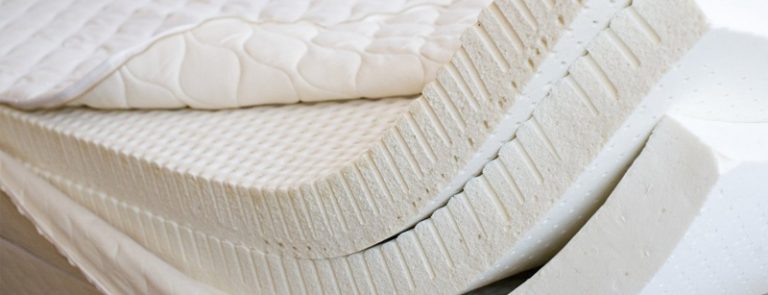
Natural latex is harvested from rubber trees. It doesn’t require petroleum-based chemicals to manufacture, doesn’t use chemical adhesives between layers, and doesn’t need chemical flame retardants when paired with natural wool.
The result: no off-gassing. A new natural latex mattress may have a mild, faintly rubbery smell that dissipates within a day or two. That’s the natural scent of rubber, not volatile organic compounds breaking down.
The differences between the two materials go beyond smell. For a full comparison, read our breakdown of latex mattresses vs. memory foam mattresses.
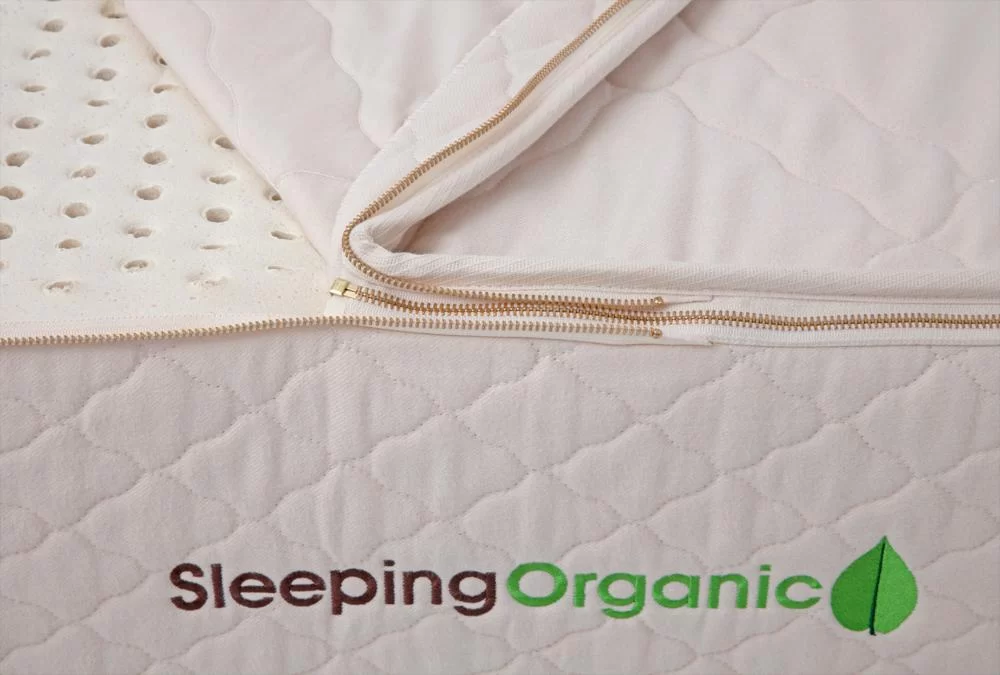
A natural latex mattress from Sleeping Organic uses GOLS-certified organic latex, an organic cotton cover, and natural wool fire barrier. No polyurethane. No chemical flame retardants. No adhesives between layers. Nothing to off-gas.
If you already own a memory foam mattress and the off-gassing is bothering you:
Ultimately, you can manage off-gassing symptoms, but you can’t eliminate them. The chemicals are part of the material. The only way to fully avoid memory foam off-gassing is to sleep on something that isn’t memory foam.
Short-term exposure causes headaches, respiratory irritation, and nausea in many people. Long-term health effects of chronic low-level VOC exposure are still being studied. People with asthma, chemical sensitivities, and young children may be more vulnerable.
The strong initial smell typically fades within a few days to a few weeks. However, research shows that polyurethane foam continues releasing VOCs at lower, undetectable levels for months to years after purchase.
Yes. All polyurethane-based foam products release VOCs. CertiPUR-US certification means emissions are below certain thresholds, not that there are zero emissions. The only way to avoid it entirely is to choose a non-foam mattress material like natural latex.
No. Natural latex is made from rubber tree sap, not petroleum chemicals. It doesn’t contain polyurethane, chemical adhesives, or synthetic flame retardants. There are no VOCs to release. A new latex mattress may have a faint natural rubber scent that disappears quickly.
Many people report headaches, nausea, eye and throat irritation, and breathing difficulty when exposed to new memory foam. These symptoms typically ease as the strongest off-gassing subsides, but sensitive individuals may experience ongoing discomfort.
For an alternative to memory foam, compare the construction of a natural latex mattress. Read the latex and cover specifications and ask about relevant supplier documentation. Material certification alone is not a promise of zero emissions.