Have a saved cart?
Enter your email to restore it.

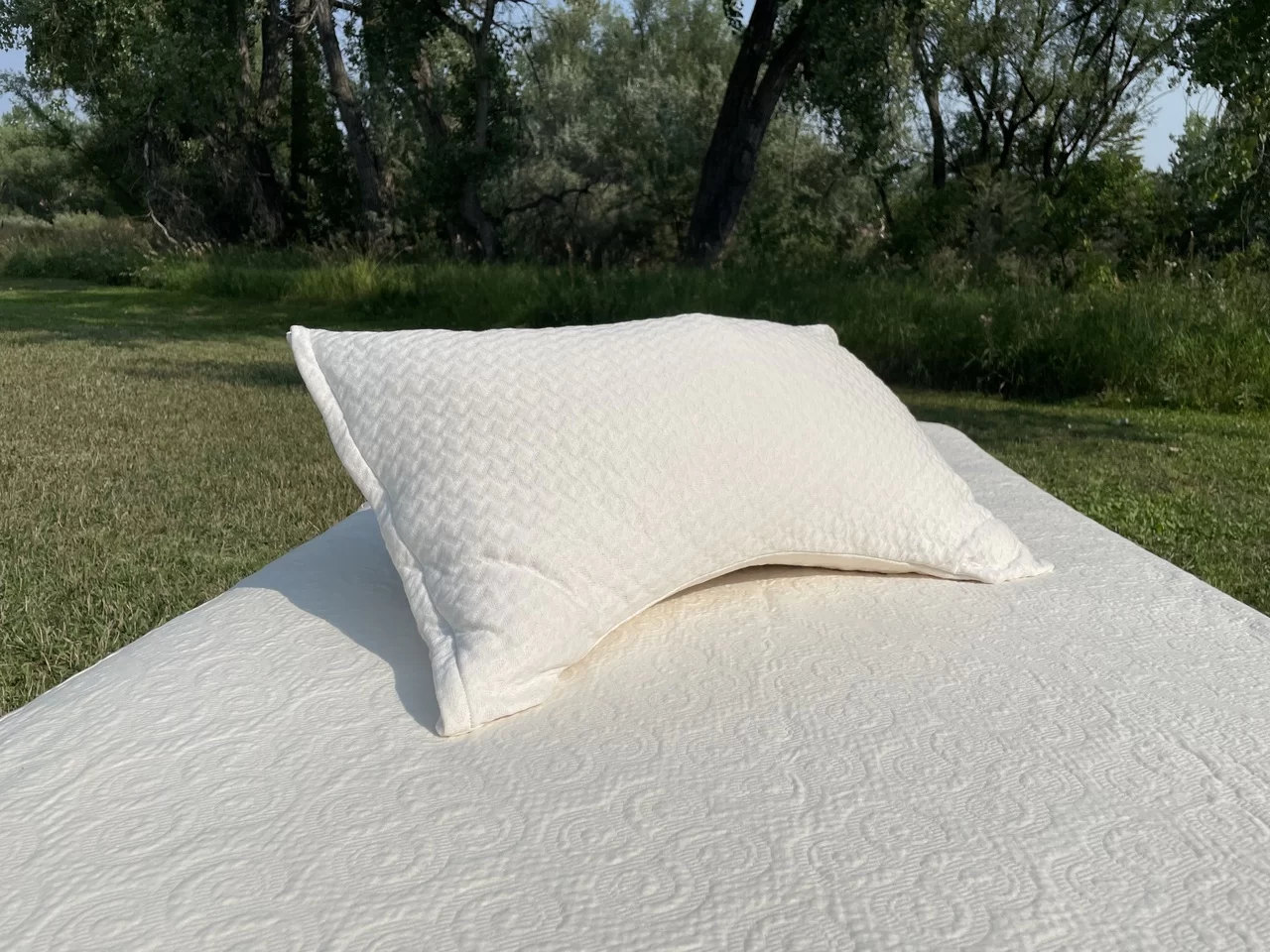
An organic latex mattress uses organic latex in its construction. Check the latex, cover, and fire barrier separately. Documentation for one component does not establish certification of the whole mattress.
The mattress industry uses “organic,” “natural,” “eco-friendly,” and “green” almost interchangeably in marketing. They do not mean the same thing. Knowing the difference protects you from paying organic prices for a non-organic product.
The Global Organic Latex Standard (GOLS) governs the latex core. To earn GOLS certification, the latex must:
GOLS is administered by Control Union Certifications, an independent international body. Certificate numbers are verifiable. If a company claims GOLS certification but cannot provide a certificate number. That is a red flag.
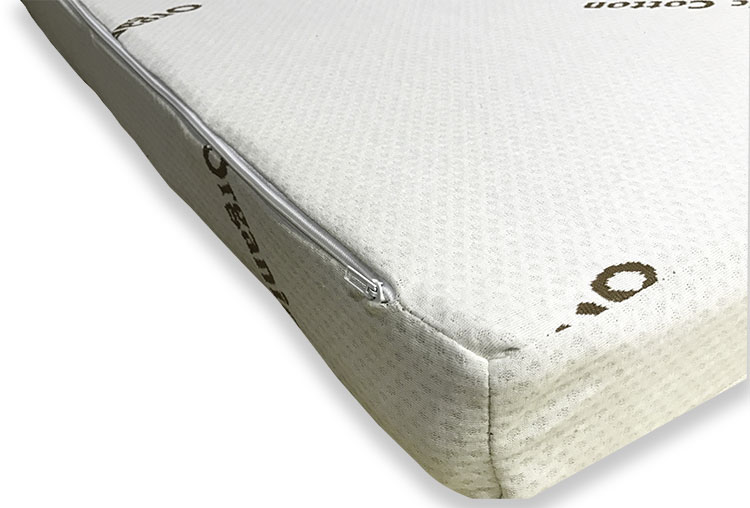
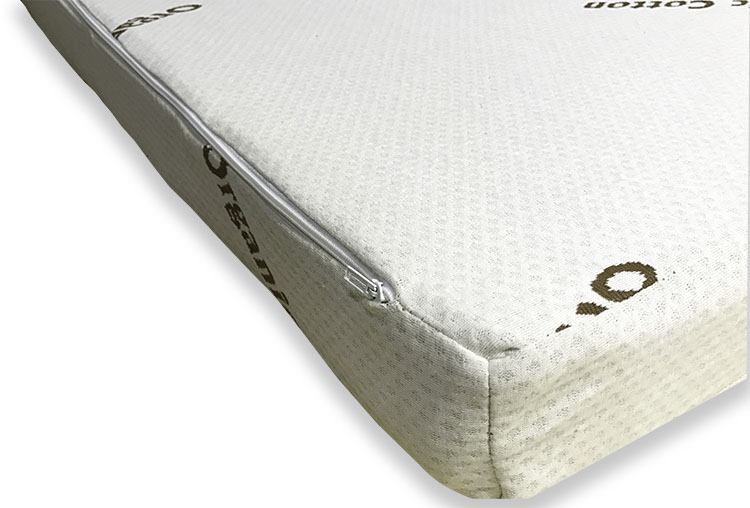
Cotton fabric forms the casing around the latex layers. Check the cover specification and care instructions for the mattress you are considering.
Cotton is the primary fabric in a latex mattress. It covers the latex layers, creates the sleep surface, and holds the entire construction together. In a non-glued mattress, the casing is what keeps the layers in position.
Wool in an organic mattress serves as the natural fire barrier. All mattresses sold in the U.S. must pass federal flammability standards (16 CFR 1633). Conventional mattresses use chemical flame retardants to pass this test. Organic mattresses use wool, which is inherently flame-resistant, eliminating the need for any chemical treatment.
Check the wool specification for the particular mattress and ask which supplier documentation applies. Coverage for latex does not extend to the wool or cover fabric.
| Feature | Organic Latex Mattress | Natural Latex Mattress | Conventional Mattress |
|---|---|---|---|
| Latex source | GOLS-certified organic plantations | Rubber trees (may be conventional farms) | Synthetic (SBR) or no latex |
| Cotton | Organic cotton | May be conventional cotton | Synthetic fabrics or conventional cotton |
| Fire barrier | Organic wool | Wool (may not be certified) | Chemical flame retardants |
| Adhesives | None (in best versions) | May contain glue between layers | Typically glued construction |
| Certifications | GOLS for organic latex | May have some certifications | CertiPUR-US at best |
| Chemical exposure | None | Minimal to none | VOCs, flame retardants, formaldehyde possible |
| Typical lifespan | 20-25 years | 15-25 years | 7-10 years |
| Price range (Queen) | $1,800-$4,500 | $1,200-$3,500 | $300-$2,000 |
This distinction matters more than most shoppers realize. A “natural” latex mattress uses latex derived from rubber tree sap, which is good, but the trees may have been grown with synthetic pesticides and fertilizers. The cotton may be conventional. The wool may not be certified. The mattress may contain adhesives between layers.
“Natural” describes what the material is (tree-derived latex vs. petroleum-based synthetic latex). “Organic” describes how the material was grown, processed, and verified. A natural latex mattress is a better product than a conventional mattress, but it is not held to the same standards as an organic one.
For a detailed breakdown, see our guide on natural latex vs. organic latex.
The mattress industry has a history of misleading marketing. Here is how to verify that an “organic” mattress actually meets the standard:
Visit our certifications page for full details on each standard and what it covers.
Organic certification describes the materials, but the sleep experience is what matters daily. Natural latex, organic or not, has a distinctive feel: responsive, buoyant support that contours to your body without the slow-sinking sensation of memory foam. It pushes back as you press into it, keeping your spine aligned while relieving pressure points.
The organic wool and cotton layers add breathability and temperature regulation. The overall sleep experience is cool, supportive, and consistent night after night for decades. The materials do not break down, develop body impressions, or change their feel the way synthetic foams do over time.
Our mattress builder distinguishes GOLS organic Dunlop from 100% natural Talalay. Check each product page for its cover and construction details. Supplier documentation applies only to the materials and products it names.
An organic latex mattress uses organic latex in its construction. Check the latex, cover, and fire barrier separately. Documentation for one component does not establish certification of the whole mattress.
“Natural” means the latex comes from rubber tree sap rather than petroleum-based synthesis. “Organic” means the rubber trees were grown on certified organic plantations without synthetic pesticides or fertilizers, and the entire supply chain has been independently audited. All organic latex is natural, but not all natural latex is organic.
GOLS is an internationally recognized standard administered by independent certification bodies like Control Union. They require regular third-party audits, supply chain traceability, and verifiable certificate numbers. These certifications are considered the gold standard for organic mattress materials.
Technically yes, but it is misleading. A mattress with organic latex but conventional cotton and chemical flame retardants is not an organic mattress. It is a mattress that contains one organic component. Look for certifications on every major material, not just the latex.
Check the materials separately and ask for documentation for the exact product and supplier. A certificate for latex does not extend to cotton, wool, or the assembled mattress.
From a materials standpoint, yes. Organic certification guarantees farming practices free from synthetic chemicals, independent third-party verification, and full supply chain traceability. A natural latex mattress may use equally good materials, but there is no independent verification. The sleep experience can be similar, but the assurance is different.