Have a saved cart?
Enter your email to restore it.


Understanding the difference between natural latex and organic latex is essential when choosing a latex mattress. Both types come from the sap of rubber trees rather than petroleum-based chemicals, but they differ in certification, sourcing standards, and price. This guide breaks down each type so you can make a confident decision for your health and your sleep.

Organic latex is certified by the Global Organic Latex Standard (GOLS), which is underwritten by the USDA. To earn GOLS certification, a latex product must contain at least 95% certified organic raw material. The remaining 5% cannot include synthetic latex or non-organic rubber. GOLS certification also requires documented separation of organic and non-organic products throughout the supply chain, along with standards for environmental sustainability and social responsibility in manufacturing.
Like organic latex, 100% natural latex must contain a minimum of 95% natural rubber. It does not include synthetic blends, petroleum byproducts, fillers, sand, or ash. The quality, durability, and feel of 100% natural latex is comparable to organic latex. The difference is that it does not carry GOLS certification, which typically makes it more affordable.
Synthetic latex is produced using petroleum-based chemicals, primarily styrene and butadiene. It does not contain natural rubber tree sap. Synthetic latex is cheaper to produce but lacks the durability, breathability, and hypoallergenic properties of natural or organic latex.
Blended latex combines natural and synthetic latex in varying ratios. Some blended products also contain fillers — particles of clay or other materials mixed into the latex to reduce cost. Fillers make the latex stiffer and less durable over time.
Natural latex is inherently hypoallergenic, anti-microbial, and anti-bacterial. It resists dust mites, mold, mildew, and other common allergens. Studies have also linked natural latex bedding to improved respiratory health compared to synthetic alternatives.
Natural latex conforms to the body’s contours while providing firm, responsive support. Its elasticity prevents the foam from packing down and compressing like polyurethane foams do. This combination of conformity and resilience distributes pressure evenly, supports spinal alignment, and reduces tossing and turning.
Natural latex absorbs movement rather than transferring it across the mattress surface. If you share a bed, one partner’s movement is far less likely to disturb the other. For more on shared sleep comfort, explore our natural latex mattress, which allows each side to be configured independently.
Natural latex has an open-cell structure that promotes airflow. When paired with an organic cotton cover and organic wool batting, the result is a sleep surface that wicks moisture and regulates body temperature throughout the night — warm in winter, cool in summer.
A high-quality natural latex mattress will last 20 years or more. This far exceeds the typical 7-10 year lifespan of a conventional polyurethane or memory foam mattress.
Natural latex is fully biodegradable. The rubber tapping process does not harm the trees, which can yield sap for up to 30 years. When trees are eventually harvested, the land is replanted and the rubberwood is used for furniture.
Synthetic latex contains man-made chemicals including polyurethane, formaldehyde, and polybrominated diphenyl ethers. These substances off-gas into bedroom air and can be absorbed through the skin during sleep. Many of these chemicals are classified as probable or known carcinogens.
Research has consistently linked synthetic bedding materials to adverse respiratory outcomes. A study published in Lippincott Williams and Wilkins found a strong association between polyurethane pillows and mattresses and frequent childhood wheezing. Additional research from the University of Otago found higher levels of fungi-related beta-glucan in synthetic bedding, a substance known to worsen allergic asthma.
Polyurethane foam compresses and expands with every movement, drawing in dust, dead skin, bacteria, and moisture. Its open-cell honeycomb structure provides an ideal environment for dust mites, mold, and mildew.
Synthetic mattresses degrade and compress far more quickly than natural latex mattresses. The cheaper the polyurethane, the faster the decline in comfort and support.
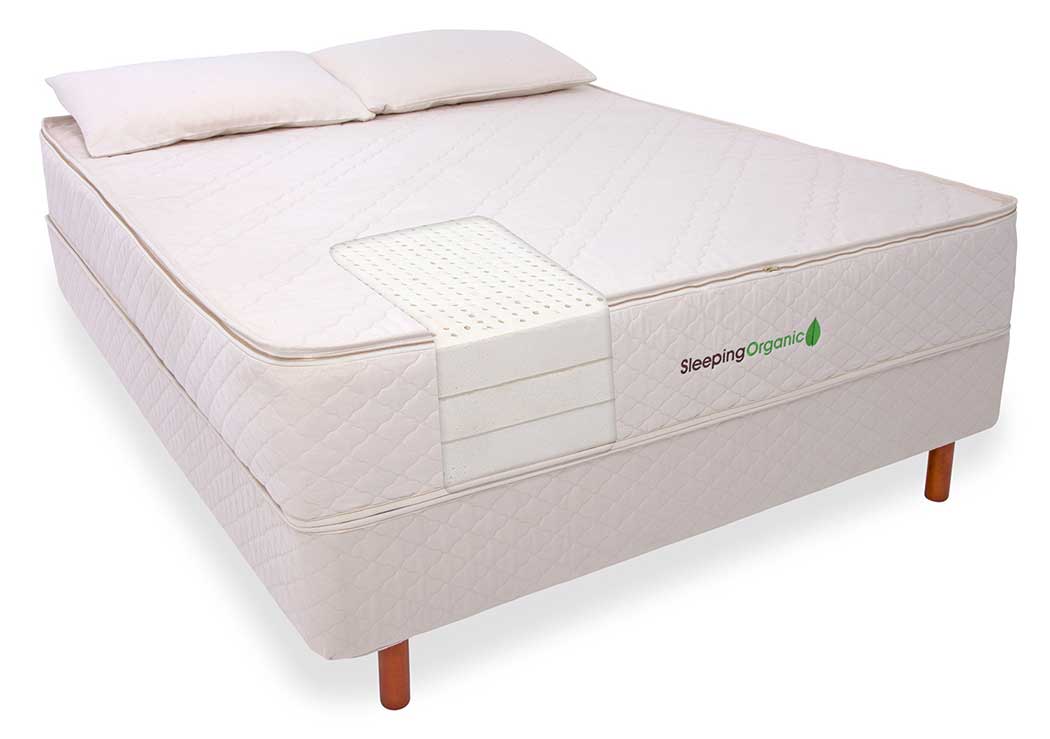
A typical latex mattress consists of one to four layers. The bottom layer (the core) is the firmest and provides structural support, usually 4-8 inches thick. Additional layers, typically 2-4 inches each, can be customized from firm to soft based on your sleep position and preference.
These latex layers are encased in a removable, zippered organic cotton cover with organic wool batting quilted inside. The wool serves two purposes: it promotes airflow for a cooler, drier sleep surface, and it acts as a natural flame retardant that meets all federal fire safety regulations without chemical treatments. The cotton cover zips off for easy access to the internal layers, allowing you to rearrange or swap components to adjust firmness. For a deeper comparison of latex types, see our guide on Talalay vs. Dunlop latex.
| Feature | Dunlop | Talalay |
|---|---|---|
| Process | Rubber sap is whipped into a froth, poured into a mold, covered, and steam-baked. Natural sediments settle to the bottom, making it slightly firmer on one side. | Sap is whipped, poured into a mold, sealed in a vacuum chamber, flash-frozen to stabilize the cell structure, then baked. |
| Feel | Denser, firmer, heavier | More consistent cell structure, softer and more pillow-like |
| Typical Use | Base/core support layers | Top comfort layers |
| Durability | Extremely durable due to higher density | Very durable, slightly less than Dunlop |
Natural latex comes from rubber trees grown primarily in Southeast Asia. The sap is extracted by carefully scoring the bark — a process that heals quickly and does not damage the tree. A single rubber tree yields about 15 grams of latex per day. The core of a queen-sized mattress requires the daily output of approximately 2,500 trees spread across 12 acres of plantation, providing a livelihood for eight rubber tappers. These trees also remove an estimated 143 metric tons of carbon dioxide from the atmosphere each year.
Latex allergies are caused by proteins naturally present in rubber sap. While direct skin contact with latex gloves, balloons, or condoms can trigger reactions in sensitive individuals, latex mattresses rarely cause problems. Sheets, pillowcases, and the organic cotton cover create a barrier between the body and the latex. Additionally, the manufacturing process includes extensive washing that removes free proteins. High-quality natural latex production uses approximately 1.5 cubic meters of clean water in the final wash cycle specifically to minimize allergen potential.
Both organic and 100% natural latex are made from rubber tree sap without synthetic fillers. The primary difference is that organic latex carries GOLS certification, which verifies organic sourcing and responsible manufacturing. The quality, feel, and durability are comparable.
A well-made natural latex mattress typically lasts 20 years or more, especially firmer configurations. This is roughly double the lifespan of most conventional mattresses.
Natural latex is hypoallergenic and resists dust mites, mold, and mildew. People with latex protein sensitivities rarely react to latex mattresses because the manufacturing wash process removes free proteins, and bedding layers create a barrier between skin and latex.
Dunlop latex is denser and firmer, making it ideal for support cores. Talalay latex has a more uniform cell structure and softer feel, making it better suited for comfort layers. Many mattresses use both types in a layered configuration.
Yes. A natural latex mattress allows you to choose the firmness of each layer independently. The removable zippered cover makes it easy to swap or rearrange layers as your preferences change.
Synthetic latex contains petroleum-derived chemicals including polyurethane, formaldehyde, and flame retardant compounds that can off-gas into your sleeping environment. Research has linked these chemicals to respiratory issues, skin irritation, and increased cancer risk. Choosing 100% natural or organic latex avoids these concerns entirely.