Have a saved cart?
Enter your email to restore it.

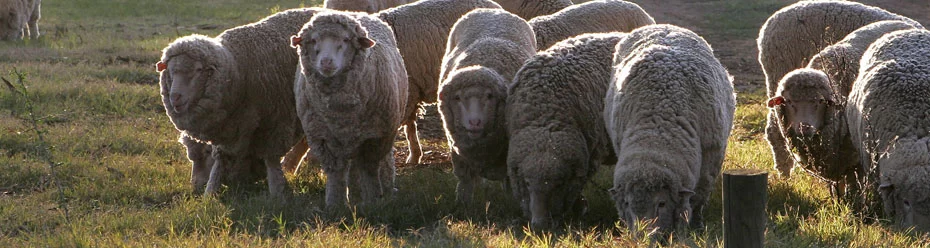
Organic wool is one of the most important materials in a quality latex mattress, yet most shoppers overlook it entirely. While latex gets the attention as the core comfort material, it is the wool layer that handles fire safety, moisture management, and temperature regulation, all without a single synthetic chemical. Here is why organic wool in a latex mattress matters more than you might think.
Every mattress sold in the United States must meet federal flammability standard 16 CFR 1633. Conventional mattresses pass this test by loading the cover with chemical fire retardants, compounds like boric acid, antimony trioxide, and modacrylic fibers. These chemicals work, but they come with legitimate health concerns including off-gassing and skin contact exposure over thousands of hours of sleep.
Wool solves this problem naturally. The protein structure of wool fibers makes them inherently flame resistant. When exposed to flame, wool chars and self-extinguishes rather than melting or spreading fire. A properly constructed wool batting layer allows an organic latex mattress to pass federal flammability testing with zero chemical retardants.
This is not a minor distinction. You spend roughly a third of your life on your mattress. Eliminating chemical fire retardants from that surface removes a persistent source of chemical exposure from your sleeping environment. It is one of the strongest arguments for choosing an organic latex mattress over a conventional one.
For a deeper look at fire retardant chemicals in mattresses, see our guide on latex mattresses and fire retardants.

Wool can absorb up to 30% of its own weight in moisture without feeling damp. This is a remarkable property that no synthetic material can match. While you sleep, your body releases moisture through perspiration, even when you do not feel like you are sweating. Wool fibers pull that moisture away from your skin, transport it through the fiber structure, and release it into the air.
This moisture wicking process does two things. First, it keeps the sleep surface dry and comfortable. Second, it prevents moisture from accumulating inside the mattress where it could promote mold, mildew, or bacterial growth. Synthetic mattress covers trap moisture against the surface, creating a clammy feeling and a breeding ground for microorganisms.
The moisture management properties of wool also extend the life of the mattress. Latex is naturally resistant to mold and mildew, but a wool cover layer adds another line of defense by preventing excess moisture from ever reaching the latex core.
Wool is a true temperature regulator, not just an insulator. The crimped structure of wool fibers creates tiny air pockets that adapt to conditions. In cold weather, these pockets trap warm air close to your body. In warm weather, wool wicks moisture and allows airflow, creating a cooling effect.
This bidirectional temperature regulation is why wool works year-round. It keeps you warm in winter without overheating and cool in summer without feeling cold. Paired with the open-cell structure of natural latex, which allows air to circulate through the mattress core, a wool-covered latex mattress provides some of the best temperature regulation available in any mattress type.
If you have concerns about sleeping hot, read our article on whether latex mattresses sleep hot.
Dust mites are one of the most common bedroom allergens, and they thrive in warm, moist environments, exactly what conventional mattresses provide. Wool disrupts this cycle in two ways. Its moisture wicking properties keep the surface too dry for dust mites to flourish, and the lanolin naturally present in wool fibers acts as a mild repellent.
Organic wool is also resistant to mold, mildew, and bacterial growth. For people with allergies or chemical sensitivities, a mattress that manages allergens naturally rather than through antimicrobial chemical treatments is a significant advantage.
It is worth noting that organic wool processing avoids the harsh chemical treatments used on conventional wool. Standard wool production often involves chlorine treatments, synthetic dyes, and chemical mothproofing, all of which can trigger sensitivities. Organic wool retains its natural beneficial properties without these additions.
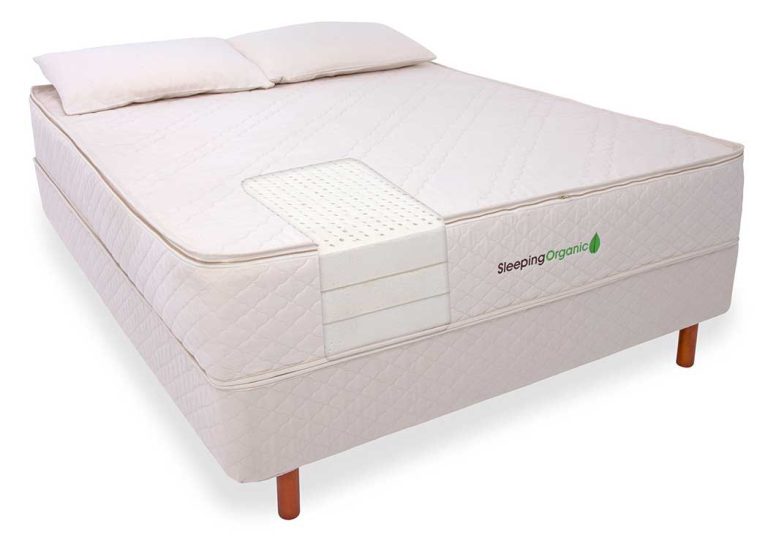
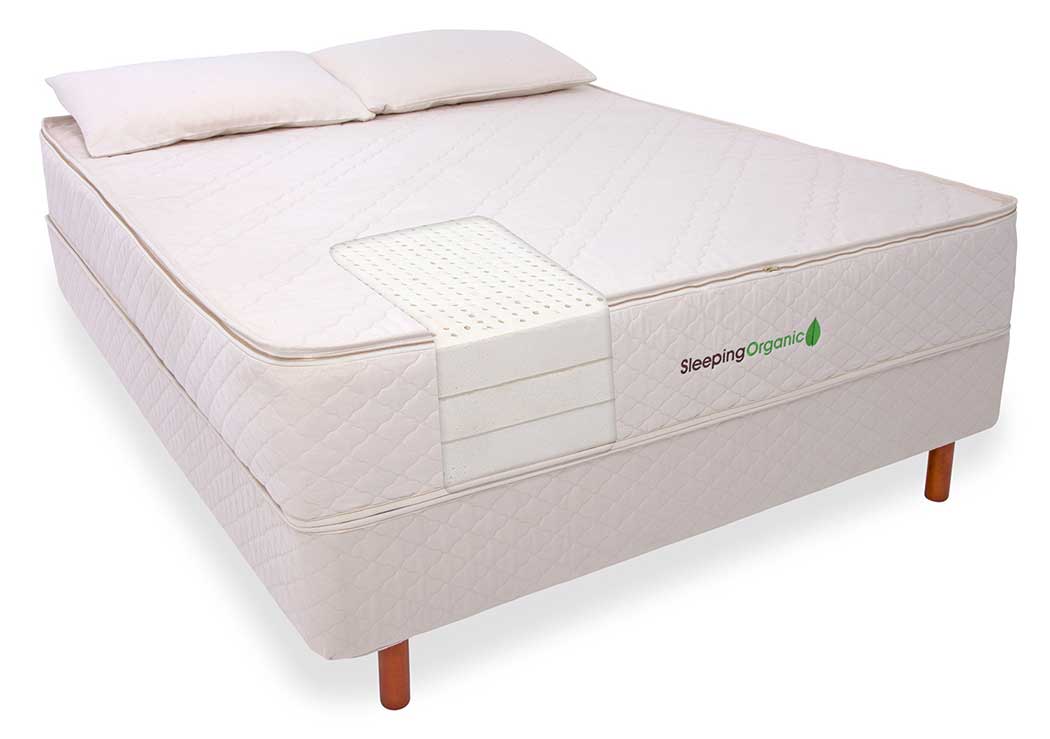
In an organic latex mattress, wool is used as a batting layer inside the mattress cover. It sits between the outer cotton fabric and the latex core, forming a continuous layer that wraps around the entire sleep surface. This positioning is intentional, it places the wool exactly where it can provide fire protection, moisture management, and temperature regulation most effectively.
The wool batting is typically needle-punched into a uniform sheet to prevent bunching or shifting over time. The amount of wool used must be sufficient to meet flammability standards while remaining comfortable. Too little wool and the mattress cannot pass fire testing naturally. The right amount creates a plush, responsive surface layer that complements the pressure relief of the latex beneath it.
Combined with an organic cotton outer cover and a natural latex core, the wool layer completes a mattress built entirely from organic, natural materials. No polyester. No chemical fire retardants. No synthetic foams. Each material contributes specific performance benefits, and wool is arguably the most versatile of the three. Support your organic mattress with a solid organic foundation and a natural shredded latex pillow to complete an all-natural sleep setup.
Conventional mattresses use polyester fiber fill, synthetic fire barriers, and chemical treatments to approximate what wool does naturally. Here is how they compare:
| Property | Organic Wool | Synthetic Alternatives |
|---|---|---|
| Fire resistance | Natural, chars and self-extinguishes | Chemical retardants required |
| Moisture wicking | Absorbs up to 30% of weight | Traps moisture on surface |
| Temperature regulation | Bidirectional, warms and cools | Insulates only |
| Dust mite resistance | Naturally resistant | Chemical antimicrobial treatments |
| Durability | Resilient fibers, long-lasting | Compresses and breaks down faster |
| Chemical exposure | None | Off-gassing from retardants and adhesives |
The synthetic approach relies on chemicals to solve problems that wool solves through its natural fiber properties. For a mattress you will sleep on for a decade or more, the natural approach is both healthier and more durable.
True wool allergies are rare. Most people who react to wool clothing are sensitive to the chemical treatments used in conventional wool processing, not the fiber itself. Organic wool is processed without these chemicals, and in a mattress, the wool is enclosed within the cotton cover, you never contact it directly. Most people with wool sensitivities have no issues with organic wool mattresses.
No. Wool regulates temperature rather than trapping heat. Its moisture wicking properties create a cooling effect during warm weather. Combined with the breathable open-cell structure of natural latex, a wool-covered latex mattress sleeps cooler than most conventional mattresses.
The amount varies by manufacturer, but it must be sufficient to meet federal flammability standards without chemical assistance. Typically this means a continuous batting layer of about one to two pounds of wool per square foot of mattress surface, quilted into the cotton cover.
Wool is naturally antimicrobial and odor resistant. New wool may have a faint natural scent that dissipates within a few days. Unlike synthetic materials, wool does not off-gas volatile organic compounds. Its moisture wicking properties actually help prevent the odor-causing bacterial growth that plagues synthetic mattresses.
Wool is extremely durable and resilient. In a well-constructed mattress, the wool batting layer will maintain its loft and performance for the full lifespan of the mattress, typically 15 to 20 years for a quality latex mattress. Wool fibers can bend thousands of times without breaking, which is why they hold up under years of nightly use.