What Is the Sleep Cure? Better Sleep Through Mattress, Environment, and Habits
There’s no single sleep cure: no pill, device, or mattress that guarantees perfect rest for everyone. But there is a clear framework for improving sleep quality that consistently works: address the physical environment first, then the behavioral patterns that support or undermine it. Your mattress is the most significant and most controllable environmental factor in your sleep quality.
Why the Mattress Matters More Than People Think
Most people replace a mattress only when it’s visibly failing, sagging so badly that sleep is obviously compromised. But a mattress can undermine sleep quality long before it reaches that point. A surface that’s slightly too warm, slightly too firm, or creating minor pressure points can reduce sleep depth and increase waking without the sleeper recognizing the mattress as the cause.
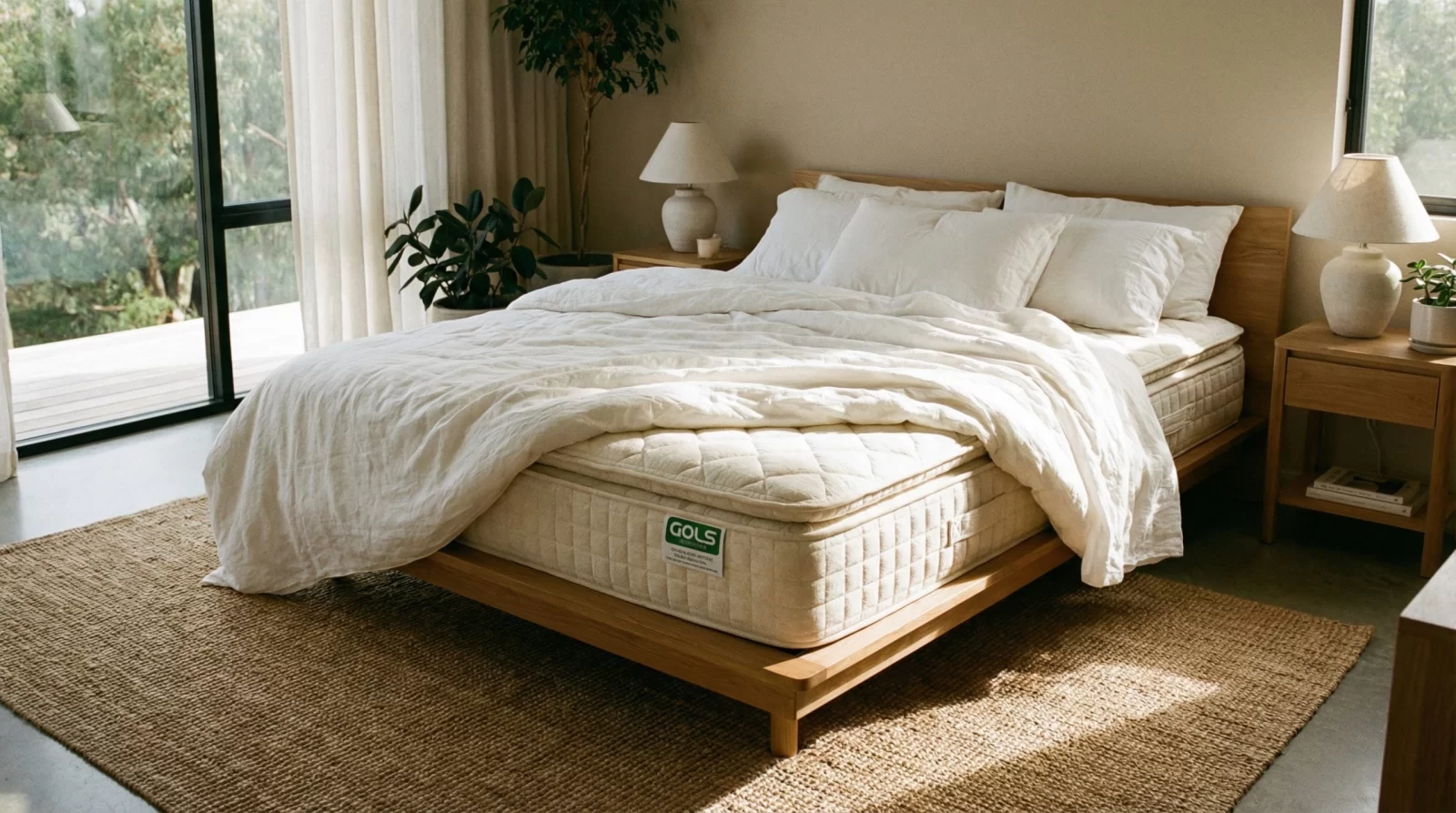
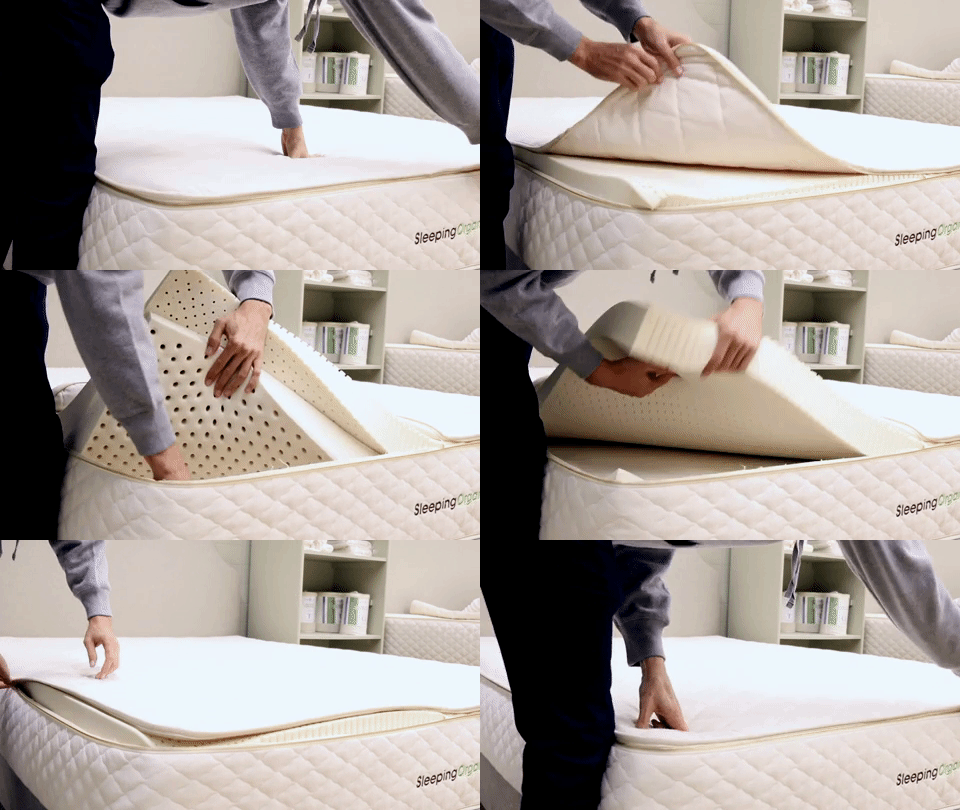
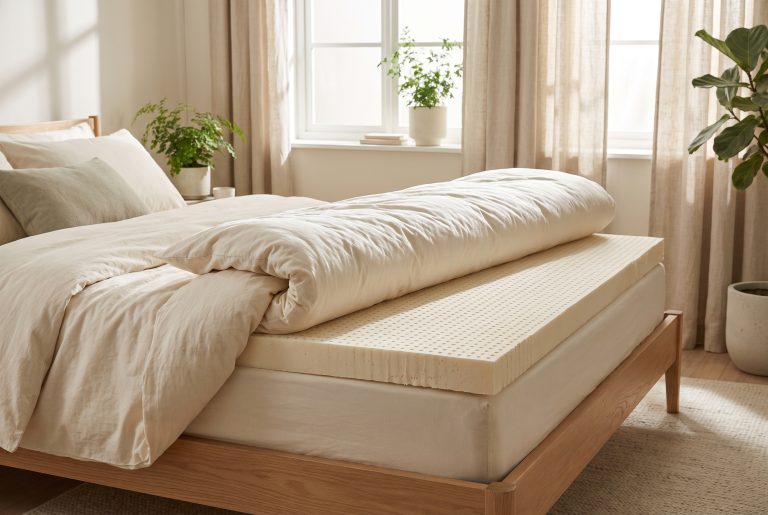
A natural latex mattress addresses the physical side of the sleep environment more completely than most alternatives. Its open-cell structure allows airflow through the mattress. Organic wool batting manages moisture and contributes to temperature regulation. The material doesn’t break down into increasingly poor support over five years. It maintains its properties over 15 to 20 years. These aren’t marketing claims; they’re the physical properties of the materials involved.
Temperature: The Most Underrated Factor
Core body temperature drops during sleep. A sleep surface that traps heat interferes with this natural process, causing lighter sleep and more frequent waking. Memory foam is the most common heat-trapping mattress material. It’s temperature-sensitive and dense, and it warms up as it conforms to your body.
If you regularly wake feeling warm, kick off covers through the night, or feel like you sleep in fits and starts, temperature is worth addressing. A cooler room (typically 65 to 68°F), breathable bedding, and a non-heat-trapping mattress surface are the environmental interventions that address it most directly.
The Habit Layer
Even the best mattress won’t compensate for behavioral patterns that undermine sleep. The habits that consistently support better sleep quality:
Consistent schedule: Going to bed and waking at the same time every day, including weekends, anchors your circadian rhythm and makes sleep onset more reliable.
Light management: Bright light exposure in the morning anchors your clock; avoiding bright screens and overhead lighting in the hour before bed supports melatonin production and sleep onset.
Alcohol: Alcohol aids sleep onset but significantly disrupts sleep architecture in the second half of the night, reducing REM sleep and increasing waking. Its apparent sleep-promoting effect masks its actual negative impact on sleep quality.
Caffeine timing: Caffeine has a half-life of five to seven hours. A 3pm coffee still has half its caffeine active at 8 to 10pm. Moving caffeine cutoff earlier, or eliminating afternoon caffeine, meaningfully improves sleep for many people.
Wind-down routine: The transition from activity to sleep works better with a consistent buffer period: 20 to 30 minutes of low-stimulation activity that signals to the nervous system that sleep is approaching.
When Sleep Problems Require Professional Help
Sleep apnea is underdiagnosed and has serious health consequences. If you snore loudly, wake frequently gasping, or feel consistently unrefreshed despite apparently adequate sleep time, a sleep study is appropriate. No mattress improvement addresses obstructed breathing.
Chronic insomnia that doesn’t respond to environmental and behavioral changes benefits from Cognitive Behavioral Therapy for Insomnia (CBT-I), which has strong evidence as a treatment. Medication for sleep has limitations and side effects; CBT-I addresses the underlying patterns that maintain insomnia.
Starting with the Foundation
The mattress is the foundation of everything else. Good sleep habits are easier to maintain when you’re sleeping on a surface that’s comfortable, thermally appropriate, and supportive. Poor sleep habits are harder to overcome when physical discomfort is adding to the problem.
What is the single most effective change for better sleep?
For most people, a consistent sleep-wake schedule has the highest impact of any single change. Circadian rhythm is highly responsive to consistent timing, and irregularity undermines sleep quality even when other conditions are optimal. If the mattress is significantly degraded or uncomfortable, addressing that first may be necessary for other changes to have effect.
How cool should my bedroom be for optimal sleep?
Research consistently points to 65 to 68°F (18 to 20°C) as the optimal range for most adults. Individual preferences vary, but erring toward cooler rather than warmer generally supports better sleep quality. A breathable mattress and bedding reduce the burden on room temperature alone.
Does a new mattress improve sleep immediately?
Many people notice improvement quickly, particularly when switching from a sagging or heat-trapping surface. Full adaptation typically takes two to four weeks as the body adjusts to the new support profile. If sleep quality hasn’t improved after a month, other factors warrant attention: habits, medical conditions, or the broader environment.
Is it better to sleep more or sleep better?
Sleep quality is more important than total time above a threshold. Seven hours of deep, uninterrupted sleep is more restorative than nine hours of fragmented, shallow sleep. Both duration and quality matter, but for most people who struggle with sleep, improving quality (through comfort, temperature, and consistency) yields more benefit than simply trying to spend more time in bed.
What role does a pillow play in sleep quality?
A pillow maintains cervical spine alignment, which affects both comfort and the quality of sleep throughout the night. A pillow that’s too high or too low for your sleep position creates neck tension that can cause waking and morning stiffness. Our Natural Shredded Latex Pillow is adjustable in loft. You add or remove fill to match your sleep position, which makes it a genuinely customizable complement to a well-configured mattress.