Have a saved cart?
Enter your email to restore it.

Stomach sleeping is the least common sleep position, and the most demanding on a mattress. When you sleep face-down, gravity pulls your hips and midsection into the mattress surface. If that surface gives too much, your lumbar spine arches downward into an unnatural curve, and you wake up stiff, sore, or worse. The fix is not to abandon stomach sleeping. The fix is to find a mattress firm enough to keep your spine level from your shoulders to your hips.
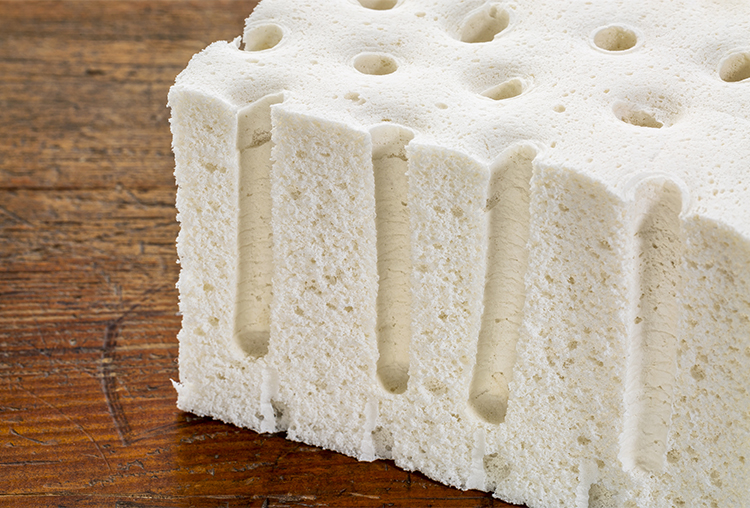
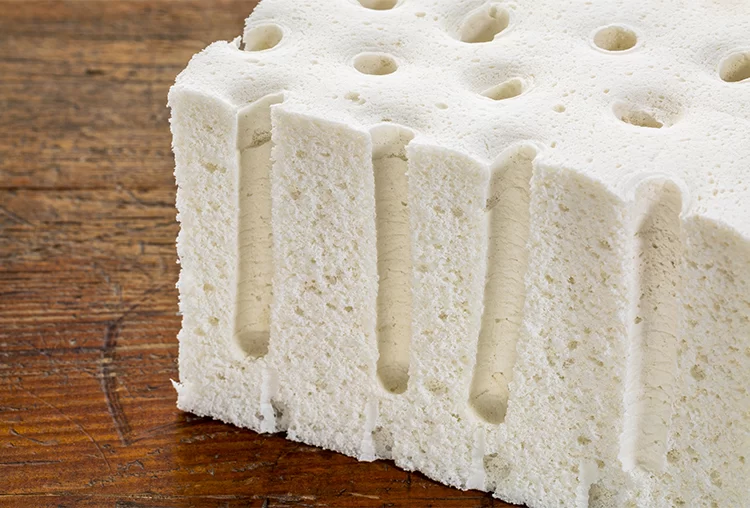
Latex is uniquely well-suited for this. Unlike memory foam, which compresses slowly and lets the body sink deep into a pressure-relieving crater, latex pushes back immediately. That responsive, buoyant support keeps a stomach sleeper’s hips from dropping, which is exactly what the lower back needs. And unlike an innerspring mattress, latex does this without creating hard pressure points at the chest or pelvis.
This guide walks through everything stomach sleepers need to know: the right firmness range, how to choose between Dunlop and Talalay latex, weight-based configurations, and how Sleeping Organic’s custom mattress lineup addresses these needs directly.
Your hips and midsection are the heaviest part of your body when you’re lying prone. On a mattress that’s too soft, those areas sink lower than your chest and legs. Your lumbar spine has to bridge the gap, which forces it into hyperextension, an exaggerated inward curve that compresses the discs and strains the muscles along the spine.
This is why firmness is the single most important variable for stomach sleepers. A mattress that a side sleeper or back sleeper might find perfectly comfortable can be genuinely painful for someone who spends the night on their stomach. If you’ve ever woken up with lower back pain that eases as the morning goes on, an overly soft mattress is almost certainly a contributor. For a deeper look at how latex addresses back pain specifically, see our post on latex mattresses and back pain.
Mattress firmness is measured using ILD (Indentation Load Deflection) ratings. The higher the ILD number, the firmer the foam. For a thorough explanation of how ILD ratings work, read our ILD firmness guide. For stomach sleepers, the general target ranges are:
These are not the same numbers you’d target for a side sleeper (who needs a softer surface to accommodate shoulder and hip pressure) or even most back sleepers. Stomach sleeping simply demands more surface resistance than any other position.
The type of latex matters, not just the ILD. Dunlop and Talalay latex are manufactured differently, and they behave differently under load. Dunlop latex has a denser, slightly heavier feel with more bottom-out resistance. It’s firmer at equivalent ILD ratings and tends to hold its position more reliably over time. Talalay latex is more uniform in cell structure, which gives it a slightly springier, more consistent feel across the surface. For a full comparison, see our post on Dunlop vs. Talalay latex.
For stomach sleepers:
Body weight determines how much pressure you put on the mattress, and therefore how firm it needs to be to maintain support. These are practical starting points, not absolutes.
Lighter stomach sleepers don’t sink as deeply into a mattress, so they have slightly more flexibility. A Medium 30–32 comfort layer with a Firm 37–40 support core will maintain spinal alignment without feeling punishingly hard against the sternum or pelvis. Talalay latex in the comfort layer works well here for its consistent pressure distribution.
This is the most common weight range, and where firmness recommendations are most straightforward. A firm configuration, 30–32 or 37–40 ILD comfort layer with a 37–40 ILD Dunlop core, provides reliable hip support without excessive hardness at the surface. Most stomach sleepers in this range find this the most comfortable long-term configuration.
Heavier stomach sleepers put more sustained load on the lumbar region and need the most resistance. A 37–40 ILD Dunlop comfort layer paired with a 44 ILD Dunlop core is the practical minimum. For a 4-layer mattress like the Tree, configuring the upper support layer at 37–40 ILD and the base at 44 ILD gives both support depth and durability over years of use.
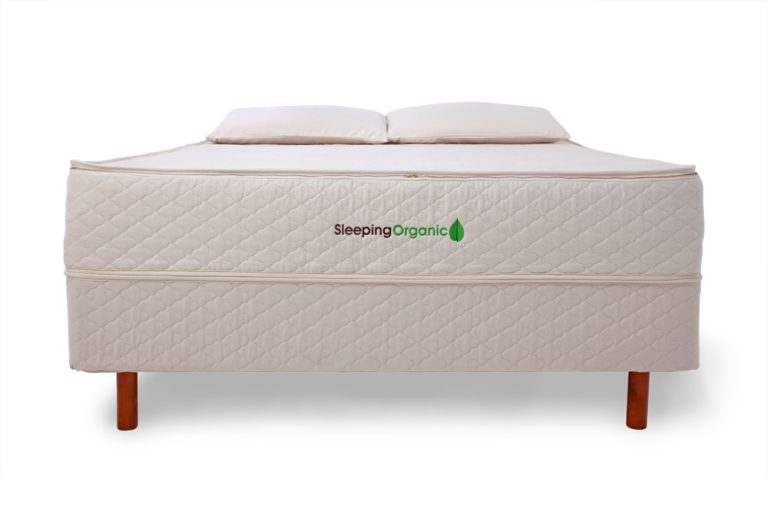
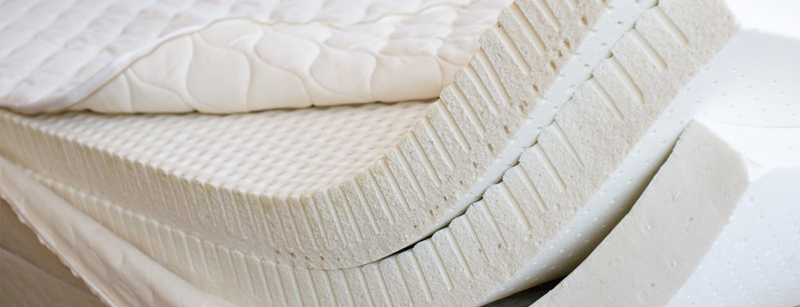
Sleeping Organic builds custom natural latex mattresses, which means you’re not choosing from a predetermined firmness menu. Each layer is selected and configured for your body weight, sleep position, and preferences. This matters more for stomach sleepers than for any other position, because the margin for error is smaller. A comfort layer that is too soft can be the difference between waking up refreshed and waking up with a stiff lower back.
Here’s how the three models serve stomach sleepers:
The Sapling is Sleeping Organic’s entry-level mattress: a 3″ comfort layer over a 6″ support core. For stomach sleepers under 175 lbs who prefer a simpler setup, the Sapling configured with a firm comfort layer and a firm Dunlop core delivers reliable support. Its relatively thin profile keeps the sleeper closer to the base, which is an advantage for lighter stomach sleepers who don’t need deep cushioning.
The Sprout adds a mid-layer between the comfort and base, allowing for a more nuanced configuration. For stomach sleepers, this middle layer can be set at 37–40 ILD to act as a transition zone, firm enough to resist hip sinkage but slightly less rigid than the base core. This is a good match for sleepers in the 130–200 lb range who want a little more depth without sacrificing lumbar support.
The Tree is the most configurable option. With four latex layers, heavier stomach sleepers (200+ lbs) can build a mattress with a genuinely graduated firmness profile, a relatively firm top that progressively increases in resistance with each layer below. This prevents both surface discomfort and the deep sink that causes lower back strain. For combination sleepers who spend some time on their stomachs and some on their backs, the Tree’s four layers also allow for a comfort layer that’s somewhat softer (30–32 ILD) while still maintaining a firm enough support structure to protect the lumbar spine during stomach sleeping. Learn more about custom configurations in our post on what a custom latex mattress actually is.
| Weight Range | Model | Comfort Layer (Top) | Mid Layer(s) | Support Core (Base) |
|---|---|---|---|---|
| Under 130 lbs | Sapling or Sprout | 30–32 ILD Talalay | 37–40 ILD Dunlop (Sprout only) | 37–40 ILD Dunlop |
| 130–175 lbs | Sprout | 30–32 ILD Dunlop or Talalay | 37–40 ILD Dunlop | 37–40 ILD Dunlop |
| 175–200 lbs | Sprout or Tree | 37–40 ILD Dunlop | 37–40 ILD Dunlop | 44 ILD Dunlop |
| 200 lbs and above | Tree | 37–40 ILD Dunlop | 37–40 ILD / 44 ILD Dunlop | 44 ILD Dunlop |
These configurations are starting points. When you order a custom mattress from Sleeping Organic, you can discuss your specific sleep habits, any existing pain points, and whether you share the mattress with a partner who sleeps in a different position. The goal is to get it right for your body, not to match a generic chart.
A firm latex mattress on a poor foundation will underperform. Latex needs a solid, flat surface with consistent support, not a slatted bed frame with gaps wider than 3 inches, and not an old box spring that has softened in the middle. Our organic mattress foundation is built specifically to pair with latex mattresses: a solid wood platform with the right surface density to let the latex perform the way it’s designed to. For stomach sleepers in particular, where every inch of support matters, the foundation is not an afterthought.
Most stomach sleepers use a pillow out of habit, not necessity. But a thick pillow forces the neck to rotate and tilt unnaturally when lying prone, adding cervical strain on top of any lumbar issues. The honest recommendation for stomach sleepers: use the flattest pillow you can tolerate, or no pillow at all under your head.
If you do use a pillow, our natural shredded latex pillow is adjustable. You can remove fill to reduce loft until it’s nearly flat. This makes it one of the few pillows that can actually work for stomach sleepers, because you control the height rather than settling for a fixed loft. Some stomach sleepers also find that placing a thin pillow under the pelvis (not the stomach) helps reduce lumbar arch, this works best on a mattress that’s already firm enough to provide baseline support.
If you’re weighing the differences between stomach, side, and back sleeping from a mattress-selection standpoint, the contrast is significant. Side sleepers need a softer surface to allow the shoulder and hip to sink in while keeping the spine level, read our full breakdown in the best latex mattress for side sleepers guide. Back sleepers fall somewhere in between, needing enough surface give to support lumbar curve without the hip-sinkage risk of stomach sleeping, see our best latex mattress for back sleepers post for those specifics.
Combination sleepers who move between stomach and back positions during the night typically do well with a Medium 30–32 configuration at the top that serves both positions reasonably well without being optimized for either.
Most stomach sleepers need a comfort layer in the 30–32 or 37–40 ILD range and a support core of 37–40 or 44 ILD. The right number within those ranges depends on your weight, lighter sleepers can work with the lower end; heavier sleepers need the upper end to prevent hip sinkage and lower back strain.
Dunlop latex is generally the stronger choice for stomach sleeping, particularly in the support core. Its denser, more resistant structure does a better job of keeping hips from sinking. Talalay can work well in a comfort layer for lighter sleepers who want a slightly more adaptive surface feel. For heavier stomach sleepers, Dunlop throughout is the more reliable configuration.
It depends on your weight. For sleepers under 130 lbs, Medium 30–32 ILD at the surface can be sufficient. For anyone above 150 lbs, Medium is typically not enough; the hips may still sink enough to cause lumbar hyperextension. Firm is the appropriate baseline for most stomach sleepers.
Stomach sleepers don’t need a thick mattress, they need a firm one. A well-configured 9″ mattress (like the Sapling) will outperform a plush 14″ mattress for stomach sleeping. That said, the 10″ Sprout and 13″ Tree offer more layering flexibility, which is useful for heavier stomach sleepers or those who share the bed with a partner in a different sleep position.
A low-loft pillow is preferable to a standard-height pillow, and no pillow at all is often better than a thick one. When lying prone, a thick pillow forces the neck into rotation and lateral flexion, which causes cervical strain. If you use a pillow, choose an adjustable one that lets you reduce the fill to a minimal loft, our shredded latex pillow works well for this because you can remove fill until it’s nearly flat.
Memory foam compresses slowly and lets the body sink progressively, which is counterproductive for stomach sleepers who need consistent surface resistance to keep hips level. Latex pushes back immediately and maintains that resistance throughout the night. It also sleeps cooler than memory foam and doesn’t develop the body impressions that cause soft spots to develop in high-pressure areas over time. For a stomach sleeper, that sustained, responsive firmness is the difference between a restful night and a stiff morning.