Have a saved cart?
Enter your email to restore it.

A latex mattress feels buoyant, responsive, and supportive. You sleep “on” the mattress rather than “in” it. Unlike memory foam, which slowly cradles and envelops your body, latex pushes back with a gentle lift that keeps you positioned on top of the sleep surface. The feel is best described as floating on a firm, springy cloud, substantial support underneath with a cushioning softness on top.
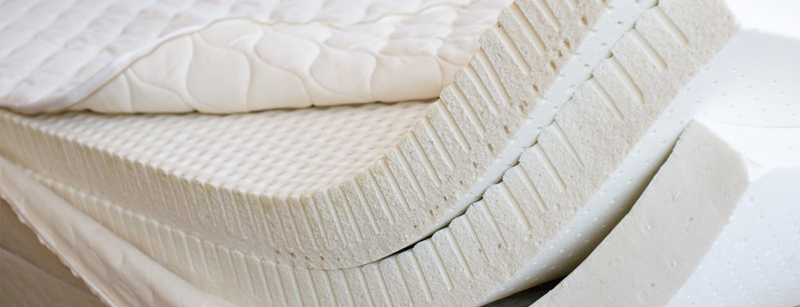
If you have never slept on a natural latex mattress before, this guide breaks down exactly what to expect: how the feel compares to other mattress types, how firmness levels change the experience, the difference between Talalay and Dunlop latex, and what the adjustment period is like.
This is the most important distinction to understand. Memory foam mattresses allow your body to sink into the material. Your hips, shoulders, and torso press down and the foam slowly conforms around you. Some people love this cradling sensation. Others feel trapped, overheated, or stuck, especially when trying to change positions.
Latex works differently. When you lie down on a latex mattress, the material compresses under your weight, conforms to your body’s curves, and then pushes back. You get contouring and pressure relief, but you remain on top of the mattress surface. Rolling over, adjusting your position, and getting out of bed all feel effortless because the latex responds instantly to your movements.
This responsive quality is why latex is often preferred by combination sleepers who change positions throughout the night, couples who do not want to feel stuck in a body impression, and anyone who values ease of movement. For a detailed comparison, read our guide on latex mattress vs. memory foam.
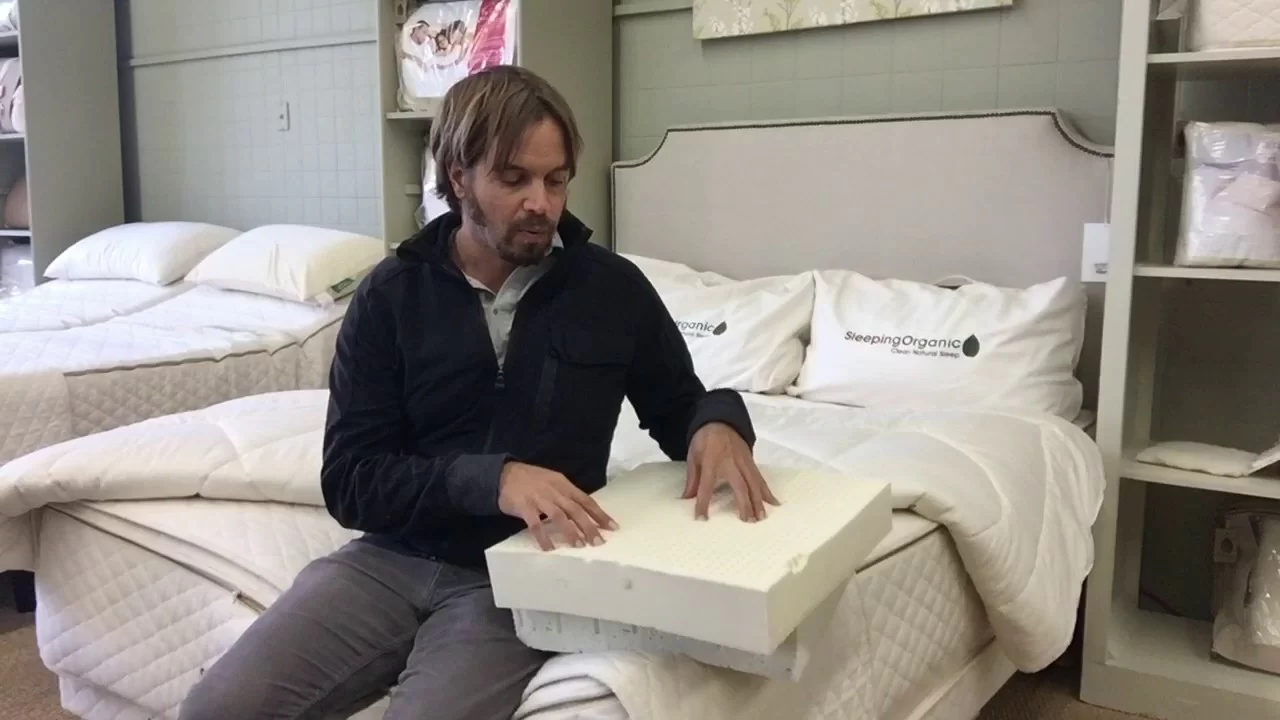
Latex has a natural elasticity that gives it a bouncy, responsive feel. Press your hand into a latex mattress and release, the material springs back to its original shape almost immediately. Memory foam, by contrast, holds the impression of your hand for several seconds before slowly recovering.
This responsiveness translates directly to how the mattress feels during sleep:
The bounce also has practical implications for couples. The responsive nature of latex, combined with its density, provides solid motion isolation, your partner’s movements are absorbed without transferring across the bed.
Not all latex mattresses feel the same. The firmness of the latex layers dramatically changes the sleep experience. Firmness in latex is measured by ILD (Indentation Load Deflection), which tells you how much force it takes to compress the latex by 25%.
| ILD Range | Firmness Level | How It Feels |
|---|---|---|
| 14–19 | X-Soft Talalay | Deep contouring, plush cushioning, more body sink |
| 19–22 | Soft | Gentle pressure relief with a plush, responsive feel |
| 30–32 | Medium | Balanced support with light contouring on top |
| 37–40 | Firm | Solid, supportive surface with minimal sink |
| 44 | X-Firm | Very little give, maximum support |
A soft latex mattress (lower ILD) will feel more plush and allow more body contouring, closer to the “sleeping in” sensation, though still bouncier than memory foam. A firm latex mattress (higher ILD) will feel more like sleeping on a stable, flat surface with very little give.
Most sleepers find that Medium 30–32 ILD provides the best balance of comfort and support. Side sleepers typically prefer softer latex for hip and shoulder pressure relief, while back and stomach sleepers tend toward firmer options for better spinal alignment.
With a custom latex mattress, you choose the ILD for each individual layer, allowing you to fine-tune the feel to your exact preference.
The two main types of natural latex, Talalay and Dunlop, produce noticeably different feels, even at the same ILD rating.
Talalay latex goes through a vacuum-sealed, flash-freezing process that creates a more consistent, open cell structure. The result is a lighter, bouncier, and more cushioning feel. Talalay excels as a comfort layer because it provides that plush, pressure-relieving sensation on top while remaining responsive. It has more “give” than Dunlop at comparable firmness levels.
Dunlop latex is poured into a mold and baked in a single step, creating a denser, heavier material. The feel is firmer, more substantial, and more supportive. Dunlop works exceptionally well as a support or base layer because it provides a stable foundation. In softer ILD ratings, Dunlop still has a more grounded, solid feel compared to Talalay.
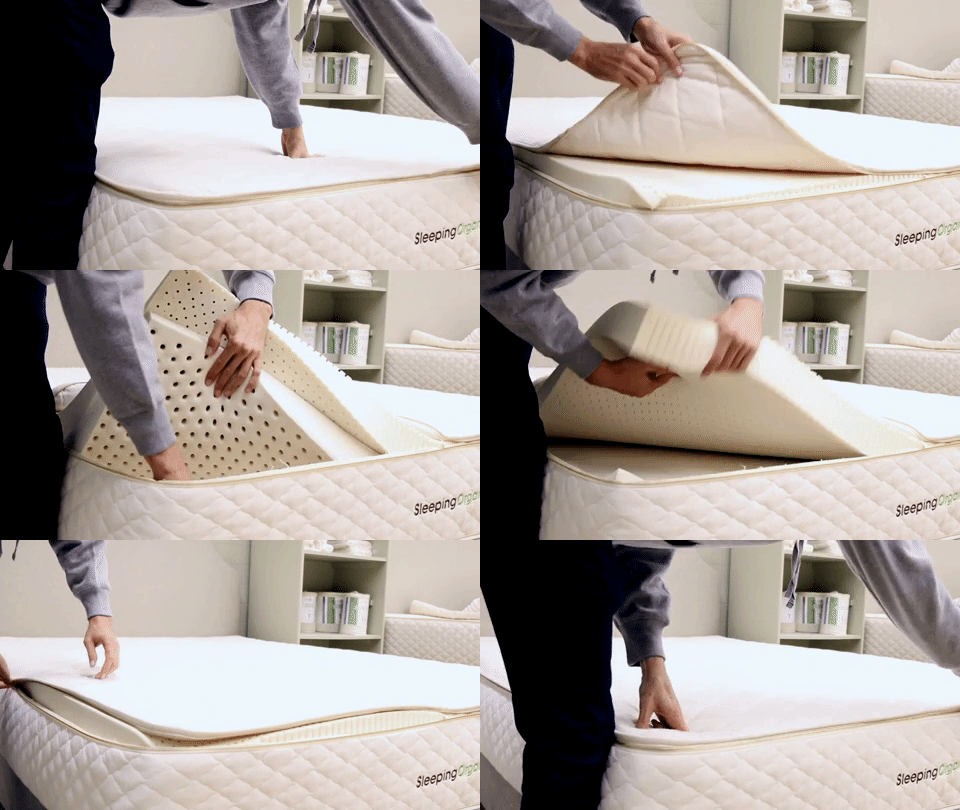
Many custom latex mattresses use both types together, Talalay on top for cushioning comfort and Dunlop on the bottom for dense, durable support. This combination delivers the best of both worlds: a plush, responsive sleep surface with a rock-solid foundation underneath. Learn more about Dunlop vs. Talalay latex.
Temperature plays a significant role in how a mattress feels. Memory foam is notorious for trapping body heat because its dense structure restricts airflow. The warmer the foam gets, the softer it becomes, which means you sink deeper as the night goes on.
Latex maintains a more consistent temperature. Its open-cell structure allows air to circulate through the material, and it does not soften significantly with heat. Combined with an organic cotton and wool cover, wool naturally wicks moisture and regulates temperature, a latex mattress feels consistently cool and dry throughout the night.
This temperature neutrality means the feel of your latex mattress stays the same whether it is the middle of summer or the dead of winter. You get the same support and the same firmness every night.
If you are switching from a memory foam or innerspring mattress to latex, expect an adjustment period of about 2-3 weeks. Your body has adapted to a specific type of support surface, and the transition to latex feels noticeably different.
During the first week, you may notice:
By the second or third week, most sleepers find that their body has fully adjusted and the mattress feels significantly more comfortable than it did initially. The latex also breaks in slightly during this period, becoming a touch softer as the cells open up with use.
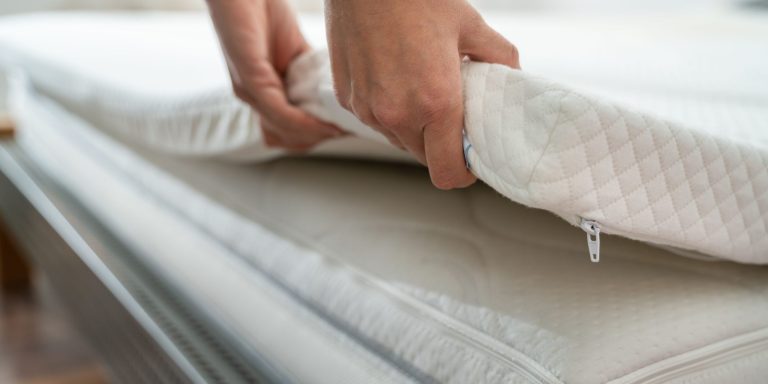
If the mattress still feels too firm or too soft after 3-4 weeks, a custom latex mattress with a zippered cover allows you to swap or rearrange layers to adjust the feel, no need to return the entire mattress.
On a properly configured latex mattress (softer top layer, firmer base), side sleepers feel their shoulders and hips sink in just enough for pressure relief while their spine stays in a straight, neutral line. The responsive latex cradles these pressure points without the “stuck” feeling of memory foam.
Back sleepers feel broad, even support across the entire back surface. The latex gently fills the lumbar curve to maintain spinal alignment without creating excessive sink in the hips. The feel is supportive and secure.
Stomach sleepers feel a flat, supportive surface that keeps the hips from sagging below the shoulders. Firm 37–40 latex is often the better fit here; if it is too soft, the pelvis can sink and create lower-back strain.
No. Latex and memory foam feel distinctly different. Memory foam slowly conforms and cradles your body, creating a “hugging” sensation. Latex responds instantly, provides a buoyant lift, and keeps you positioned on top of the mattress rather than sinking into it.
Yes, latex has a natural springiness. It is more responsive and bouncy than memory foam but less bouncy than an innerspring mattress. The bounce makes it easy to change positions and get in and out of bed.
That depends entirely on the ILD rating of the layers you choose. Sleeping Organic offers X-Soft Talalay 14–19 through X-Firm 44. Many people find Medium 30–32 ILD to be a comfortable starting point.
Most people fully adjust within 2-3 weeks. The mattress may feel firmer or different at first, especially if you are coming from a memory foam bed. Give your body time to adapt before making firmness adjustments.
Natural latex breaks in slightly during the first few weeks of use as the cell structure opens up. After this initial break-in period, the firmness remains remarkably stable for years. This is one of the key advantages of latex over memory foam, which tends to soften progressively over its lifespan.
Yes, if you purchase a custom latex mattress with a zippered cover and unglued layers. You can rearrange, swap, or replace individual layers to change the firmness and feel without buying a new mattress. Our Natural Latex Mattress is designed for this exact purpose.