Have a saved cart?
Enter your email to restore it.

When getting in and out of bed becomes harder, for you or someone you care for, the search usually starts with “hospital bed for home.” But most families who go down that road are not actually looking for a medical device. They are looking for three things: a bed that raises and lowers for safe transfers, positions that make sleeping and sitting up easier, and something that still looks like furniture in a real bedroom. This guide walks through the honest differences so you can decide which one you actually need.
A home hospital bed is a medical device: steel side rails, a vinyl-covered foam mattress in a narrow twin size, crank or motorized height, and an institutional look. It is the right call when a doctor prescribes one, when insurance is paying, or when care needs are intensive.
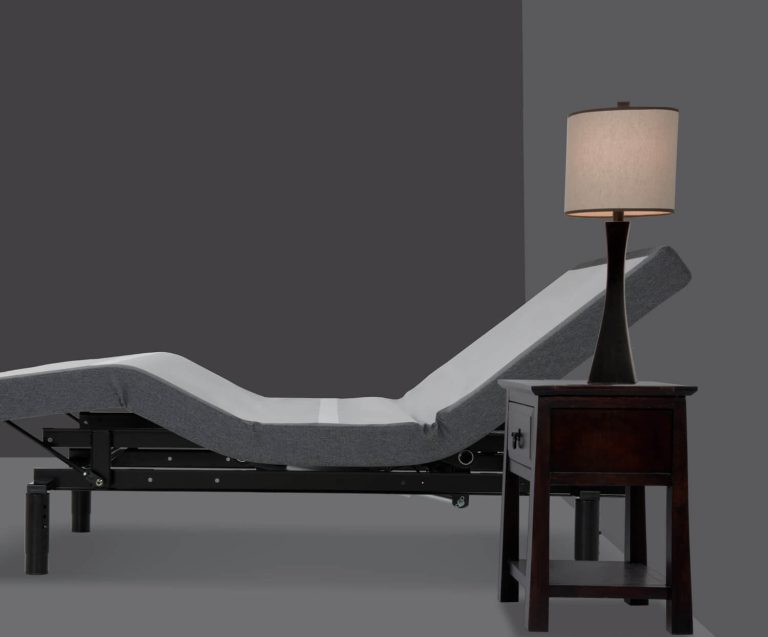
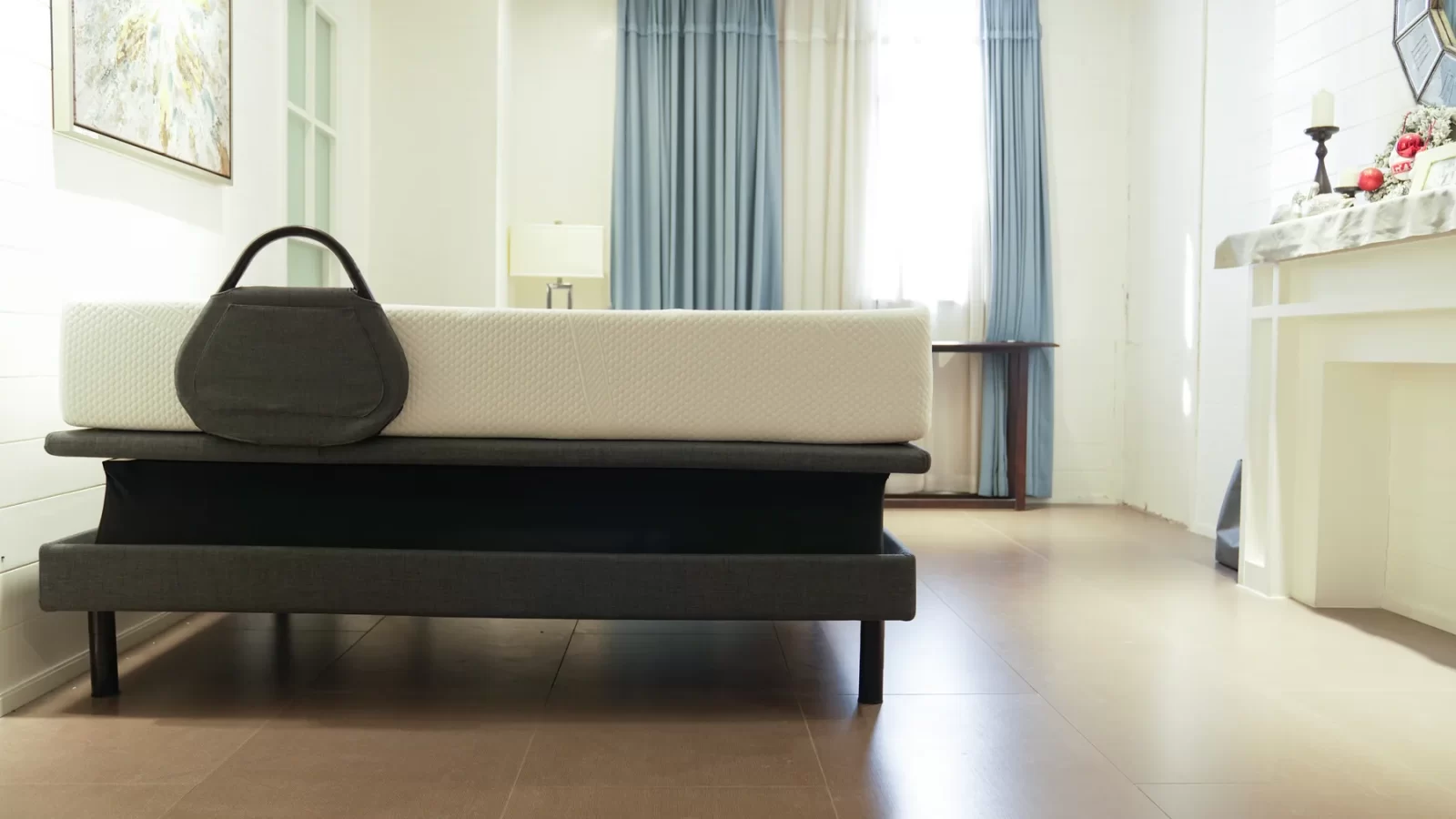
A hi-low adjustable bed like the Ergomotion Ascend delivers the two features families usually want, height adjustment for easier transfers and head/foot articulation for comfortable positioning, in a regular bed that takes a normal mattress, comes in sizes up to split king, and looks like it belongs in a bedroom.
| Consideration | Hi-Low Adjustable Bed (Ascend) | Typical Home Hospital Bed |
|---|---|---|
| Looks like bedroom furniture | Yes, upholstered base | No, exposed steel frame |
| Height adjustment | Yes, 17.85″ to 25.35″ (7″ of lift) | Yes, typically 9″ to 27″ |
| Head and foot articulation | Yes | Yes |
| Full-bed tilt | Yes, gentle head-up or feet-up angling | Trendelenburg on some models |
| Uses a standard mattress | Yes, any flexible mattress including natural latex | No, sized for narrow hospital mattresses |
| Sizes for couples | Twin XL through Split King | Twin only on most models |
| Sleep comfort features | Zero-G, anti-snore preset, memory positions, underbed lighting | Rare |
| Side rails | Optional padded assist rail | Standard steel rails |
| Insurance/Medicare coverage | Generally no (consumer product) | Sometimes, with prescription and qualifying criteria |
| Warranty | 10-year limited | 1 to 5 years typical |
Standing up from a low surface takes noticeably more effort than standing from a higher one, and caregivers helping with transfers end up bending over a fixed-height bed dozens of times a day. Height adjustment solves both sides of that equation: lower the bed for a safe, easy sit-down, raise it so standing up is more of a push than a climb, and bring it to a comfortable working height when a caregiver is helping with dressing or bedding changes.
This is the feature that separates a hi-low bed from an ordinary adjustable base. Most adjustable beds articulate but sit at a fixed height. The Ascend adds 7 inches of powered height range on top of full head and foot articulation, which covers the transfer scenarios most households actually face.
The Ascend can also gently tilt the entire flat sleeping surface head-up or feet-up while your body stays straight rather than bent. Families use it to make getting out of bed easier (a slight head-up tilt means you are already partway to standing) and to shift position without folding at the waist. On a hospital bed this feature is usually reserved for higher-end clinical models.
We sell the Ascend, and it is still not the answer for everyone. A prescribed hospital bed makes more sense when:
If none of those apply, and the goals are safer transfers, comfortable elevation, and a bedroom that still feels like home, a hi-low adjustable bed does the job without making the room feel clinical.
Hospital beds use thin vinyl-covered foam mattresses because they are easy to sanitize, not because they are comfortable. A hi-low bed takes a real mattress, and the mattress choice matters as much as the base: it has to flex with the articulation thousands of times without breaking down. A natural latex mattress is the best match, because latex bends cleanly, recovers instantly, and our unglued layers move with the base instead of fighting it. It also lets you choose the firmness per layer, which helps when one partner needs a softer or firmer feel.
One of the biggest quality-of-life differences: hospital beds are single beds. Moving one into the bedroom usually means splitting up a couple who have shared a bed for decades. The Ascend comes in sizes through split king, so one partner gets the height assist and positioning they need while the other keeps their own side, their own firmness, and their own controls. That alone is why many families choose this route.
Generally no. Hi-low adjustable beds like the Ascend are consumer products, while hospital beds can qualify as durable medical equipment with a prescription. If coverage is the deciding factor, talk to your provider about what qualifies. If you are paying out of pocket either way, compare the total cost against what you are getting: a covered hospital bed rental costs less, but a hi-low bed is a long-term piece of furniture with a 10-year warranty.
The deck travels from 17.85 inches to 25.35 inches, a 7-inch powered range. Lower it to sit down safely, raise it to stand up with less effort or to bring the bed to caregiver working height.
Yes, any mattress designed to flex works. Natural latex is the best match for articulation and durability. Rigid innerspring mattresses with border rods should not be used on any adjustable base.
An optional padded assist rail is available for safer entry and exit. It is designed as a support aid, not a restraint, and it looks like part of the bed rather than hospital hardware.
Twin XL, Full, Queen, and Split King. King sleepers use the split king configuration, two Twin XL bases side by side, each with independent controls.