Have a saved cart?
Enter your email to restore it.

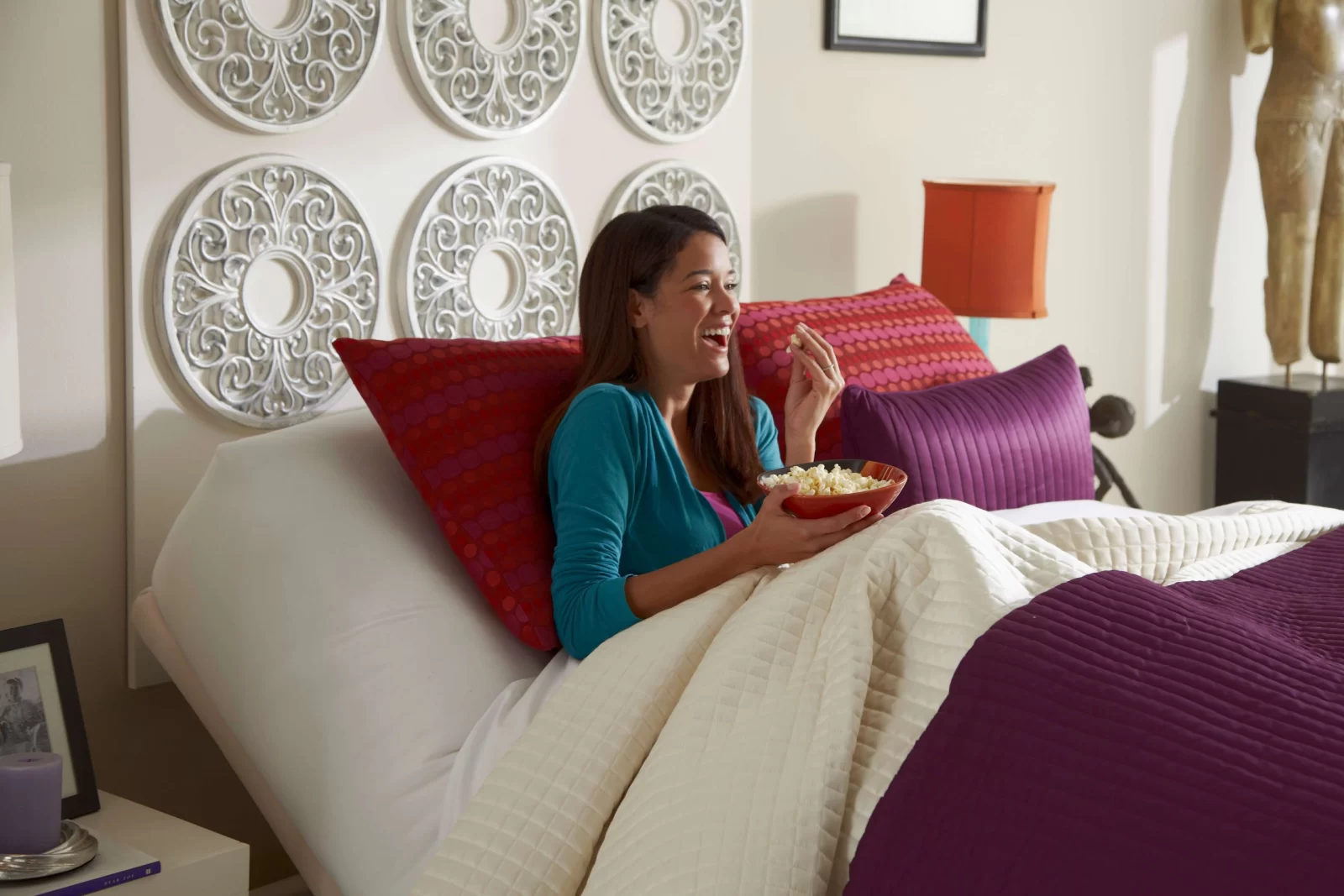
An adjustable bed base is only as good as the mattress on top of it. The wrong mattress restricts movement, loses shape under repeated flexing, and can even damage the base. The best latex mattress for adjustable beds is an all-latex, unglued, modular mattress in 10 inches or less, built with 100% natural Talalay and Dunlop layers.
Natural latex outperforms every other mattress material on adjustable bases because of three structural advantages: it bends without resistance, it does not fatigue from repeated flexing, and its unglued modular construction lets layers shift independently as the base moves.
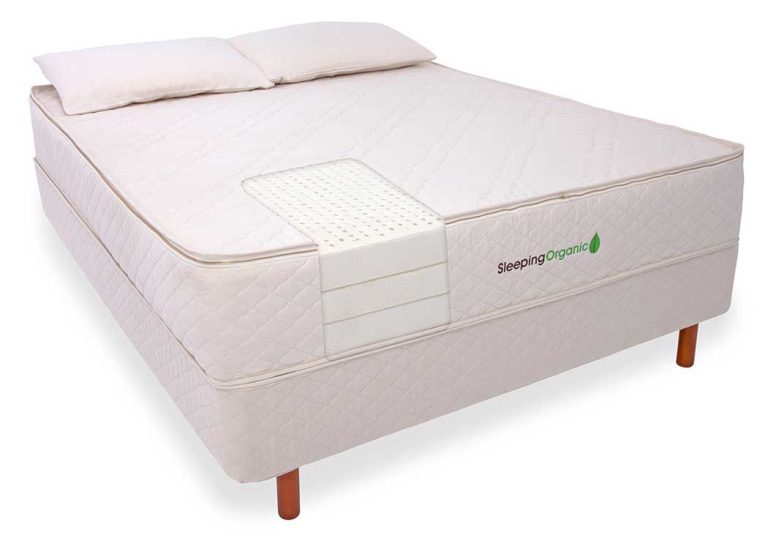
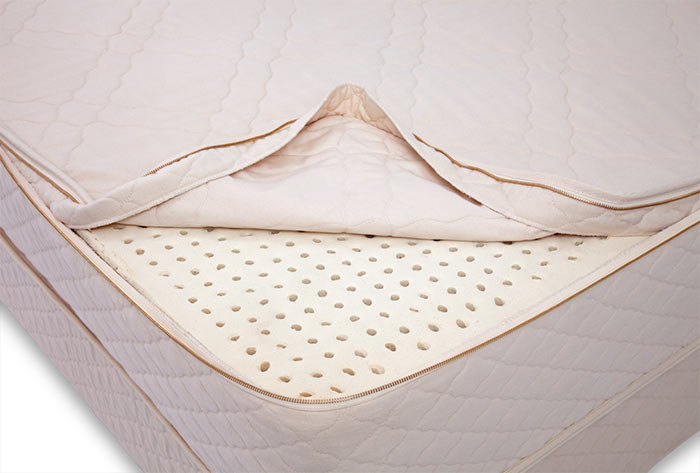
Most latex mattresses are built from stacked layers of latex foam inside a zippered fabric encasement. There are no coils, no rigid edge support, and no glue bonding the layers together. When the adjustable base raises the head or foot section, the latex layers bend naturally along the curve.
This is fundamentally different from how other mattresses interact with adjustable bases:
Latex is naturally elastic. It bends, returns to shape, bends again, and returns to shape, thousands of times without structural degradation. This is the same property that makes rubber bands work, because latex is rubber.
The most important feature of a latex mattress for an adjustable bed is unglued construction. When the layers inside the mattress are not bonded together, each layer can shift and flex independently as the base changes position.
Glued-together layers create a single rigid slab that resists bending. This puts unnecessary stress on the adjustable base motors, creates lumps and bunching at the flex points, and accelerates material breakdown at the hinge areas.
Sleeping Organic mattresses use completely unglued layers inside a zippered organic cotton and wool encasement. The layers move freely, which means the mattress bends as smoothly as the base allows. It also means you can open the cover and rearrange, swap, or replace individual layers without replacing the entire mattress.
Thinner mattresses flex more easily on adjustable bases. A 9- to 10-inch mattress bends cleanly at the base’s hinge points and stays flush with the surface throughout the range of motion.
Thicker mattresses (13 inches and above) can still work, but they do not conform as tightly to the base, especially at extreme head or foot elevation. The extra material also makes it harder to feel massage features if your base has them.
Sleeping Organic offers three mattress profiles that all work on adjustable bases:
For most adjustable bed users, the Sprout (10 inches, 3 layers) is the best choice. It provides enough layers for real firmness customization while remaining thin enough for excellent base compatibility.
This is non-negotiable for adjustable base use. If the mattress manufacturer glues the layers together, the mattress will fight the base at every angle change. Ask specifically whether layers are glued before purchasing.
100% natural latex maintains its elasticity far longer than blended or synthetic latex. Blended latex contains petroleum-based fillers that break down faster under repeated flexing. Since an adjustable base flexes the mattress multiple times every day, material durability matters more than it does on a flat foundation.
A custom latex mattress with individually selectable layer firmnesses lets you dial in the exact feel you want. This matters on an adjustable base because changing the angle of the bed changes how your weight distributes across the mattress. A configuration that feels right when flat should also feel right when elevated.
Adjustable bases are not just about comfort. Specific positions make the widely recommended “sleep elevated” advice practical to follow night after night. An adjustable bed is not a medical device or a treatment, but position changes matter, and a base holds them consistently. For the specific angles people use, see our guide to sleeping elevated for reflux and snoring.
Elevating the head and knees slightly (the zero-gravity position) takes pressure off the lumbar spine by distributing weight more evenly. This position reduces compression on spinal discs and relaxes the muscles along the lower back. A latex mattress supports this position well because the elastic material conforms to the curved surface without creating pressure points at the bend.
Elevating the head changes the head and neck angle, and many people notice quieter nights with a modest raise. An adjustable base makes this effortless because you can find the exact angle that works, save it as a preset, and return to it without stacking pillows that shift during the night. One note: loud, persistent snoring can be a sign of sleep apnea, which deserves a proper medical evaluation rather than a furniture solution.
Head elevation is one of the most commonly recommended lifestyle changes for acid reflux. Raising the upper body 6 to 8 inches uses gravity to keep stomach acid from traveling up the esophagus. An adjustable base provides consistent, stable elevation that pillows cannot match.
Raising the foot of the bed promotes venous return from the legs, reducing swelling and improving circulation. This is particularly helpful for people who spend long hours on their feet, those with varicose veins, and anyone recovering from lower body surgery or injury.
Memory foam bends adequately on an adjustable base, but it falls short of latex in several ways:
| Feature | Natural Latex | Memory Foam |
|---|---|---|
| Flex recovery | Instant return to shape | Slow recovery, retains bent shape temporarily |
| Durability under flexing | 20+ years | 5–8 years before softening at hinge points |
| Heat at flex points | Breathable, no heat buildup | Traps heat where material folds |
| Material composition | Natural rubber (renewable) | Petroleum-based chemicals |
| Off-gassing | None | Common, especially when new |
| Customizable firmness | Individual layers selectable | Single firmness, not adjustable |
The durability gap is the most significant factor. Adjustable bases flex the mattress daily, sometimes multiple times per day. Memory foam fatigues at the hinge points within a few years. Latex does not.
Not every mattress works with an adjustable bed. These types should be avoided:
If you are not ready for an adjustable base but want a solid foundation for your latex mattress, a wood slat foundation with slats spaced no more than 3 inches apart provides excellent support. You can always add an adjustable base later since latex mattresses transition between foundation types without any issues.
For couples with different preferences, split king and split California king adjustable setups let each partner control their own side independently. Each side gets its own twin XL latex mattress on its own adjustable base, so one partner can elevate their head while the other lies flat.
All four pair perfectly with our unglued natural latex mattresses, ship free, and are eligible for an additional 10% off when bundled with a custom latex mattress in our builder. Torn between the Rios? Read the Rio 3.0 vs 4.0 vs 5.0 breakdown.
Most all-latex mattresses work on adjustable beds, but the best results come from unglued, modular latex mattresses under 13 inches thick. Avoid latex hybrids that include coils or glued layers, as these restrict the mattress’s ability to flex with the base.
No. Natural latex is inherently elastic and designed to flex without fatigue. An adjustable base will not damage a quality all-latex mattress. In fact, latex handles repeated flexing better than any other mattress material because it is natural rubber.
Ten inches or less is ideal. The Sapling (9 inches, 2 layers) and Sprout (10 inches, 3 layers) offer the best adjustable base compatibility. The Tree (13 inches, 4 layers) works but bends slightly less at extreme angles.
A regular all-latex mattress with unglued layers works perfectly on an adjustable base. There is no need for a specially designated “adjustable bed mattress.” The key requirements are all-foam construction, no internal glue, and appropriate thickness.
Yes. Firm latex bends just as easily as soft latex on an adjustable base. Firmness (ILD) affects how the mattress feels, not how it flexes. Even an extra-firm latex layer bends smoothly with the base.
The Ergomotion bases we carry are rated for 750 pounds per base, and the rating includes the mattress and bedding, not just the sleepers. A 13-inch king latex mattress weighs roughly 170 pounds, which still leaves ample margin for two adults. On a split king, each base carries its own rating independently.
They ruin the wrong mattresses. Rigid innerspring mattresses deform, air chambers stress their seams, and glued foam slabs delaminate at the hinge points. A flexible, unglued all-latex mattress is designed for exactly this movement and is not damaged by it. Match the mattress to the base and neither one suffers.
Zero gravity is a position where the head and knees are both slightly elevated, distributing body weight evenly and reducing pressure on the spine. It mimics the posture astronauts adopt during launch to minimize physical stress. Most adjustable bases have a preset zero-gravity button. This position, combined with a supportive natural latex mattress, provides significant relief for back pain, circulation issues, and breathing difficulties.