Have a saved cart?
Enter your email to restore it.


The best latex mattress for an RV solves the three problems every road traveler faces: non-standard bed sizes, temperature swings from desert heat to mountain cold, and off-gassing in a tiny enclosed space. Natural latex handles all three. It can be custom-cut to any dimension, performs consistently across temperature extremes, and produces zero off-gassing because it contains no synthetic foams or chemical adhesives.
If you have slept on a stock RV mattress, you already know the problem. Most come with thin polyurethane foam that breaks down within a year or two, sags in the middle, and traps heat on summer nights. A natural latex mattress is a direct upgrade in every category that matters for life on the road.
RV and camper beds rarely match standard mattress dimensions. Short queens, three-quarter sizes, corner-cut shapes for wheel wells, and narrow bunk configurations are all common. Buying a standard queen and trimming it down is not the answer, compressed foam loses its structural integrity at cut edges.
Latex, however, can be manufactured to exact custom dimensions from the start. Whether your RV bed is 54 x 75, 60 x 74, or has a notched corner, a custom latex mattress is built to fit the space precisely. No gaps against the wall. No overhang, no folding excess material under the sheets.
Memory foam is temperature-sensitive. It gets rock-hard in cold weather and excessively soft in heat. In an RV that might sit in 40-degree mornings and 95-degree afternoons on the same trip, that inconsistency becomes a real problem.
Natural latex maintains consistent feel regardless of ambient temperature. It does not harden in the cold or turn mushy in the heat. It also sleeps cooler than memory foam thanks to an open-cell structure and pin-core ventilation holes throughout the material.
The absence of off-gassing is especially important in an RV. The sleeping area in most campers is a small, enclosed space with limited ventilation. A memory foam mattress releasing volatile organic compounds in that environment means you are breathing concentrated chemical fumes all night. Natural latex has none of that.
Thinner builds work best in RVs for two practical reasons: clearance above the bed is often limited, and every pound matters when you are towing or driving a motorhome.
The Sapling model (9 inches, 2 layers) is the ideal RV mattress. Two layers of natural latex provide genuine comfort and support without the bulk of a full-height home mattress. You choose the firmness of each layer independently, firm Dunlop on the bottom for support, medium or soft on top for comfort.
For RV owners who want maximum softness, the Sprout model (10 inches, 3 layers) adds a third comfort layer while staying reasonable in height and weight.
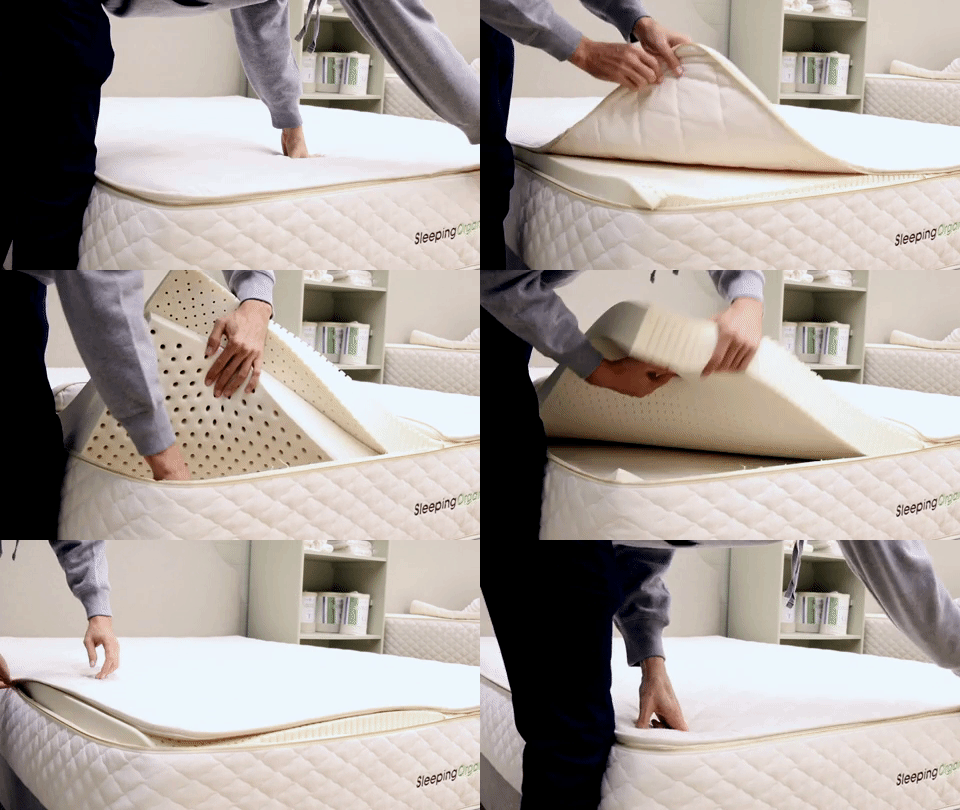
A full assembled mattress is difficult to maneuver through an RV door. Latex mattresses built with separate modular layers solve this completely. Each layer is 2-3 inches thick and flexible enough to carry through a narrow RV doorway individually. Stack them on the platform inside, zip up the cover, and you have a complete mattress.
This also means if one layer wears out after years of use, you replace that single layer rather than the entire mattress.
Most RV mattress platforms are solid or semi-solid surfaces (plywood, slatted boards), which means the mattress itself handles all the cushioning. A medium-firm configuration works well for most RV sleepers:
If you are not sure where to start, a 2-layer Sapling with medium over firm Dunlop is the most versatile RV configuration we recommend.
If replacing the entire RV mattress is not in the budget right now, a natural latex topper for your RV can dramatically improve an existing mattress. A 3-inch Dunlop or Talalay topper placed on top of your current RV mattress adds genuine pressure relief and support. Toppers are also easy to roll up and store when not in use.
Natural latex lasts 15-20 years under normal use, and Dunlop latex in firmer densities can last even longer. For RV owners, this durability matters because replacing an oddly-sized RV mattress is more involved than swapping a standard home mattress.
Latex is also naturally resistant to dust mites, mold, and mildew, important in a vehicle that may sit in humid climates or go unused for weeks between trips. Pair it with a natural shredded latex pillow for a complete chemical-free sleep setup in your camper.
Most RVs use non-standard sizes. Common RV mattress dimensions include short queen (60 x 75), RV king (72 x 75), and three-quarter (48 x 75), but many campers have unique dimensions that require custom sizing. Always measure your specific RV bed platform before ordering.
A 2-layer Sapling in queen size weighs approximately 60-70 pounds, which is comparable to many RV-specific mattresses. The modular layer design means you carry each piece individually, so the total weight is manageable. For weight-conscious setups, Talalay latex is lighter than Dunlop.
Only if your RV bed matches a standard mattress size, which is uncommon. Even when dimensions are close, a mattress that is an inch too wide will not fit through the RV door or sit properly on the platform. Custom sizing eliminates these problems entirely.
The Sapling at 9 inches is ideal for most RV setups. It provides full comfort and support while leaving adequate clearance above the sleeping surface. Measure the distance from your platform to the ceiling or any overhead cabinets before choosing a thickness.
Yes. Natural latex does not freeze, harden, or become overly soft across the temperature ranges encountered in RV travel. It maintains its feel whether your camper is parked in a cold mountain campground or a hot desert site.
Use a slatted or ventilated platform under the mattress to allow airflow beneath it. Latex is naturally mold and mildew resistant, but trapped moisture between the mattress bottom and a solid platform can create problems in any material. If your RV has a solid bed platform, consider adding a breathable moisture barrier underneath.