Have a saved cart?
Enter your email to restore it.


Shopping for a latex mattress can feel overwhelming when you encounter unfamiliar terms like Dunlop, Talalay, ILD, and GOLS. This comprehensive latex mattress terminology guide defines every term you need to know, so you can make an informed decision and find the perfect sleep setup for your needs.
Natural latex is harvested from the sap of rubber trees (Hevea brasiliensis) and processed into foam using either the Dunlop or Talalay method. However, the term “natural latex” in the mattress industry can be misleading. Some manufacturers label latex as “natural” even when it contains a blend of natural and synthetic materials. Always look for “100% natural latex” to ensure you are getting a product free of synthetic fillers. Learn more about the differences between synthetic, natural, and organic latex.
This designation means the latex contains no synthetic additives, petroleum-based fillers, or blending agents. It is pure rubber tree sap that has been processed into foam. Sleeping Organic mattresses use 100% natural latex in every layer.
Organic latex is 100% natural latex that carries GOLS (Global Organic Latex Standard) certification. This means every step of the production process, from rubber tree cultivation to foam manufacturing, meets strict organic standards and has been independently verified. GOLS organic latex is only available in Dunlop processing.
Synthetic latex, also called styrene-butadiene rubber (SBR), is a man-made material produced from petroleum-based chemicals. It mimics some properties of natural latex but is less durable, less breathable, and may off-gas volatile organic compounds.
Blended latex is a mixture of natural and synthetic latex. The ratio varies widely, from 90% natural to as little as 10% natural. Blended latex is often marketed simply as “natural latex,” which can mislead buyers into thinking they are getting a purely natural product.
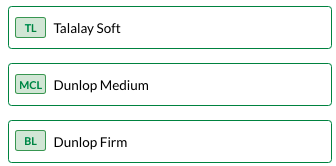
Dunlop is the traditional method for processing liquid latex into foam. The latex is whipped into a froth, poured into a mold, and baked. Dunlop latex tends to be denser and firmer, making it ideal for mattress support layers. All GOLS certified organic latex is made using the Dunlop process. Learn more about Dunlop vs. Talalay latex.
Talalay is a more complex manufacturing process where the latex is poured into a mold, vacuum-sealed to distribute it evenly, flash-frozen, and then baked. This creates a more uniform, consistent cell structure with a lighter, bouncier feel. Talalay latex is often preferred for comfort layers, especially for side sleepers who need softer pressure relief.
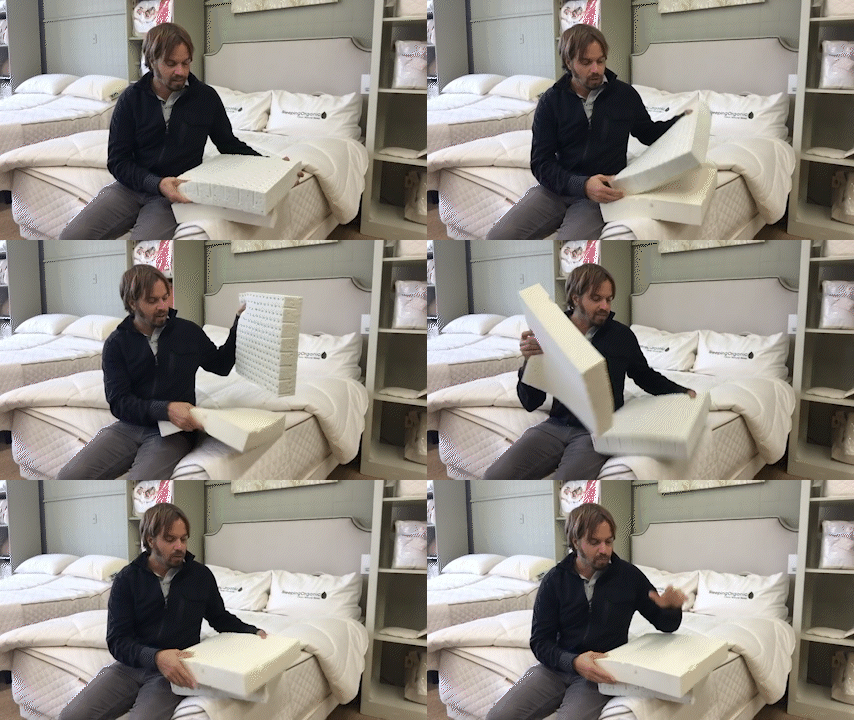
A single slab of latex foam, typically 3 inches thick, used to build a mattress. Sleeping Organic latex mattresses are built from two, three, or four individual layers that can be arranged and swapped to customize firmness.
The top layer or layers of a mattress that you feel when you lie down. Comfort layers are typically softer and provide pressure relief for shoulders, hips, and other contact points. In a latex mattress, the comfort layer is usually a softer ILD Talalay or Dunlop latex.
The bottom layer or layers of a mattress that provide structural support and spinal alignment. Support layers are typically firmer (higher ILD) Dunlop latex that prevents excessive sinking and keeps the spine in a neutral position. Read more about ILD firmness ratings.
A single, thicker piece of latex, usually 6 inches, used as the primary component in some mattress designs. Cores serve as both the comfort and support element in simpler mattress constructions.
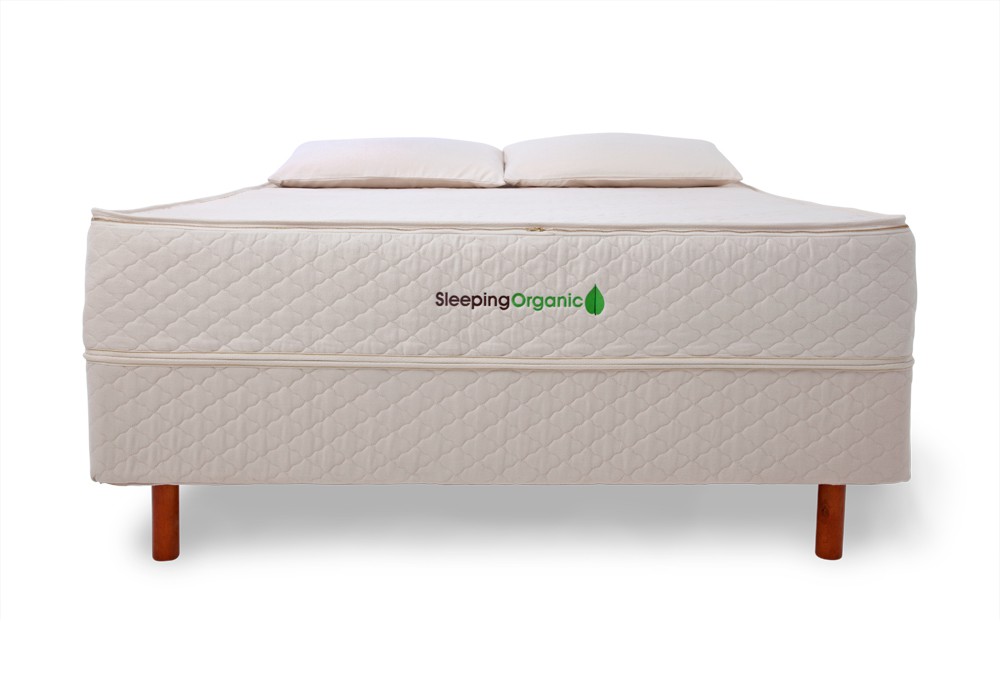
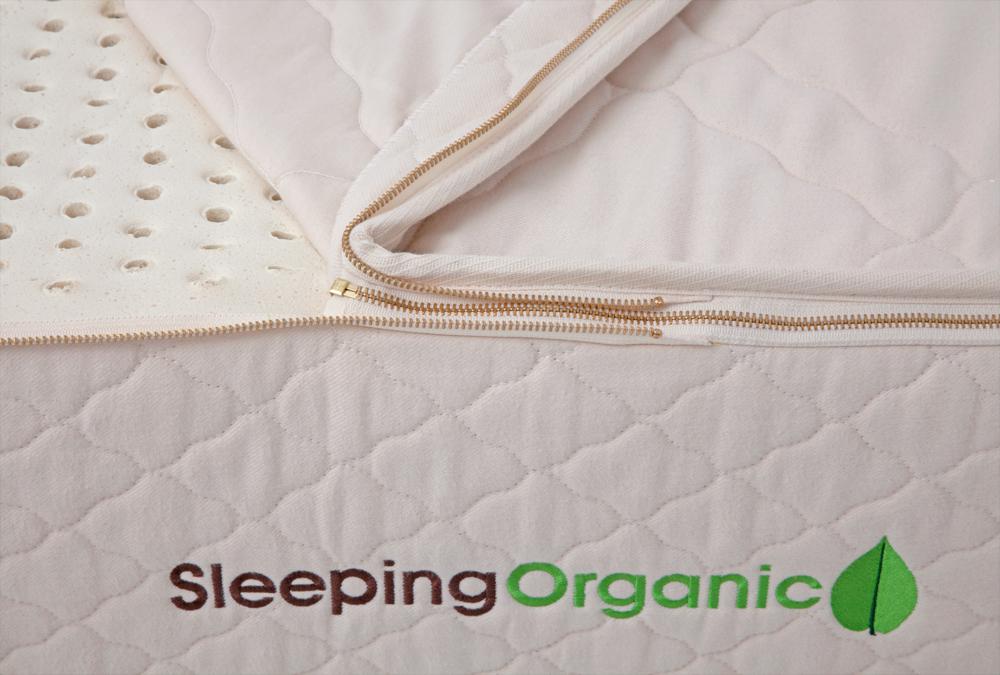
A six-sided, zippered cover that fully encloses the latex layers in a mattress. The encasement holds the layers together and provides a finished sleeping surface. Sleeping Organic encasements are made from organic cotton and feature a zip-off design for easy access to the internal layers. Note that mattress encasements are not machine washable.
A thin, removable, fitted covering that goes over the mattress to create a washable barrier against spills, dust, and allergens. Mattress protectors are five-sided (no bottom panel) and machine washable.
Similar to a mattress protector but thicker and quilted for additional comfort and protection. Mattress pads provide a soft layer between you and the mattress while still being machine washable.
A removable 2- or 3-inch layer of latex that sits on top of an existing mattress to modify its feel. Toppers can soften a firm mattress, add support to a worn-out mattress, or provide the comfort of natural latex without replacing your entire bed. Sleeping Organic toppers are interchangeable with the layers inside their mattresses. See our latex topper guide for help choosing the right one.
A six-sided, zippered cover that fully encloses a latex topper to keep it clean and in place. Topper covers are not machine washable.
ILD is the standard measurement for latex firmness. It measures how many pounds of force are needed to compress a piece of latex by 25% using a circular disc. Lower ILD numbers mean softer latex, and higher numbers mean firmer latex. Most latex used in mattresses ranges from 14 to 44 ILD. Read our detailed guide on ILD firmness ratings.
A mattress setup where each side has independent latex layers, allowing each sleeper to choose a different firmness. Split configurations are ideal for couples with different comfort preferences and significantly reduce motion transfer.
A sturdy wooden base with slats that provides flat, ventilated support for a latex mattress. Sleeping Organic’s foundation is specifically designed to support the weight and flexibility of natural latex. Foundations can sit on bed legs, bed frames, or directly on the floor.
A traditional bed base made of a wooden frame containing springs or a flexible wire grid. Box springs are not recommended for latex mattresses because the flexible surface can cause uneven support and premature wear. Always use a solid, non-flexing base with a latex mattress.
A bed frame with a built-in rigid slat system that functions as a foundation. Platform beds can support a latex mattress directly without needing a separate foundation, provided the slats are closely spaced and do not flex.
A motorized bed frame that allows you to raise or lower the head and foot of the mattress using a remote control. Adjustable bases work well with latex mattresses because natural latex is flexible enough to bend without damage.
A metal or wooden structure that raises the foundation and mattress off the floor. A bed frame alone does not provide adequate support for a latex mattress. You need a foundation or platform on top of the frame.
Individual support posts attached directly to a foundation to elevate it off the floor, eliminating the need for a separate bed frame. Bed legs are a minimalist alternative to a traditional frame.
A pillow filled with natural latex, available in solid molded or shredded latex forms. Shredded latex pillows are adjustable because you can add or remove fill to change the loft and firmness.
A removable, washable cover placed over a pillow and under the pillowcase. Pillow protectors extend the life of your pillow by guarding against moisture and oils.
A zippered cover that fully encloses a latex pillow, protecting the latex fill from dust and moisture. Pillow encasements are typically made from organic cotton.
The internationally recognized certification for organic latex. GOLS verifies that the latex is made from organically grown rubber tree sap and that every step of the manufacturing process meets organic standards.
An independent testing and certification system for textiles that verifies products are free from harmful substances. OEKO-TEX certification covers finished products and individual components.
Dunlop latex is denser and firmer, made by pouring liquid latex into a mold and baking it. Talalay latex undergoes additional vacuum-sealing and flash-freezing steps that create a more uniform, lighter, and bouncier foam. Dunlop is typically used for support layers, while Talalay is popular for comfort layers.
ILD stands for Indentation Load Deflection and measures the firmness of a latex layer. It represents how many pounds of force are needed to compress the latex by 25%. Lower ILD means softer latex, higher ILD means firmer. Most latex mattress layers range from 14 to 44 ILD.
All organic latex is 100% natural latex, but not all natural latex is organic. Organic latex carries GOLS certification, which verifies that the rubber trees were organically cultivated and the entire manufacturing process met strict organic standards.
Yes. Latex mattresses require a firm, flat, non-flexing base. A wood slat foundation or solid platform bed works best. Box springs and flexible bases are not recommended because they can cause uneven support and reduce the lifespan of the mattress.
A split latex mattress has independent layers on each side, allowing each sleeper to choose a different firmness level. Both sides are enclosed in a single mattress cover, so the bed looks and functions as one unit while providing customized comfort for each person.
Yes. A natural latex topper can be placed on top of any existing mattress to change its feel. A softer topper adds pressure relief, while a firmer topper can restore support to a worn-out mattress. Latex toppers are also interchangeable with the layers inside Sleeping Organic mattresses.