Have a saved cart?
Enter your email to restore it.


Yes, natural latex mattresses are hypoallergenic. Natural latex inherently resists dust mites, mold, and mildew, the three most common bedroom allergens. When wrapped in organic wool and organic cotton covers, a latex mattress creates one of the cleanest sleeping environments available. This makes it an excellent choice for allergy sufferers, people with asthma, and anyone looking to reduce chemical exposure during sleep.
Natural latex is harvested from the sap of rubber trees (Hevea brasiliensis). The resulting material has a dense, continuous structure with no hollow cavities where dust mites can nest and reproduce. This is fundamentally different from innerspring mattresses, which contain open air pockets that become breeding grounds for microscopic pests.
Natural latex also has antimicrobial properties. Its chemical composition naturally inhibits the growth of mold, mildew, and bacteria. In humid environments where other mattress types would develop mold problems, a natural latex mattress remains resistant. These properties do not wash out or diminish over time. They are inherent to the material itself.
A truly hypoallergenic mattress is more than just the core material. The cover matters just as much. Organic wool serves as a natural fire barrier, eliminating the need for chemical flame retardants. Wool also wicks moisture away from the body, keeping the sleep surface dry and inhospitable to dust mites. Organic cotton provides a soft, breathable outer layer free from pesticide residues and synthetic treatments.
Together, these three materials, natural latex, organic wool, and organic cotton, create a mattress that is hypoallergenic from core to cover, without relying on any chemical treatments or synthetic additives.

Not all latex mattresses are equally hypoallergenic. The distinction between natural and synthetic latex matters significantly for allergy sufferers.
Natural latex is derived entirely from rubber tree sap. It contains no petroleum-based chemicals and produces no volatile organic compound (VOC) off-gassing. It is the gold standard for hypoallergenic bedding.
Synthetic latex is manufactured from petrochemicals, primarily styrene-butadiene rubber (SBR). While it mimics the feel of natural latex, synthetic latex can off-gas VOCs that irritate the respiratory system. It also breaks down faster, and as it deteriorates, it can release particles that aggravate allergies.
Blended latex combines natural and synthetic latex, typically in a 30/70 or 40/60 ratio. While less problematic than fully synthetic latex, blended formulations still introduce petroleum-based chemicals into your sleeping environment.
For allergy sufferers, 100% natural latex or GOLS-certified organic latex is the clear choice.
A common concern is whether people with latex allergies can sleep on a latex mattress. The answer for the vast majority is yes. Here is why.
Latex allergies are triggered by proteins found in raw latex sap. During the Dunlop and Talalay manufacturing processes, the latex is extensively washed, heated, and cured. This processing removes nearly all of the allergenic proteins. The finished latex foam that goes into a mattress is chemically very different from the raw latex found in medical gloves, which is the most common source of latex allergy reactions.
Additionally, you never make direct skin contact with the latex in a mattress. Multiple layers, the organic cotton and wool cover, your sheets, and potentially a mattress protector, sit between your skin and the latex core. True allergic reactions to latex mattresses are extremely rare.
That said, if you have a diagnosed severe latex allergy (Type I hypersensitivity), consult your allergist before purchasing a latex mattress.
Memory foam is made from polyurethane, a petroleum-derived synthetic material. New memory foam mattresses are known for off-gassing, releasing volatile organic compounds into your bedroom air. Common VOCs from memory foam include formaldehyde, benzene, and toluene. These chemicals can trigger headaches, respiratory irritation, and allergic reactions, particularly in sensitive individuals.
While the off-gassing smell typically fades after several weeks, low-level chemical emissions can continue for months or even years. Memory foam also traps heat and moisture, which can create conditions favorable to dust mite proliferation over time.
Traditional innerspring mattresses are among the worst options for allergy sufferers. The open coil structure creates vast interior spaces where dust mites, dead skin cells, and other allergens accumulate. A well-used innerspring mattress can harbor millions of dust mites. The foam comfort layers on top of the coils are typically made from polyurethane foam, adding chemical off-gassing to the allergen problem.
Many innerspring mattresses also use chemical flame retardants, adhesives, and synthetic fabrics that contribute to poor indoor air quality.
Natural latex outperforms both memory foam and innerspring mattresses on every allergy-related measure. No off-gassing, no dust mite habitats, natural antimicrobial properties, and no need for chemical flame retardants when paired with an organic wool cover.
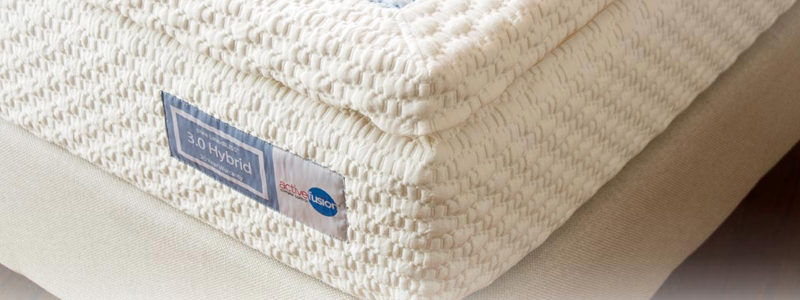
Every our natural latex mattress is built with hypoallergenic materials throughout. Our mattresses use 100% natural latex in either Dunlop or Talalay formulations, wrapped in an organic cotton and wool cover. No synthetic foams. No chemical adhesives, no flame retardant chemicals.
We offer three models to fit different sleep needs:
All three models are fully customizable. You choose the firmness of each layer, and because our layers are not glued together. You can swap or rearrange them at any time. If your comfort preferences change or a layer needs replacing after years of use, you replace just that layer, not the entire mattress.
For additional protection, pair your mattress with our natural shredded latex pillow, which offers the same hypoallergenic benefits in pillow form.
No. Only 100% natural latex mattresses are truly hypoallergenic. Synthetic latex mattresses are made from petrochemicals and can off-gas VOCs that trigger allergic reactions. Blended latex (part natural, part synthetic) is better than fully synthetic but still introduces chemicals. For the best hypoallergenic performance, choose a mattress made with 100% natural or organic latex, organic wool, and organic cotton.
In most cases, yes. The manufacturing process removes nearly all allergenic proteins from the latex, and you never directly touch the latex. It is enclosed in a fabric cover. However, if you have a severe Type I latex allergy, consult your doctor before purchasing. Mild latex sensitivities, such as contact dermatitis from latex gloves, are generally not triggered by latex mattresses.
Natural latex is naturally resistant to dust mites. Its dense, continuous structure provides no cavities for mites to nest in, and its antimicrobial properties inhibit their growth. This is in stark contrast to innerspring mattresses, which can accumulate millions of dust mites over their lifespan.
Natural latex mattresses are among the healthiest mattress options available. They produce no off-gassing, contain no chemical flame retardants (when paired with an organic wool cover), and resist allergens naturally. The primary health consideration is for individuals with severe latex allergies, though reactions to finished latex foam in mattresses are extremely rare.
Ask which documents apply to the latex and cover in the mattress you are considering. GOLS concerns organic latex; OEKO-TEX STANDARD 100 addresses harmful substance testing of covered textiles. Certification is specific to its stated scope.
Natural latex is significantly better for allergies than memory foam. Memory foam is a synthetic material that off-gasses VOCs including formaldehyde and other respiratory irritants. Natural latex produces zero off-gassing and has inherent antimicrobial and dust-mite-resistant properties that memory foam lacks.