Have a saved cart?
Enter your email to restore it.


Organic cotton plays a critical role in every natural latex mattress. It forms the outer cover that encases the latex core, serves as a protective layer in toppers and pillows, and directly contacts your skin each night. Understanding what makes organic cotton different from conventional cotton — and why it matters for your health — helps explain why it is the material of choice for organic bedding.

Organic cotton is grown using organic agricultural practices. Spinning, weaving, and finishing are separate stages, so check the actual fabric specification when comparing mattress covers.
Conventional cotton, by contrast, is one of the most heavily sprayed crops in the world. Approximately 35% of the world’s pesticides are used in cotton farming. These chemical residues become embedded in the fiber and cannot be removed through washing, meaning they remain in contact with your body through sheets and mattress covers.
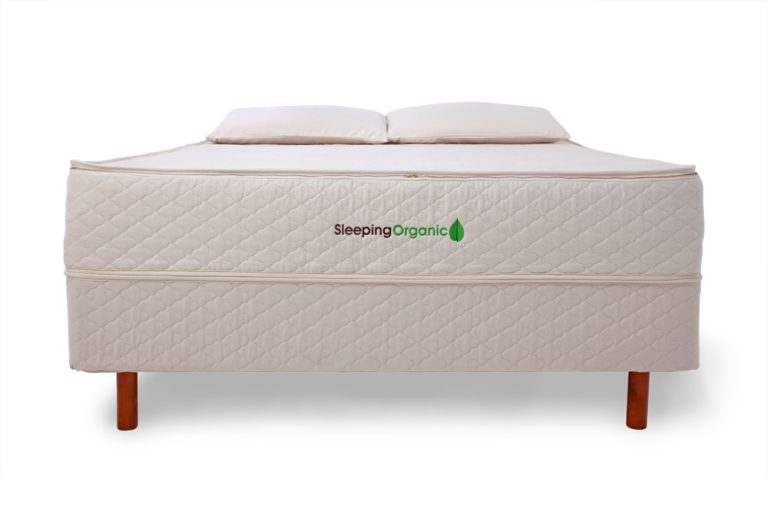
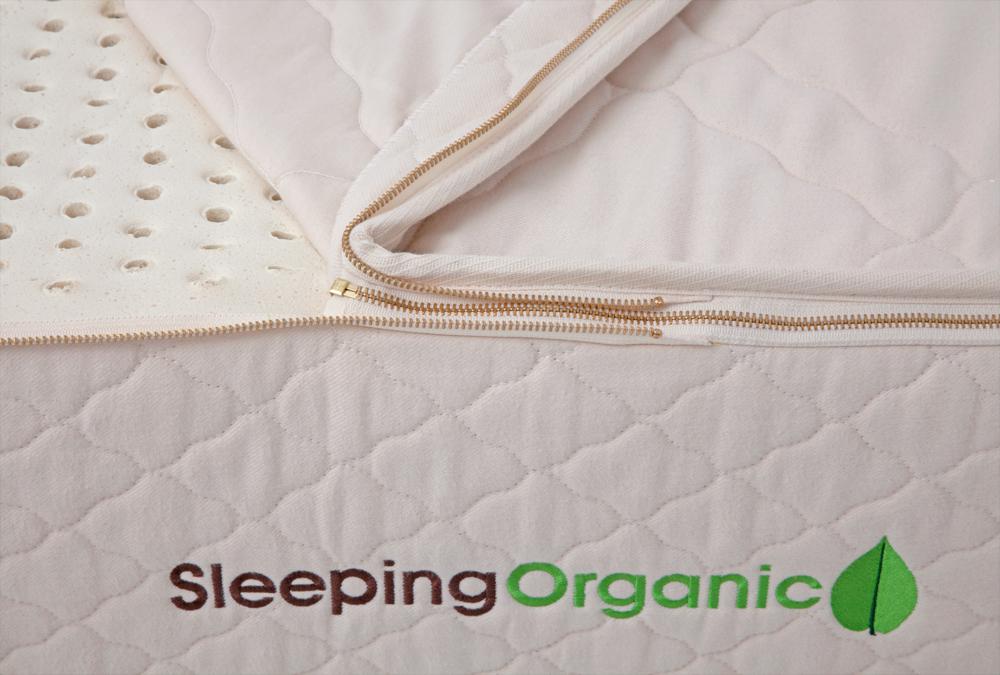
Every natural latex mattress at Sleeping Organic is encased in an organic cotton cover with organic wool batting quilted inside. This cover serves multiple purposes: it protects the latex core from wear, provides a soft sleeping surface, and enables airflow. The cover zips off for easy removal, cleaning, and access to the internal latex layers.
Organic cotton covers protect latex toppers from direct exposure and extend their lifespan. If you are adding comfort to an existing mattress, a latex topper wrapped in organic cotton gives you the benefits of natural materials without replacing your entire bed. For guidance on choosing the right topper, see our latex topper quick guide.
The natural shredded latex pillow uses an organic cotton cover to encase the adjustable latex fill. This keeps the shredded latex contained while providing a breathable, chemical-free surface next to your face.
Organic cotton is grown and processed without synthetic pesticides, herbicides, or chemical fertilizers. This means the fabric that touches your skin each night contains no chemical residues that could be absorbed through contact or inhaled as off-gassing.
Because organic cotton is free of chemical dyes, bleach, and metal-based pigments, it is far less likely to trigger allergic reactions or skin sensitivities. It is especially recommended for people with asthma, eczema, or chemical sensitivities, and is considered safe for infants.
Unlike synthetic fabrics, organic cotton fibers breathe naturally. Cotton can absorb up to one-fifth of its weight in moisture before feeling damp, wicking perspiration away from the body and releasing it into the surrounding air. This keeps you cool and dry throughout the night.
Organic cotton fabric — made from spun thread rather than loose fiber — is highly durable and does not compress or form body impressions the way loose cotton fiber does. Cotton fabric maintains its structure and softness through years of use and washing.
Organic cotton is fully biodegradable. Organic farming methods replenish soil fertility, use fewer natural resources, and support biodiversity rather than degrading it. The environmental footprint of an organic cotton mattress cover is dramatically smaller than that of a conventional cotton or synthetic alternative.
Conventional cotton is heavily treated with pesticides including glyphosate, aldicarb, and other toxic compounds. These pesticides create residues that become part of the cotton fiber and cannot be removed through washing. When used in bedding, these chemical residues can be absorbed through skin contact during the hours you spend sleeping.
Conventional cotton production causes water pollution through nitrogen-loaded synthetic fertilizer runoff, kills aquatic life, contaminates soil, and destroys animal habitats. The pesticides used in cotton farming affect far more than the target pests — over 98% of sprayed insecticides reach unintended destinations.
Conventional cotton processing involves boric acid treatment, chlorine bleaching that releases carcinogenic dioxins, and permanent-press finishes that off-gas formaldehyde. These additional chemicals compound the health risks already present from pesticide residues in the raw fiber.
| Category | Organic Cotton | Conventional Cotton |
|---|---|---|
| Pesticides | None used in growing or processing | Heavy pesticide and herbicide use |
| Health | Hypoallergenic, no chemical residues | Chemical residues linked to allergies, asthma, and chronic disease |
| Environment | Improved soil fertility, biodiversity, and water quality | Water pollution, soil contamination, habitat destruction |
| Agriculture | Crop rotation maintains soil health | Reduced soil fertility, fields becoming barren |
| Processing | No bleach, no chemical dyes, no formaldehyde | Chlorine bleaching, boric acid, formaldehyde finishes |
There is an important distinction between cotton fabric and cotton fiber in mattress construction. Cotton fiber consists of loose strands that trap air and create initial loft, but eventually compress and form body impressions as they absorb moisture. Cotton fabric is made from spun thread and does not compress. It remains soft, breathable, and structurally sound over years of use. Sleeping Organic uses only organic cotton fabric in our mattress covers and bedding products.
Organic cotton requires more labor-intensive farming methods, does not use cheap synthetic pesticides, and undergoes certification processes that verify organic standards. The higher cost reflects genuinely cleaner production — not marketing. Over time, the durability and health benefits offset the initial price difference.
Yes. Organic cotton is free of pesticide residues, chemical flame retardants, and metal-based dyes that can be absorbed through an infant’s sensitive skin. It is one of the safest textile choices for nursery bedding and clothing.
Organic cotton sheets, pillowcases, and mattress pads can be safely washed and dried in a standard household machine. Removable organic cotton mattress covers should be spot-cleaned and air-dried to preserve the quilted wool batting inside.
Request the cover material specification and any documentation relevant to that particular fabric. Confirm the named supplier, covered product, and validity dates.
Yes. Organic cotton fibers breathe naturally and can absorb significant moisture without feeling damp. Synthetic fabrics trap heat and moisture against the body, often leading to night sweats and discomfort. Pairing organic cotton sheets with a natural latex mattress creates an especially breathable sleep environment.
The organic cotton cover protects the latex core, provides a comfortable surface, houses the wool fire barrier, and allows the mattress to breathe. It also zips off so you can access the internal latex layers to adjust firmness or rotate components. A quality cover is essential to the mattress’s performance and longevity.