Have a saved cart?
Enter your email to restore it.

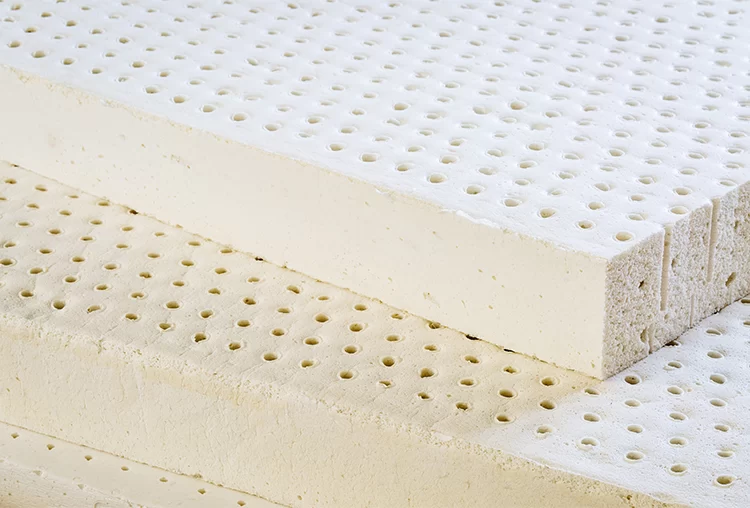
ILD firmness ratings are the standard measurement used to describe how firm or soft a piece of latex feels. ILD stands for Indentation Load Deflection, and understanding this number is the key to choosing the right latex mattress configuration for your body type and sleeping position. Whether you are building a custom latex mattress or selecting a topper, ILD ratings tell you exactly what to expect from each layer.
ILD is measured by pressing a circular disc into a piece of latex foam and recording how many pounds of force are needed to compress it by 25% of its original thickness. ILD is the pounds of force required to compress a latex layer by 25%. The higher the value, the firmer the latex; Sleeping Organic’s current customer options are shown below.
Sleeping Organic’s current latex choices run from X-Soft Talalay 14–19 through X-Firm 44. Within those options, the lower numbers feel softer and the higher numbers feel firmer.
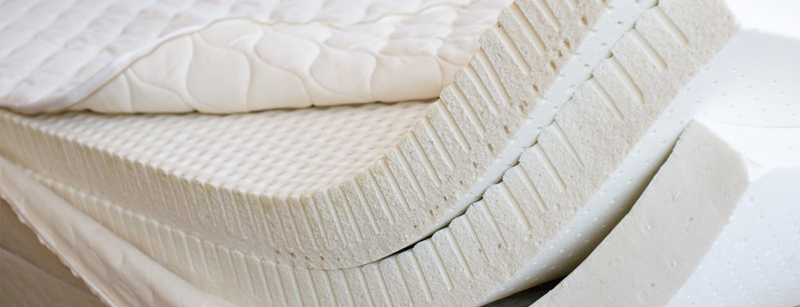
ILD is measured at multiple points across the latex surface, typically at the center and edges, and averaged. This is important to know because the edges of a latex layer may feel slightly softer than the center due to the manufacturing process.
| Current Sleeping Organic ILD | Firmness Level | Best For |
|---|---|---|
| 14–19 | X-Soft Talalay | Talalay topper comfort or the top comfort layer of a mattress |
| 19–22 | Soft | Pressure relief and softer comfort layers |
| 30–32 | Medium | Balanced comfort and support |
| 37–40 | Firm | Firmer comfort or support layers |
| 44 | X-Firm | Maximum support, usually a lower support layer |
Side sleepers need softer latex in their top comfort layers to allow the shoulders and hips to sink in and relieve pressure. For current Sleeping Organic options, X-Soft Talalay 14–19 or Soft 19–22 provides enough cushion to prevent pressure point pain without letting the body sink too deep. The bottom support layers should be firmer, typically ILD 30–32, 37–40, or 44, to maintain spinal alignment.
Talalay latex in the 14–19 or 19–22 ILD range works especially well for side sleeper comfort layers because its more uniform cell structure provides consistent, gentle cushioning. Learn more about the best latex mattress for side sleepers and latex toppers for side sleepers.
Back sleepers generally prefer a firmer sleeping surface that supports the natural curvature of the spine without allowing the hips to sink too far. Firm 37–40 or X-Firm 44 in the top comfort layer provides the firm, supportive feel some back sleepers need. Dunlop latex works particularly well for this sleeping position.
Read more about the best latex mattress for back sleepers and latex toppers for back sleepers.
Stomach sleepers need a firm enough surface to prevent the pelvis from sinking, which would cause lower back strain. However, they also benefit from a slightly softer second layer (ILD 19–22) beneath the firm top to provide some body contouring without excessive sinkage. This layered approach gives stomach sleepers the flat, supportive surface they need with just enough cushion.
Explore the best latex mattress for stomach sleepers and latex toppers for stomach sleepers.
If you switch between positions throughout the night, a Medium 30–32 ILD comfort layer offers the best compromise. This provides adequate pressure relief for side sleeping while still offering enough support for back and stomach positions. Pair the Medium comfort layer with Firm 37–40 or X-Firm 44 Dunlop support layers on the bottom for a versatile, all-position mattress.
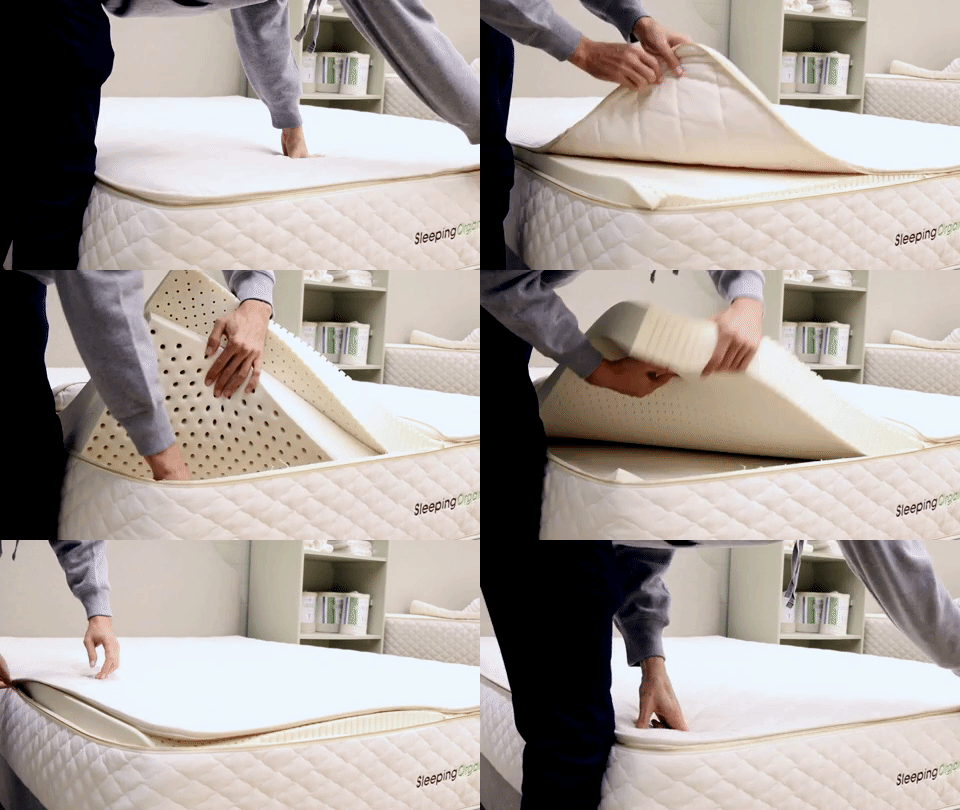
Both Dunlop and Talalay latex use the same ILD scale, but the same ILD number can feel slightly different between the two processes. Talalay latex at ILD 30–32 will feel lighter and bouncier than Dunlop latex at ILD 30–32, which feels denser and more substantial. This is because the Talalay process creates a more uniform, open cell structure, while Dunlop produces a denser, heavier foam.
As a general guideline, Talalay latex works best for comfort layers where you want a responsive, pressure-relieving feel. Dunlop latex excels as support layers where density and durability matter most.
Higher ILD latex is denser, which means it contains more rubber per cubic inch. This makes it more resistant to wear, compression, and body impressions over time. A 44 ILD Dunlop latex support layer will last longer than a 19–22 ILD Talalay comfort layer simply because there is more material to withstand years of nightly use.
This is one reason why custom latex mattresses from Sleeping Organic use firmer, denser Dunlop on the bottom and softer Talalay or Dunlop on top. The durable support layers provide a long-lasting foundation, while the comfort layers can be swapped if they soften over many years of use.
ILD is specifically used to rate latex foam firmness. Memory foam mattresses use a different measurement system based on density (measured in pounds per cubic foot). The two scales are not directly comparable, so do not try to match ILD numbers from a latex mattress to density ratings from a memory foam mattress.
When building a natural latex mattress, you select the ILD for each individual layer. Here is a practical approach:
Pair your mattress with a natural shredded latex pillow for consistent head and neck support that complements your chosen firmness.
ILD stands for Indentation Load Deflection. It measures the firmness of latex foam by recording how many pounds of force are needed to compress a piece of latex by 25% of its thickness. Higher ILD means firmer latex, lower ILD means softer.
Side sleepers typically do best with comfort layers in the 14–19 or 19–22 ILD range. This provides enough softness for the shoulders and hips to sink in and relieve pressure. The bottom support layers should be firmer, around ILD 30–32, 37–40, or 44, to maintain proper spinal alignment.
The firmest ILD commonly available for mattress latex is 44. Latex at this ILD is very firm and dense, best suited for bottom support layers or sleepers who prefer an exceptionally firm surface. Most people find ILD 44 too firm for a comfort layer unless they are a heavier sleeper or strong back sleeper.
Not necessarily. Higher ILD means firmer and more durable latex, but the “best” ILD depends entirely on your sleeping position, body weight, and comfort preferences. A side sleeper on a 44 ILD comfort layer would likely experience pressure point pain, while a back sleeper on a 14–19 ILD layer might not get enough support.
With a custom latex mattress from Sleeping Organic, yes. The modular layer design allows you to swap individual layers for different ILD ratings without replacing the entire mattress. This is one of the biggest advantages of a customizable latex mattress system.
ILD measures the firmness of individual latex layers, not the overall feel of a finished mattress. The perceived firmness of a complete mattress depends on the ILD of each layer, the number of layers, the mattress cover, and the foundation underneath. Two mattresses with identical top-layer ILD can feel different based on their support layer configuration.