Have a saved cart?
Enter your email to restore it.

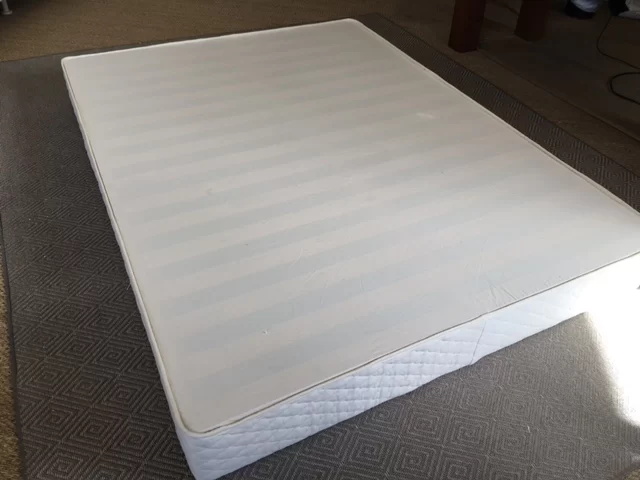
Latex mattresses are not like memory foam or innerspring beds. A Queen latex mattress typically weighs between 90 and 130 pounds — and that weight is distributed unevenly unless the surface below it is firm, flat, and properly spaced. Use the wrong foundation, and you risk voiding your warranty, shortening the life of your mattress, and sleeping on a surface that sags in ways you cannot see.
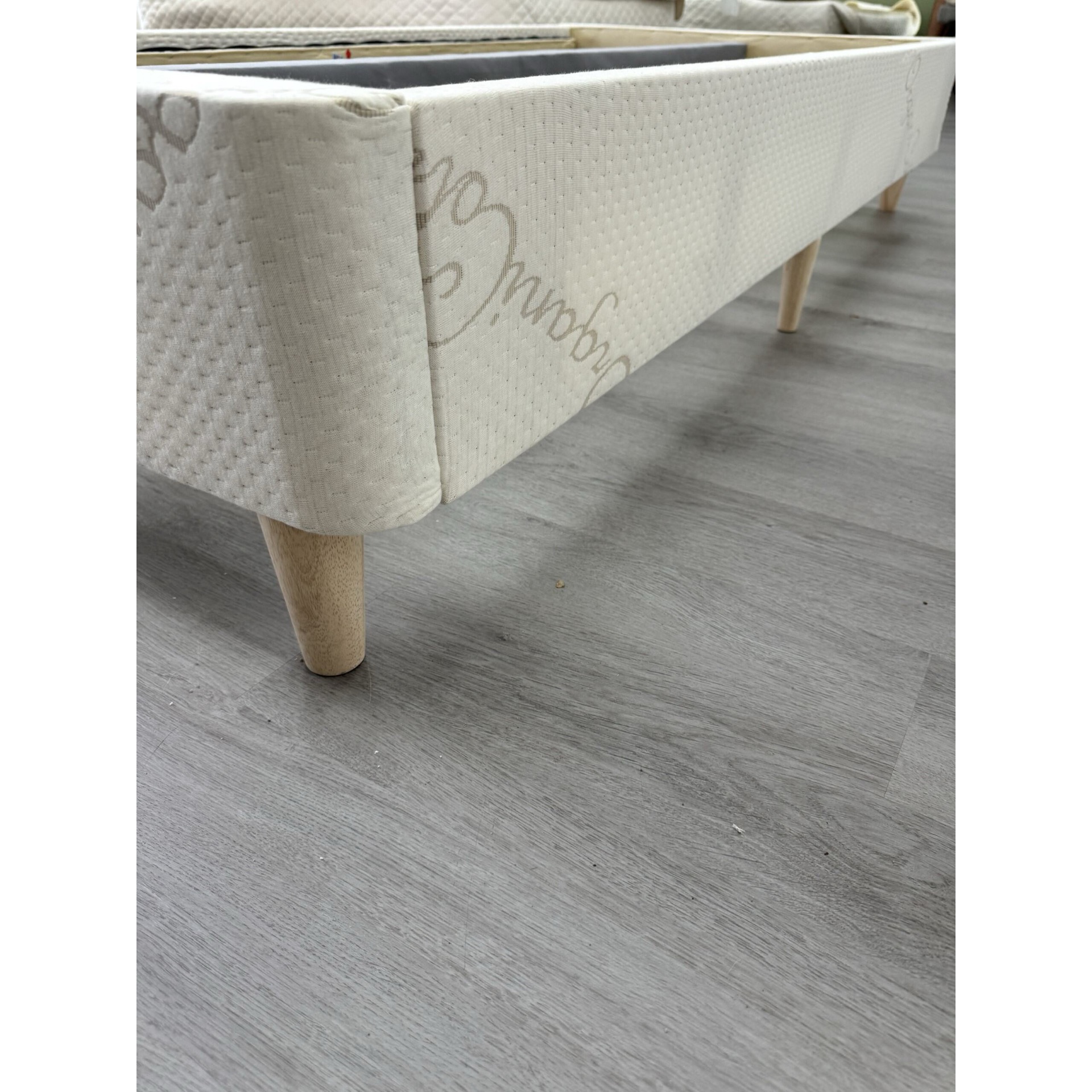
The good news: the right foundation is not complicated. You just need to know what to look for — and what to avoid.
Before comparing specific foundation types, every option must meet three baseline requirements:
If a foundation fails any one of these three criteria, it is not suitable for a latex mattress regardless of price or marketing language.
Here is how the most common foundation options stack up for latex mattresses specifically.
| Foundation Type | Slat Spacing | Weight Handling | Airflow | Latex-Compatible? |
|---|---|---|---|---|
| Solid wood foundation (closely spaced slats) | ≤3 inches | Excellent | Good | Yes — recommended |
| Platform bed (slatted) | Varies — must verify | Good to excellent | Good | Conditional — check slat spacing |
| Platform bed (solid panel) | No gaps | Excellent | Poor | Conditional — heat/moisture risk |
| Adjustable base | Tight flex surface | Good | Moderate | Yes — with latex-compatible mattress |
| Traditional box spring | Wide gaps, spring flex | Poor for latex | Good | No — not recommended |
| Bunkie board | No gaps (solid panel) | Good | Poor | Marginal — airflow concern |
A purpose-built solid wood foundation with closely-spaced slats is the safest, most reliable choice for a latex mattress. The slats are fixed in place, the frame does not flex under load, and the construction is designed specifically for the kind of even, firm support latex requires.
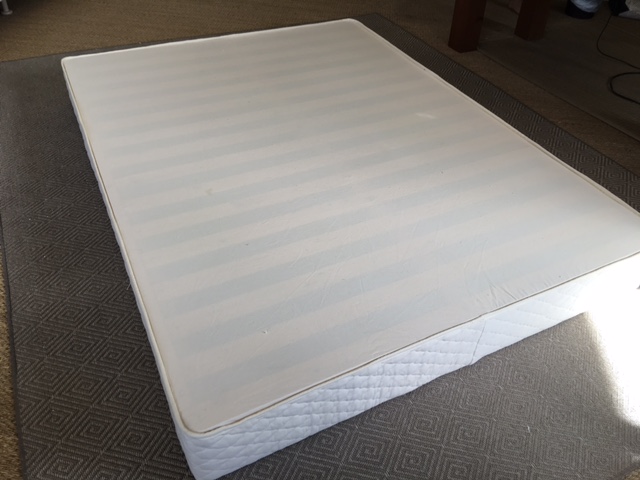
Sleeping Organic offers an organic mattress foundation built to this standard. The slat spacing is designed to work correctly with natural and organic latex mattresses, and the construction handles the weight of heavy latex cores without any of the compromise you get from repurposed bedroom furniture or big-box platform beds.
If you are buying a custom natural latex mattress, pairing it with a foundation from the same source removes any guesswork about compatibility. You know the weight rating, slat spacing, and construction quality are matched to the mattress from the start.
Platform beds are one of the most popular choices for latex mattresses, and for good reason — when built correctly, they offer firm support, good aesthetics, and avoid the height-stacking issue that comes from using a foundation inside a bed frame.
The caveat is slat spacing. Many platform beds sold at furniture retailers have slats spaced 4, 5, or even 6 inches apart. This is fine for a spring mattress. For latex, it is not. Before purchasing any platform bed for use with a latex mattress, measure the slat spacing or confirm it with the retailer in writing.
Slatted platform beds also offer better airflow than solid panel platforms. Latex does not trap heat the way memory foam does, but moisture can accumulate underneath any mattress placed on a non-breathable surface. A slatted platform bed allows air to circulate and prevents that buildup.
Solid panel platform beds eliminate the slat-spacing concern entirely, but replace it with an airflow concern. If you choose a solid panel, use a breathable mattress protector and rotate your mattress regularly to prevent moisture from collecting at the base.
This one comes up constantly, and it is worth being direct: box springs are not appropriate for latex mattresses.
The issue is not just slat spacing — it is the fundamental design. A box spring is engineered to flex. The springs inside compress and rebound, adding give to the sleep surface. For an innerspring mattress, this is a feature. For a latex mattress, it is a problem.
Latex is a self-supporting material. It does not need additional flex from below — in fact, uneven or shifting support from below causes the latex to deform asymmetrically over time. The springs in a box spring do not degrade evenly, which means the support they provide becomes increasingly inconsistent. The result is a latex mattress that develops soft spots and sags earlier than it should.
For a full explanation of why box springs are not recommended and what to use instead, see our post on whether a latex mattress needs a box spring.
Adjustable bases are compatible with latex mattresses, but not all latex mattresses are compatible with adjustable bases. The distinction matters.
When an adjustable base articulates — raising the head, raising the feet — it bends the mattress. A mattress made from a single thick slab of firm latex may resist this bending or develop stress fractures at the flex points over time. Mattresses designed for adjustable base use are typically constructed in multiple layers, often with softer latex blended into the lower layers to allow flex without structural damage.
If you are considering an adjustable base, verify with your mattress manufacturer that the specific mattress model is rated for adjustable base use. See our guide to the best latex mattresses for adjustable bases for more detail on what to look for.
Foundation height is a practical consideration that gets overlooked until after purchase. Latex mattresses are typically thicker than conventional mattresses — often 10 to 13 inches — so adding an 8-inch standard foundation can result in a bed height of 18 to 21 inches off the floor. That is tall for most people.
Low-profile foundations (typically around 5 inches) bring the total bed height down to a more comfortable range. If you are purchasing a foundation to pair with a thick latex mattress, a low-profile option is usually the better ergonomic choice unless you prefer a higher bed height for ease of getting in and out.
Consider your frame as well. Some platform bed frames have their own height and do not accommodate a separate foundation inside the frame — they are designed to support the mattress directly. If you are using a traditional bed frame with legs and side rails, you will need a foundation (or bunkie board) to bridge the frame and support the mattress.
Natural latex has open-cell structure that promotes airflow through the mattress itself. This is one of its thermal advantages over memory foam. But that breathability is only fully realized when the surface below the mattress is also breathable.
A solid, non-porous surface — sealed hardwood panels, for example — blocks airflow from underneath and creates a moisture-accumulation zone at the base of the mattress. Over time, this can contribute to mildew, premature material breakdown, and odor.
Slatted foundations and platforms allow air to move beneath the mattress, which supports the natural ventilation that latex is designed to provide. This is another reason closely-spaced slatted foundations are preferred over solid panel options for organic and natural latex mattresses specifically.
For guidance on maintaining your mattress once it is properly set up, see our organic latex mattress care instructions.
A solid wood foundation with closely-spaced slats (no more than 3 inches apart) is the best foundation for a latex mattress. It provides firm, even support across the full surface, handles the significant weight of a latex mattress, and allows adequate airflow underneath. Sleeping Organic’s organic mattress foundation is built to this specification.
Yes, as long as the slat spacing is 3 inches or less. Many platform beds have slats spaced too far apart for latex mattresses. Always confirm slat spacing before purchase. A slatted platform is preferable to a solid panel platform for airflow reasons.
Box springs are designed to flex and compress. Latex mattresses require firm, non-flexing support. The uneven and inconsistent support from a box spring’s springs causes latex to deform asymmetrically, creating permanent soft spots and shortening mattress lifespan. Box springs also typically have wide gaps between the spring coils, which do not adequately support a heavy latex core.
A Queen-size latex mattress typically weighs between 90 and 130 pounds — significantly heavier than memory foam or innerspring mattresses of the same size. This weight puts substantial stress on whatever is below it. A foundation must be rated for the combined weight of the mattress plus the sleepers. Lightweight or poorly-constructed foundations can fail structurally or develop flex over time under this load.
Yes. Natural latex has excellent internal airflow, but that ventilation is impaired when the mattress sits on a non-breathable solid surface. A slatted foundation or platform allows air to circulate underneath, preventing moisture accumulation that can lead to mildew and material degradation. This is especially relevant for organic latex mattresses, which are not treated with chemical antimicrobials.
You can, but it is not ideal long-term. Placing a latex mattress directly on the floor eliminates airflow entirely underneath the mattress, creating conditions favorable to moisture accumulation and mildew — particularly in humid climates. It also makes the mattress harder to move and rotate for maintenance. A proper foundation or platform is the better solution for both longevity and hygiene.
The foundation decision is not a secondary concern — it directly affects how well your latex mattress performs and how long it lasts. A premium latex mattress on the wrong foundation will underperform and wear out faster than it should. The same mattress on the right foundation will provide consistent support for years.
The criteria are straightforward: firm, flat, slats no wider than 3 inches, adequate weight capacity, and sufficient airflow. A solid wood foundation designed for latex mattresses meets all of them without compromise.
Our Pick: Premium Solid Wood Latex Mattress Foundation
2.5″ slat spacing, solid white pine, organic cotton cover. Designed specifically for natural latex mattresses. Free shipping on all sizes.
If you are in the process of selecting a mattress as well, our guide on how to choose the best latex mattress walks through the full decision — ILD ratings, layer construction, certifications, and more. And if you want to complete the sleep setup, the natural shredded latex pillow pairs well with any latex mattress for consistent, breathable support head to toe.