Have a saved cart?
Enter your email to restore it.

Latex mattresses are one of the best-kept secrets in the mattress industry. They consistently outperform memory foam and innerspring in durability, support, and material safety — but they’re not perfect for everyone. Here’s an honest look at the real pros and cons, including what most brands won’t tell you.
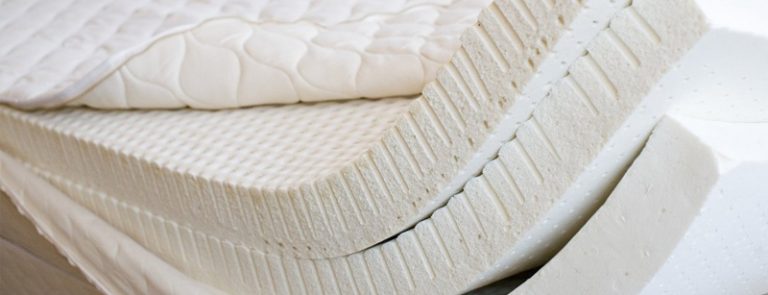
A 100% natural latex mattress lasts 15–25 years. Memory foam typically lasts 7–10 years before developing permanent body impressions. Innerspring mattresses start sagging even sooner. Latex retains its shape and resilience because natural rubber is inherently elastic — it bounces back fully after compression, night after night.
One caveat: this longevity requires maintenance. Latex layers should be rotated and flipped periodically. This is why the best latex mattresses have zippered covers with unglued layers — so you can access and rotate them easily.
Latex contours to your body without the “sinking in” feeling of memory foam. It pushes back with responsive support, keeping your spine aligned while cushioning pressure points at the shoulders and hips. This makes it excellent for back pain, joint pain, and side sleepers who need shoulder relief.
The difference is responsiveness. Memory foam absorbs and slowly releases — latex responds instantly. You won’t feel stuck or struggle to change positions at night.
Natural latex is inherently resistant to dust mites, mold, and mildew. Its dense cell structure doesn’t provide a hospitable environment for allergens. When paired with an organic cotton and wool cover, you get a sleeping surface free from synthetic chemicals and allergens.
If allergies are a concern, make sure the latex is 100% natural — not blended or synthetic. Synthetic latex doesn’t have the same antimicrobial properties.
Memory foam mattresses are notorious for off-gassing — that chemical smell when you first unbox them. It comes from volatile organic compounds (VOCs) released by petroleum-based foams and adhesives.
A 100% natural latex mattress with an organic cover and no glue between layers produces zero off-gassing. You may notice a faint natural rubber smell that dissipates in a day or two, but it’s not the same as chemical off-gassing.
Latex has a naturally open-cell structure with pinholes throughout that promote airflow. Unlike memory foam — which traps body heat — latex sleeps significantly cooler.
That said, much of the temperature regulation comes from the cover. An organic wool and cotton cover breathes and wicks moisture naturally. Polyester covers on budget mattresses trap heat regardless of what’s inside.
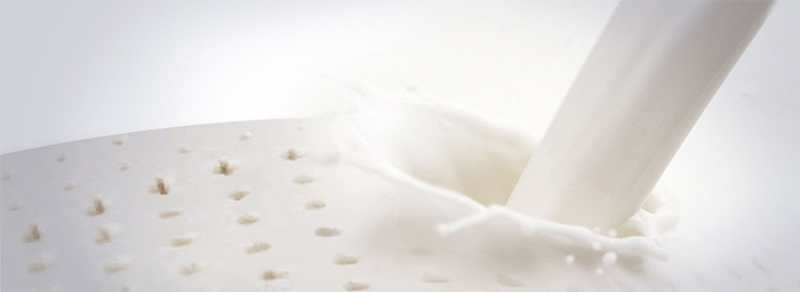
Natural latex comes from rubber tree sap — a renewable resource harvested without killing the tree. The trees continue producing sap for 25+ years and absorb CO2 in the process. When a natural latex mattress reaches end of life, the latex is biodegradable.
Compare that to petroleum-based memory foam, which is neither renewable nor biodegradable.
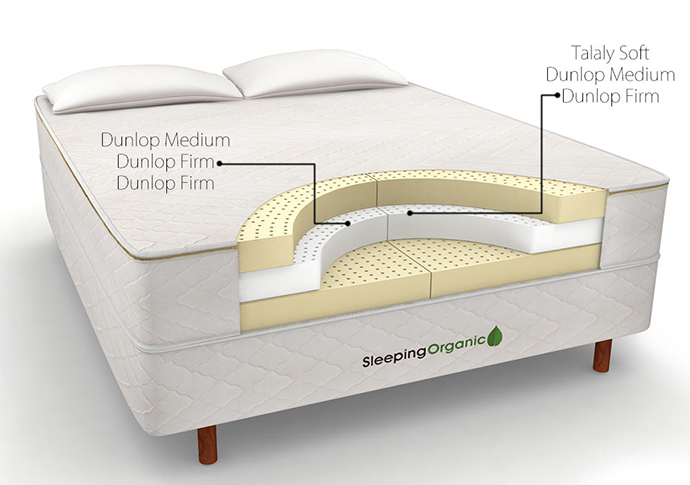
The best latex mattresses are built in modular layers that you can configure to your body. Choose Talalay or Dunlop per layer, set the firmness per layer, and rearrange or swap layers after purchase. A custom latex mattress eliminates the firmness guessing game entirely.
A quality 100% natural latex mattress costs more than a comparable memory foam or innerspring. Expect to pay $1,100–$3,000+ for a Queen depending on the configuration and materials.

However, the cost per year tells a different story. A $1,500 latex mattress that lasts 20 years costs $75/year. A $900 memory foam mattress that lasts 8 years costs $112/year — and you’ll buy two of them in the same timeframe. The more organic and natural the materials, the higher the price — but also the longer the lifespan.
Latex is dense. A Queen-size latex mattress can weigh 90–130 lbs depending on the number of layers. This makes it difficult to move as a single piece.
The solution: buy a mattress with a zippered cover and individual layers. Each layer weighs 20–30 lbs and can be carried separately. This is also why latex mattresses ship with layers individually wrapped — you assemble it in the bedroom, not drag a 100-lb box up the stairs.
If you’re coming from a memory foam mattress, latex will feel different. Latex doesn’t have that slow “sink-in” feeling. It’s responsive and pushes back, which some people initially interpret as “too firm” — even when the ILD rating is soft.
Give it 2–3 weeks to adjust. Most people who initially think their latex mattress is too firm end up preferring the responsive support once their body adapts. If it’s still not right after that, a custom mattress with swappable layers lets you change the firmness without returning the whole thing.
You won’t find quality organic latex mattresses at most mattress stores. Big-box retailers focus on innerspring and memory foam because they’re cheaper to produce and ship. Most of the best latex mattresses are sold online and made to order.
This means you may not be able to try one in person before buying. Look for brands that offer generous trial periods and layer exchanges — not just returns. Being able to swap one layer is far more useful than returning the whole mattress and starting over.
Some people have latex allergies. However, allergic reactions to latex mattresses are extremely rare because the manufacturing process (multiple washings and high-heat vulcanization) removes nearly all of the proteins that trigger reactions. The latex is also encased in a cotton and wool cover — you never directly contact it.
If you suspect a latex allergy, request a small sample from the manufacturer to test before committing to a full mattress.
For most sleepers, the pros of a latex mattress significantly outweigh the cons. The higher cost is offset by dramatically longer lifespan. The weight issue is solved by modular layers. The firmness concern is addressed by customization.
The key is buying the right latex mattress — one with 100% natural or organic latex, unglued layers, a zippered cover, and per-layer firmness customization. That’s what separates a great latex mattress from a mediocre one.
Ready to Build Your Custom Latex Mattress?
Choose your firmness per layer, pick Talalay or Dunlop, and get free shipping.
Shop Our Custom Latex Mattress
Not sure about firmness? Add a natural latex topper to fine-tune your existing mattress.
For most people, yes. Latex is more durable (15–25 years vs. 7–10), sleeps cooler, responds faster to movement, and doesn’t off-gas. Memory foam’s advantage is a lower price point and that slow-contouring “hug” feel. If you want long-term value and healthier materials, latex wins. Full latex vs. memory foam comparison.
100% natural latex resists sagging far better than any other mattress material. With regular rotation, a quality latex mattress maintains its shape for 15+ years. Synthetic or blended latex breaks down faster. Read more about latex durability.
If you calculate cost per year of use, a latex mattress is often cheaper than replacing a foam mattress every 7–8 years. Add in the health benefits of organic materials and the ability to swap layers instead of buying a new mattress, and it’s one of the best long-term investments in your sleep.
Look for a mattress that offers split firmness — different firmness on each side. Latex also has minimal motion transfer, so you won’t feel your partner tossing and turning. See our full guide for couples.
Yes. Latex is flexible enough to bend with an adjustable base. In fact, it’s one of the best mattress types for adjustable beds because the layers flex without damage. Just make sure the layers aren’t glued together. More on latex mattresses for adjustable beds.